Pond cypress and bald cypress are the two species of cypress trees found in the Everglades.
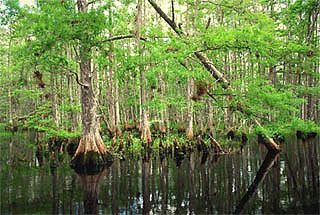
Two species of cypress reside within the Everglades, the bald cypress (Taxodium distichum) and the pond cypress (Taxodium ascendens). These trees were harvested during the early to mid 1900s. The durable wood from these cypress were used to make shingles, siding, cross ties, fenceposts, and picklebarrels. Second growth cypress is what primarily remains visible today.
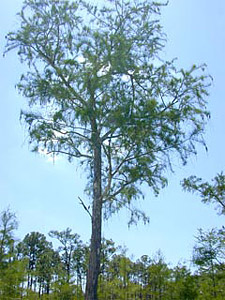
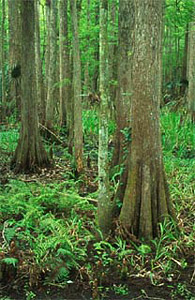
The bald cypress grows to heights of 150 feet (45 m) or more, in or along flowing water such as rivers and springs. Characteristics include enlarged bases with buttresses, pale brown bark that sheds in strips, and light green, soft leaves growing in a single plane along both sides of the horizontal branches. The knees of this cypress tree are pointed and conical in shape.
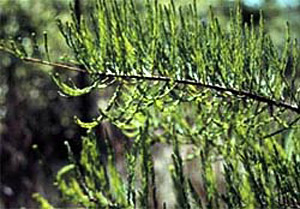
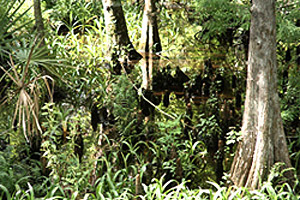
The pond cypress is smaller than the bald cypress and thrives near ponds with slow-moving or still water. In the Everglades, this cypress grows in low-nutrient soils resulting in slow growth. These trees are often referred to as dwarf cypress or “hat-rack” cypress. In contrast with the bald cypress, the pond cypress knees are rounded and blunt at the tips. Also the leaves are spirally arranged rather than in a single plane as with the bald cypress.
Other trees found within cypress swamps include:
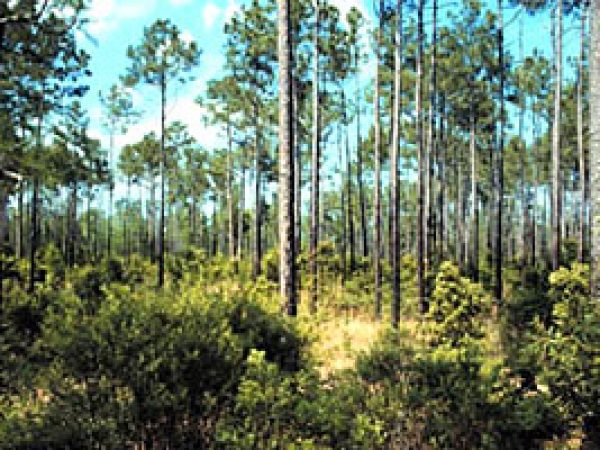
 Slash pine (Pinus elliotii). Photo courtesy NOAA
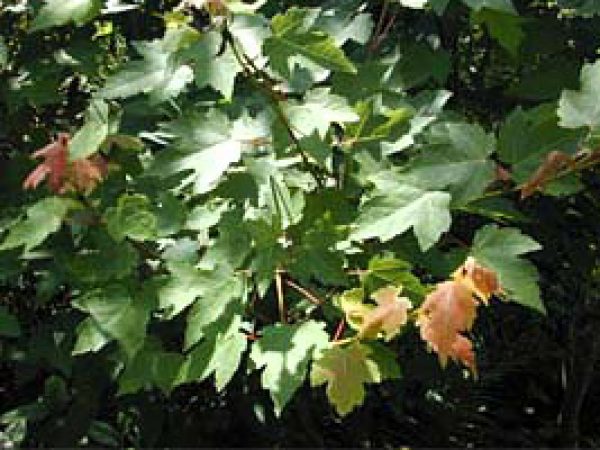
- Red maple (Acer rubrum). Photo courtesy U.S. Geological Survey
- Swamp tupelo (Nyssa sylvatica var. biflora). Photo © Steve Baskauf
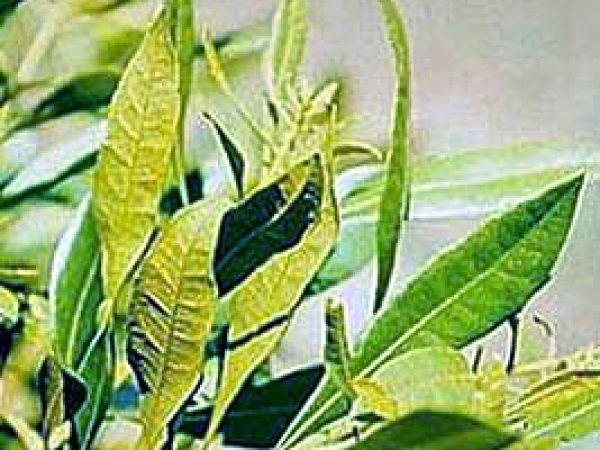
- Wax myrtle (Morella cerifera). Photo courtesy NOAA
- swamp bay (Persea palustris) [not shown]
Along with trees, other plants such as fetterbush (Leucothoe populufolia) and wax myrtle (Morella cerifera) as well as ferns, grasses, sedges, and vining plants are found in cypress swamps.
- Bromeliad. Photo courtesy U.S. Geological Survey
- Bromeliad. Photo courtesy U.S. Geological Survey
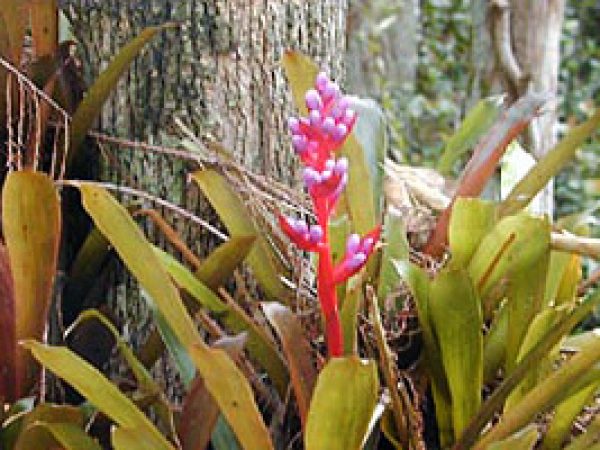
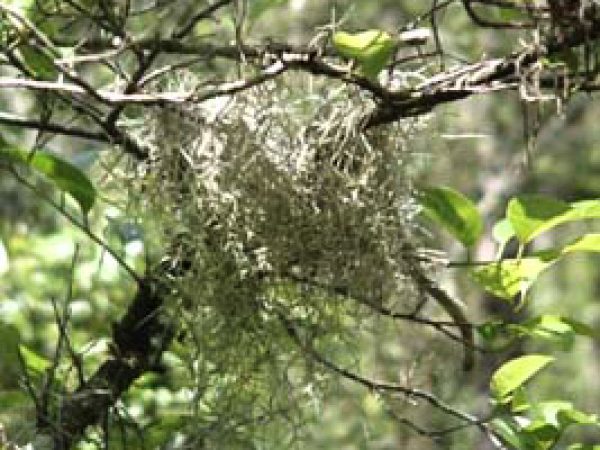
An epiphyte is a plant that grows on other living plants for support but does not harm the host plant. These include bromeliads, orchids, air plants, and spanish moss (Tillandsia usneoides) which all thrive among the trunk and branches of cypress trees.
Shrubs and groundcover grow along the outer edges of cypress swamps, including:
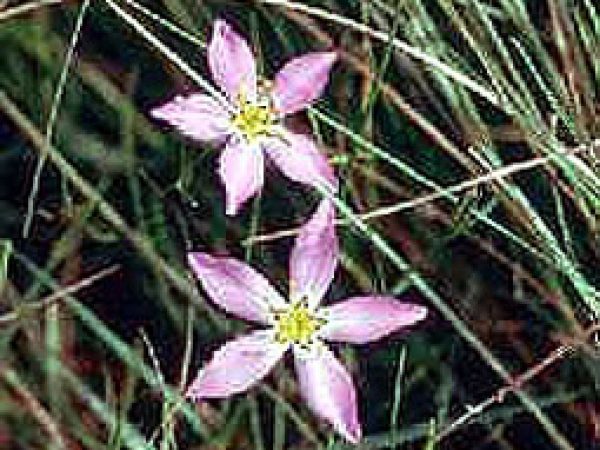
- Marsh pink (Sabatia stellaris). Photo courtesy National Park Service
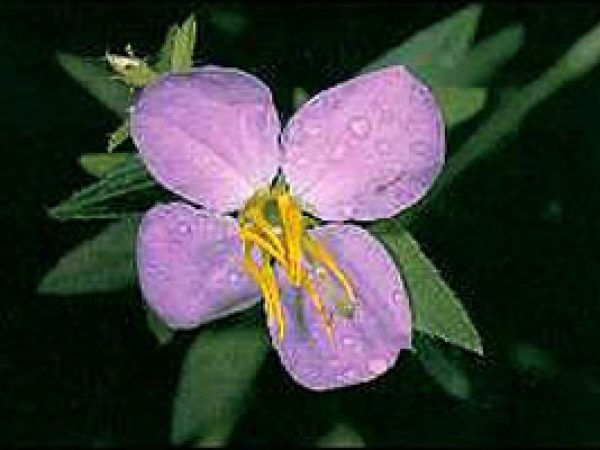
- Meadow beauty (Rhexia virginica). Photo courtesy U.S. Geological Survey
- Alligator lily (Hymenocallis palmeri). Photo courtesy National Park Service
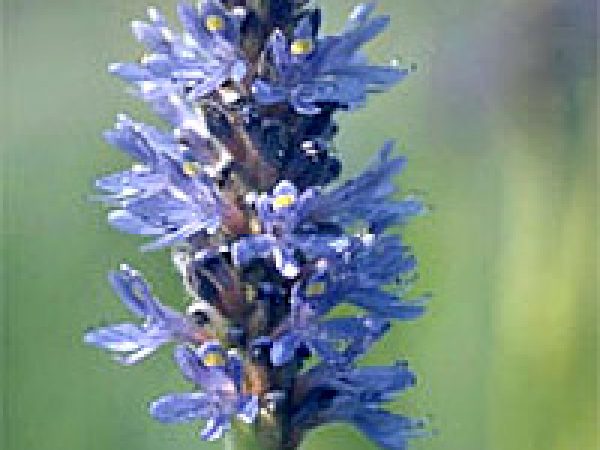
- Pickerel Weed © Frithjof Holmboe, California Academy of Sciences
- yellow-eyed grass (Xyris difformis) [not shown]
Native Fauna
Aquatic life is more diverse and abundant than terrestrial life within cypress swamps.
Although cypress habitats support few species of terrestrial wildlife, the water within cypress domes does support a variety of aquatic life. Invertebrates including crayfish, dragonfly larvae, and snails provide food for small fish and wading birds.
- Mosquitofish (Gambusia holbrooki). Photo courtesy U.S. Geological Survey
- Flagfish (Jordanella floridae). Photo courtesy South Florida Water Management District
- Golden topminnow (Fundulus chrysotus). Photo courtesy Noel Burkhead/Howard Jelks, U.S. Geological Survey
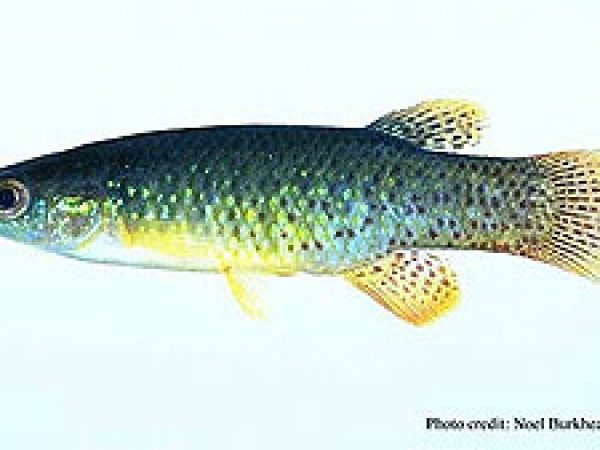
Common fishes in these shallow marsh habitats include marsh killifish (Fundulus confluentus), golden topminnows (Fundulus chrysotus), flagfish (Jordanella floridae), and the mosquitofish (Gambusia holbrooki). These fish are adapted for survival in aquatic habitats that dry seasonally. The marsh killifish is able to survive complete dessication by burying their eggs in the muds while the adult fish perish. These eggs hatch when flooding occurs at the beginning of the wet season, continuing the survival of the species. Other small fish, such as the mosquitofish, take refuge in rock cavities or crayfish burrows that maintain water levels until the rains come in the summer.
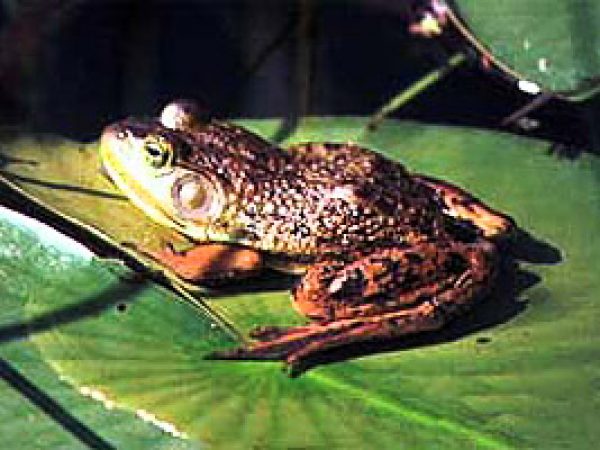
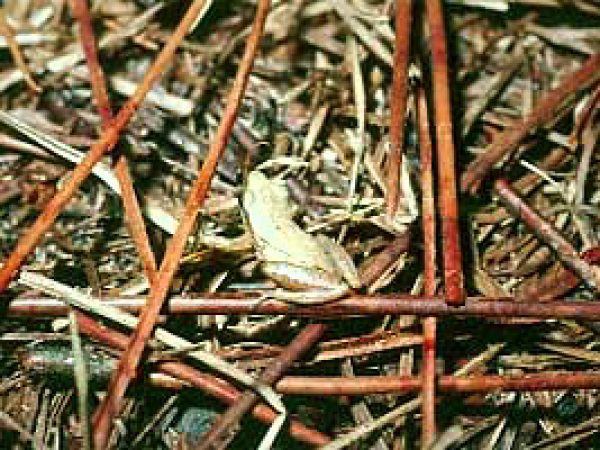
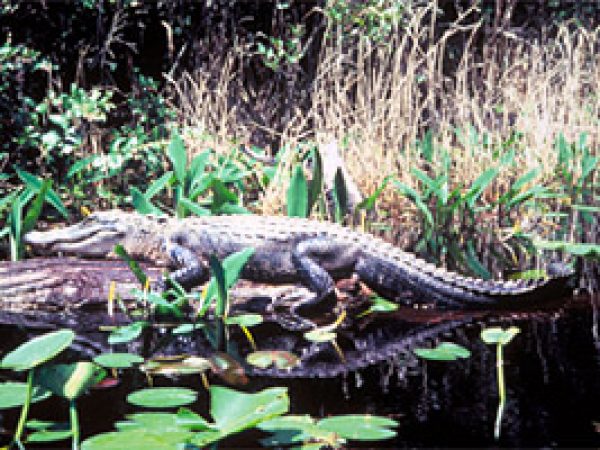
During the dry season, reptiles and amphibians frequent cypress domes in search of moisture. These species include:
- Bull frog (Rana catesbeiana). Photo courtesy Mike Mossman/U.S. Geological Survey
- Little grass frog (Pseudacris ocularis). Photo courtesy U.S. Geological Survey
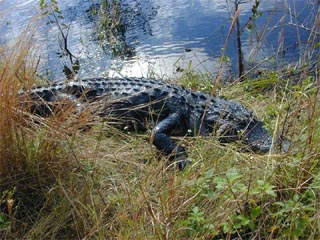
- American alligator (Alligator mississippiensis). Photo courtesy U.S. Fish and Wildlife Service
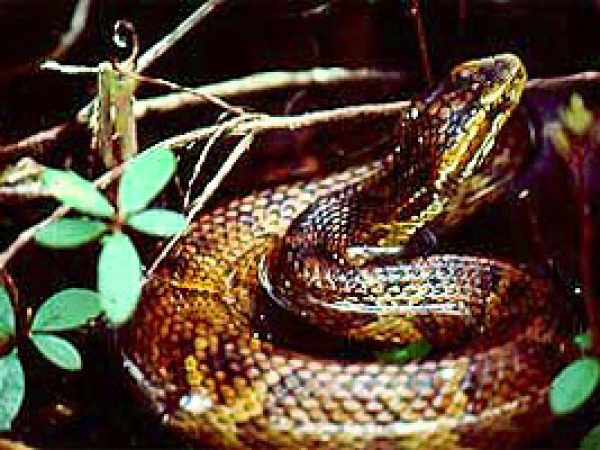
- Eastern cottonmouth (Agkistrodon piscivorus). Photo courtesy U. S. Fish and Wildlife Service
- Brown water snake (Nerodia taxispilota). Photo courtesy U.S. Fish and Wildlife Service
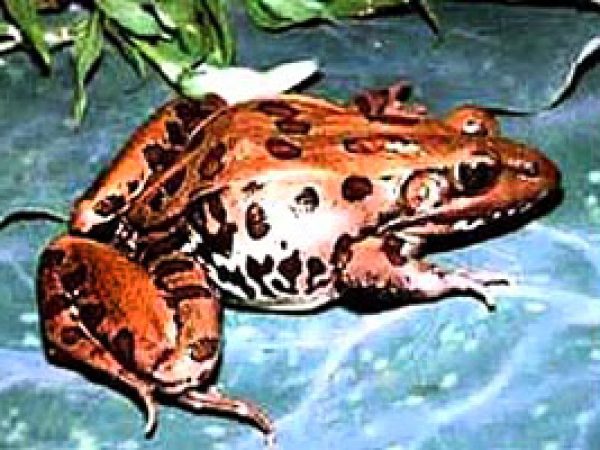
- Leopard frog (Rana sphenocephala). Photo © Kenneth Krysko
- Florida softshell turtle (Apalone ferox). Photo courtesy South Florida Water Management District
- Florida snapping turtle (Chelydra serpentina osceola). Photo courtesy U.S. Geological Survey
- South Florida swamp snake (Seminatrix pygaea cyclas) [not shown]
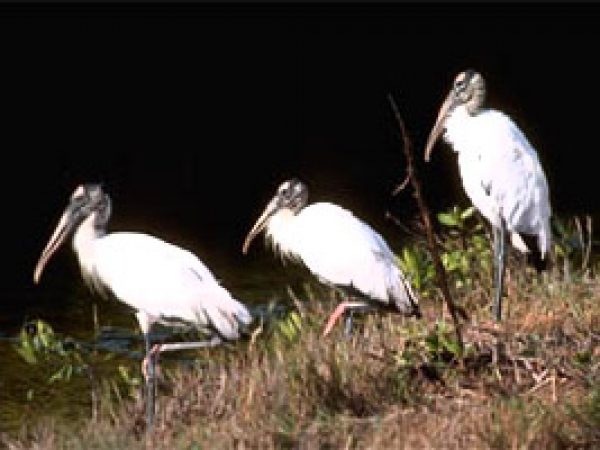
Cypress habitats are prime areas for feeding and nesting birds, including many that have threatened or endangered status. One example is the wood stork (Mycteria americana), an endangered species that is entirely dependent upon the wetlands of Florida. Within cypress swamps, this bird feeds on small freshwater fish and nests in the trees.
- Wood storks (Mycteria americana). Photo © Gerald and Buff Corsi, California Academy of Sciences
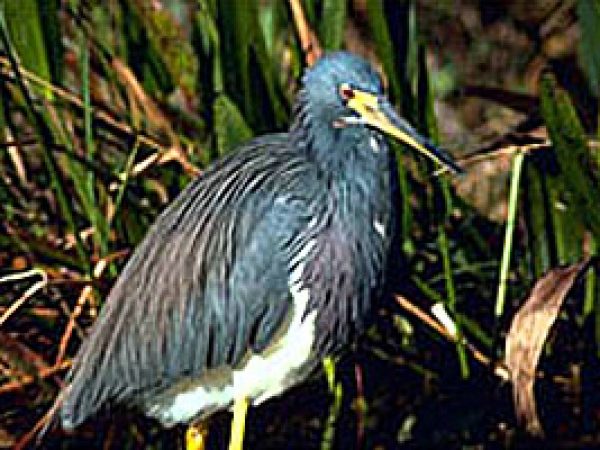
- Tricolored heron (Egretta tricolor). Photo courtesy U.S. Fish and Wildlife Service
- Double-crested cormorant (Phalacrocorax auritus). Photo courtesy U.S. Geological Survey
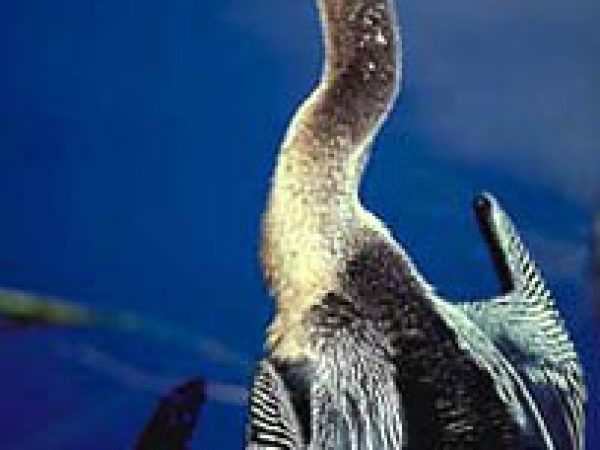
- Anhinga (Anhinga anhinga). Photo courtesy U.S. Geological Survey
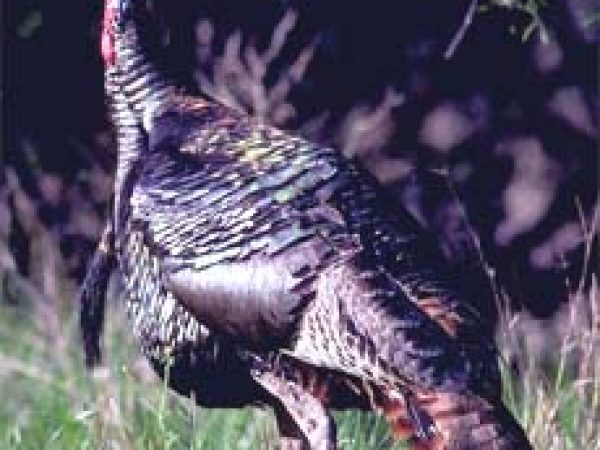
- Wild turkey (Meleagris gallopavo). Photo courtesy A. Wilson/U.S. Geological Survey
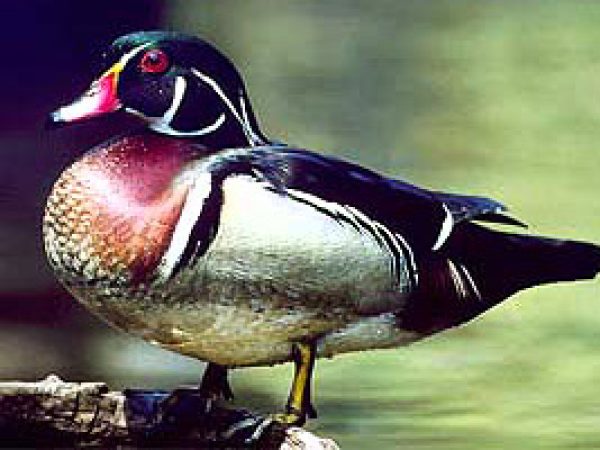
- Wood duck (Aix sponsa). Photo courtesy U.S. Geological Survey
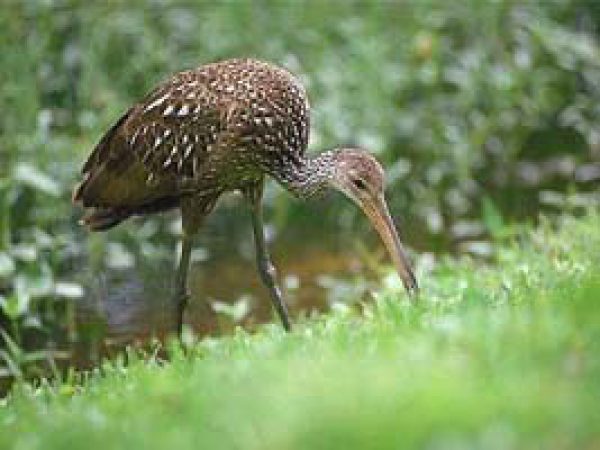
- Limpkin (Aramus guarauna). Photo courtesy South Florida Water Management District
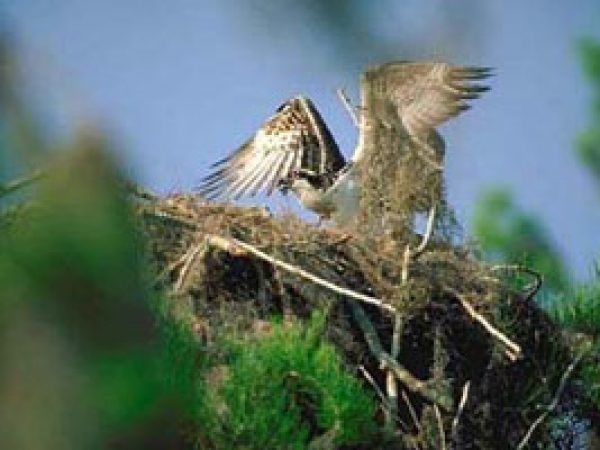
- Osprey (Pandion haliaetus). Photo courtesy NOAA
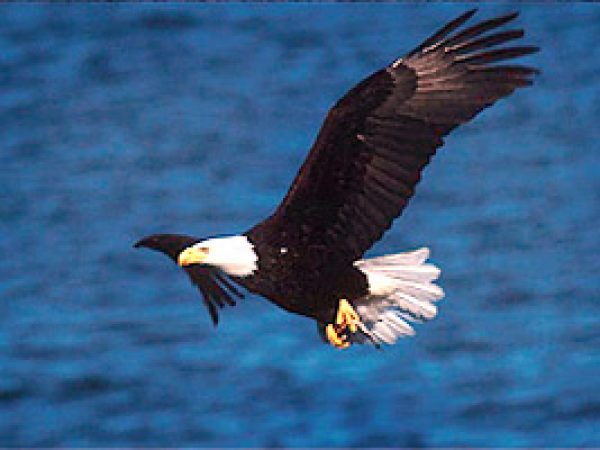
- Southern Bald Eagle (Haliaeetus leucocephalus leucocephalus). Photo © John White
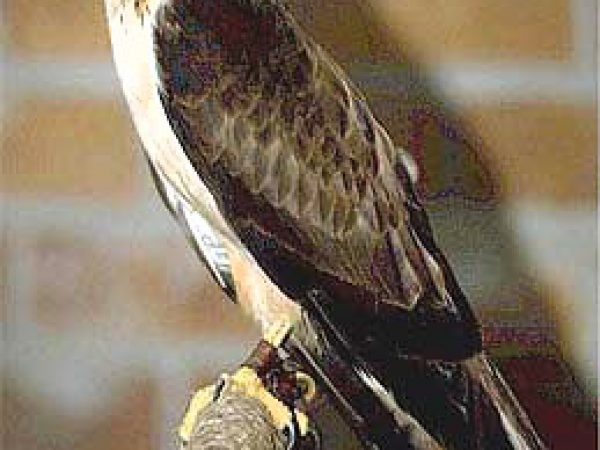
- Short-tailed hawk (Buteo brachyurus ). Photo courtesy Peter S. Weber/ U.S. Geological Survey
Mammals residing in the cypress swamps include:
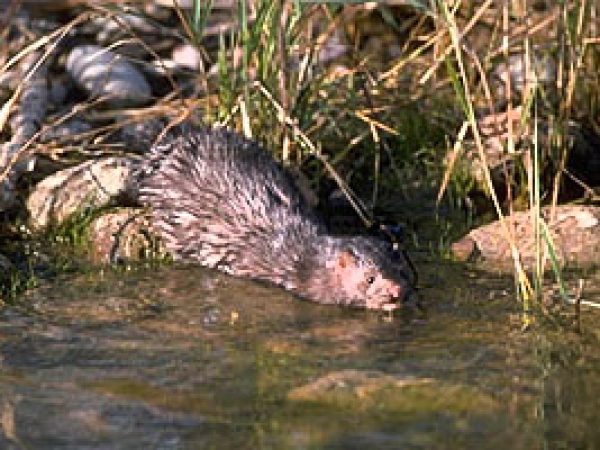
- Mink (Mustela vison). Photo © Gerald and Buff Corsi, California Academy of Sciences
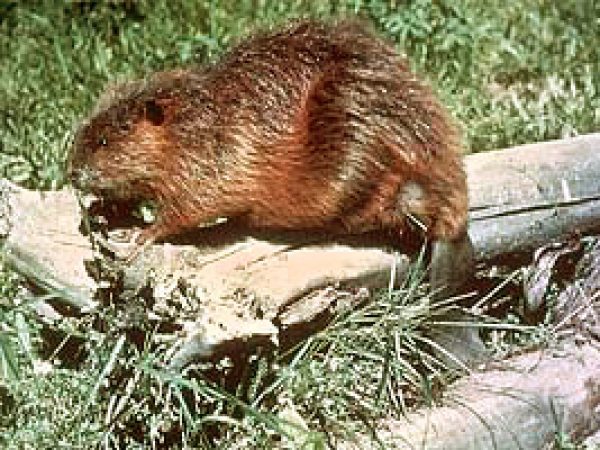
- Beaver (Castor canadensis). Photo courtesy Bill Banazewski/U.S. Fish and Wildlife Service
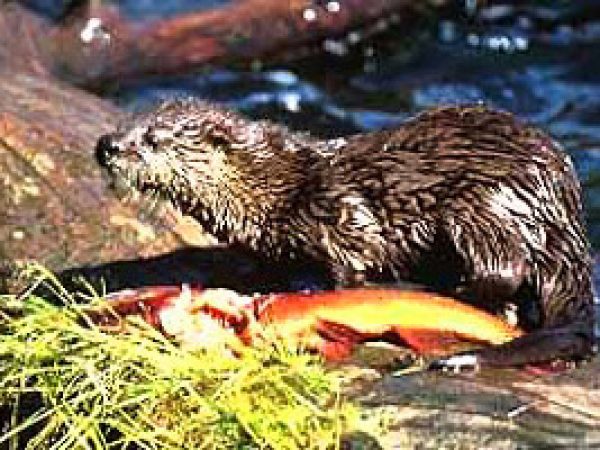
- River Otter (Lutra canadensis). Photo courtesy National Park Service
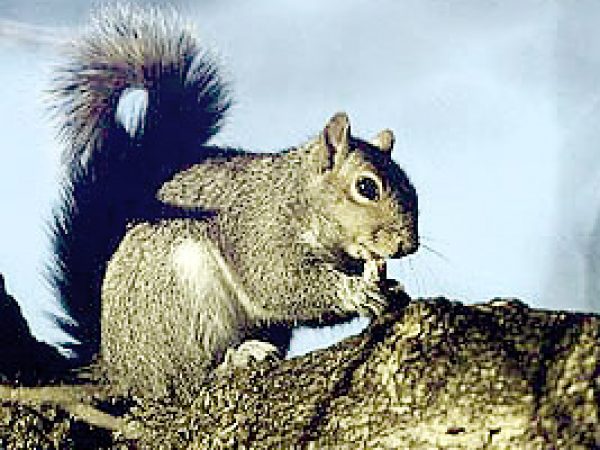
- Gray Squirrel (Sciurus carolinensis). Photo courtesy U.S. Geological Survey
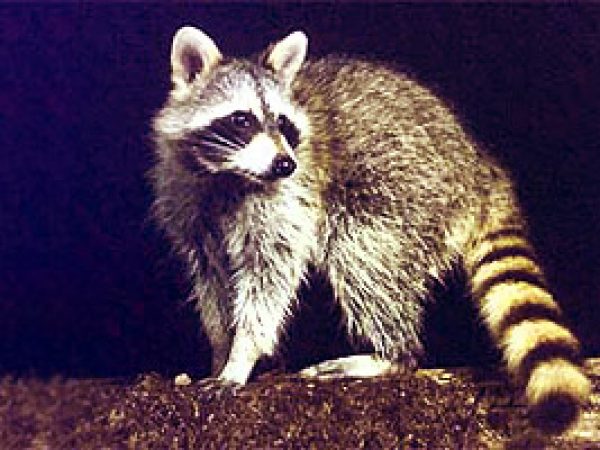
- Raccoon (Procyon lotor). Photo courtesy U.S. Geological Survey
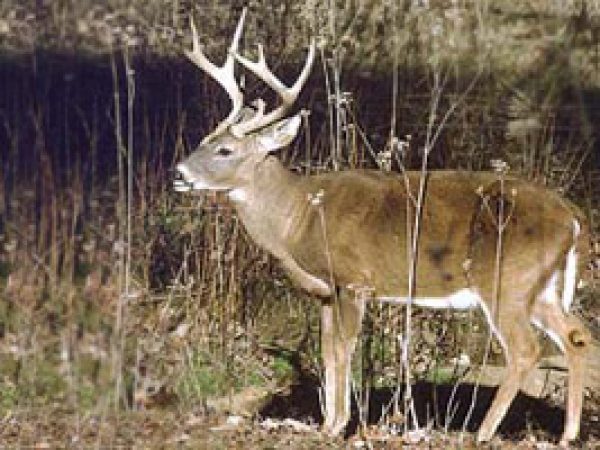
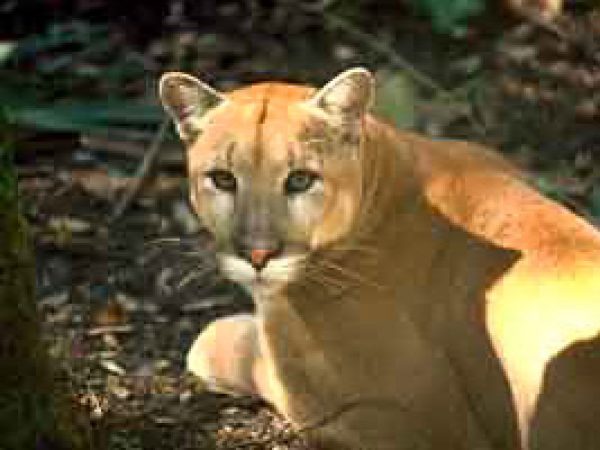
White-tailed deer (Odocoileus virginianus) and the Florida panther (Felis concolor coryi) utilize cypress habitats for daytime bedding.
- White-tailed Deer (Odocoileus virginianus). Photo courtesy U.S. Geological Survey
- Florida panther (Felis concolor coryi). Photo courtesy South Florida Water Management District