Thanks to the Florida Museum of Natural History Travelling Award, I recently had an incredible opportunity to visit the Missouri Botanical Garden to further my research on the evolution of African flora, through utilizing Monopsis (Campanulaceae) as a model clade.
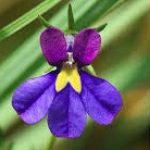
Africa is home to a stunning diversity of plants and animals, many of which are found nowhere else in the world. Yet, the evolutionary processes and historical environmental changes that might have shaped this diversity remain largely unresolved. My research uses Monopsis, a genus of about 15 species, endemic to sub-Saharan Africa, as a model to unravel these mysteries. These plants occur across a wide range of ecosystems, ranging from the Mediterranean ecosystem in the Cape Floristic Region to arid ecosystems in the Succulent Karoo, and tropical forests in Central and Eastern Africa, making them a valuable tool to explore how geography, climate change, and tectonic shifts have shaped African biodiversity.
The success of this ambitious yet feasible study relies on herbarium specimens because of financial and other logistical challenges of conducting fieldwork across the sub-Saharan African region. Many of the species I’m studying are rare, vulnerable, or found in isolated or politically sensitive areas, which further complicates their accessibility. To get samples of these species, I recently visited the Missouri Botanical Garden, which holds one of the most comprehensive African plant collections in the world.
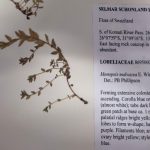
During my time at the Missouri Botanical Garden (MGB), I sampled over 350 herbarium specimens from the Campanulaceae family. By leveraging MBG’s vast collection, I accessed plant materials that span decades and continents, just from a single location. I will use these specimens to extract DNA for further molecular phylogenetics analyses. This will help to answer key questions about when and how Monopsis species evolved, how they spread across different regions, and how they adapted to new environments over time, thus giving an overall view of African flora’s evolution.
This research does not only contributes to a deeper understanding of African plant evolution but also supports biodiversity conservation by clarifying patterns of endemism and ecological specialization.
Stay tuned for updates as the molecular work progresses. I’m excited to continue piecing together the story of Africa’s remarkable flora, one leaf at a time.
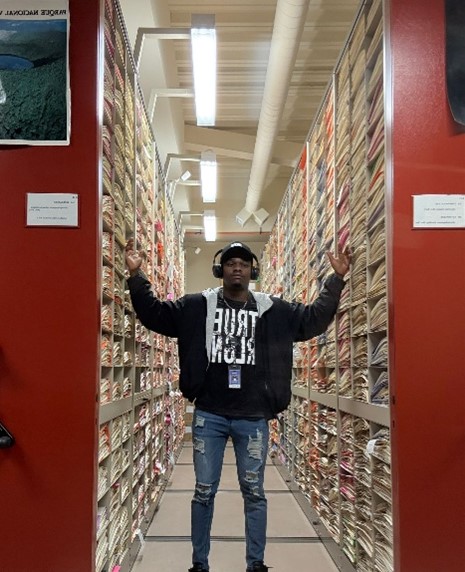
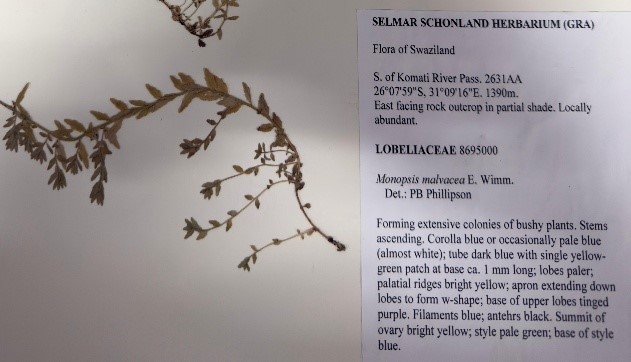
Lungelo Khanyile is a graduate student pursuing their Ph.D. in through the College of Liberal Arts and Sciences, Department of Biology, advised by Dr. Nico Cellinese, Curator and Professor in Herbarium and Informatics here at the Florida Museum.
The 2025 Summer Graduate Student Travel Awards are supported by the FLMNH Department of Natural History using funds from the Louis C. and Jane Gapenski Endowment. If you would like to help support these funds for future student awards, please go to:
Louis C. and Jane Gapenski Endowment