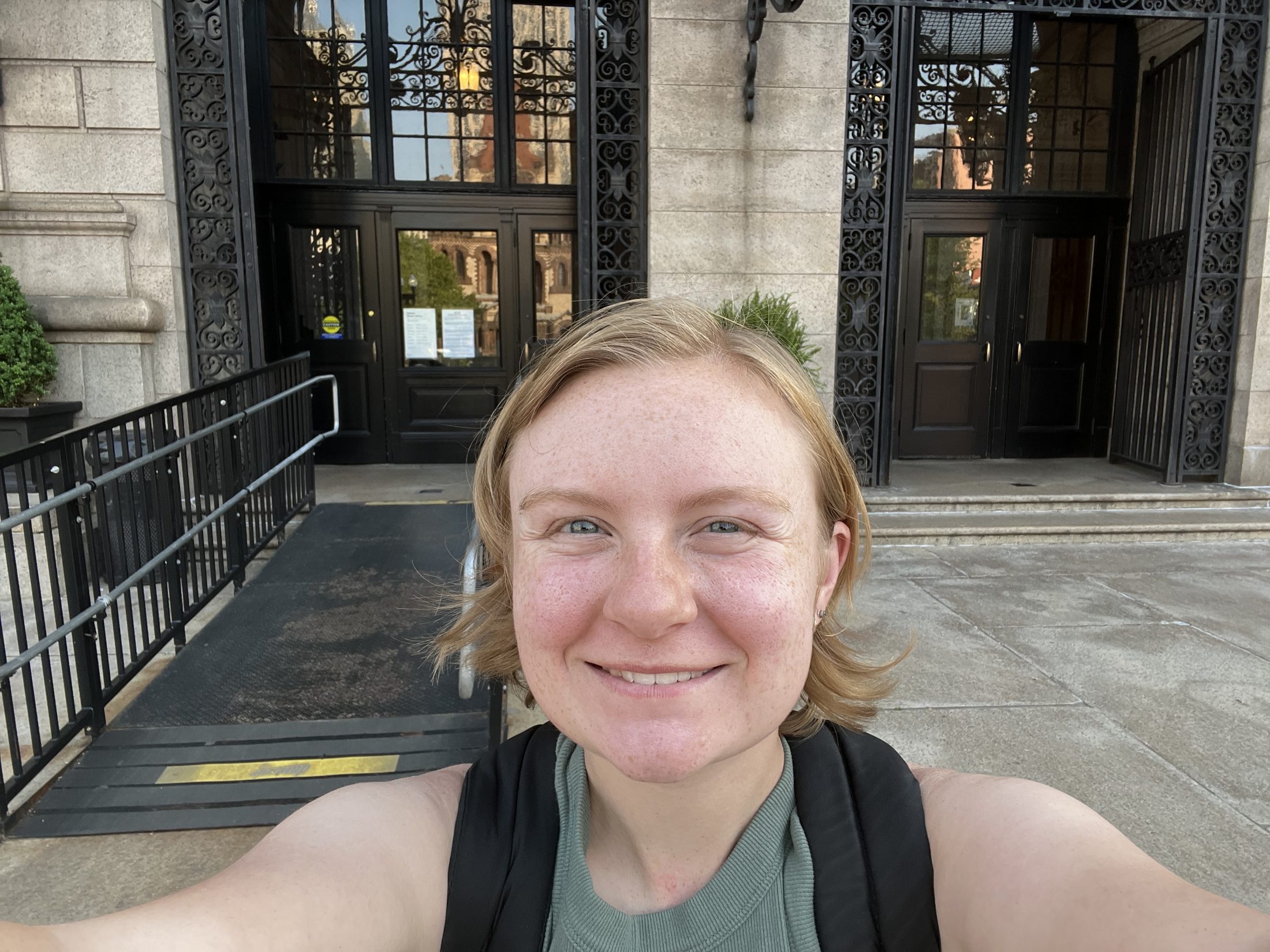
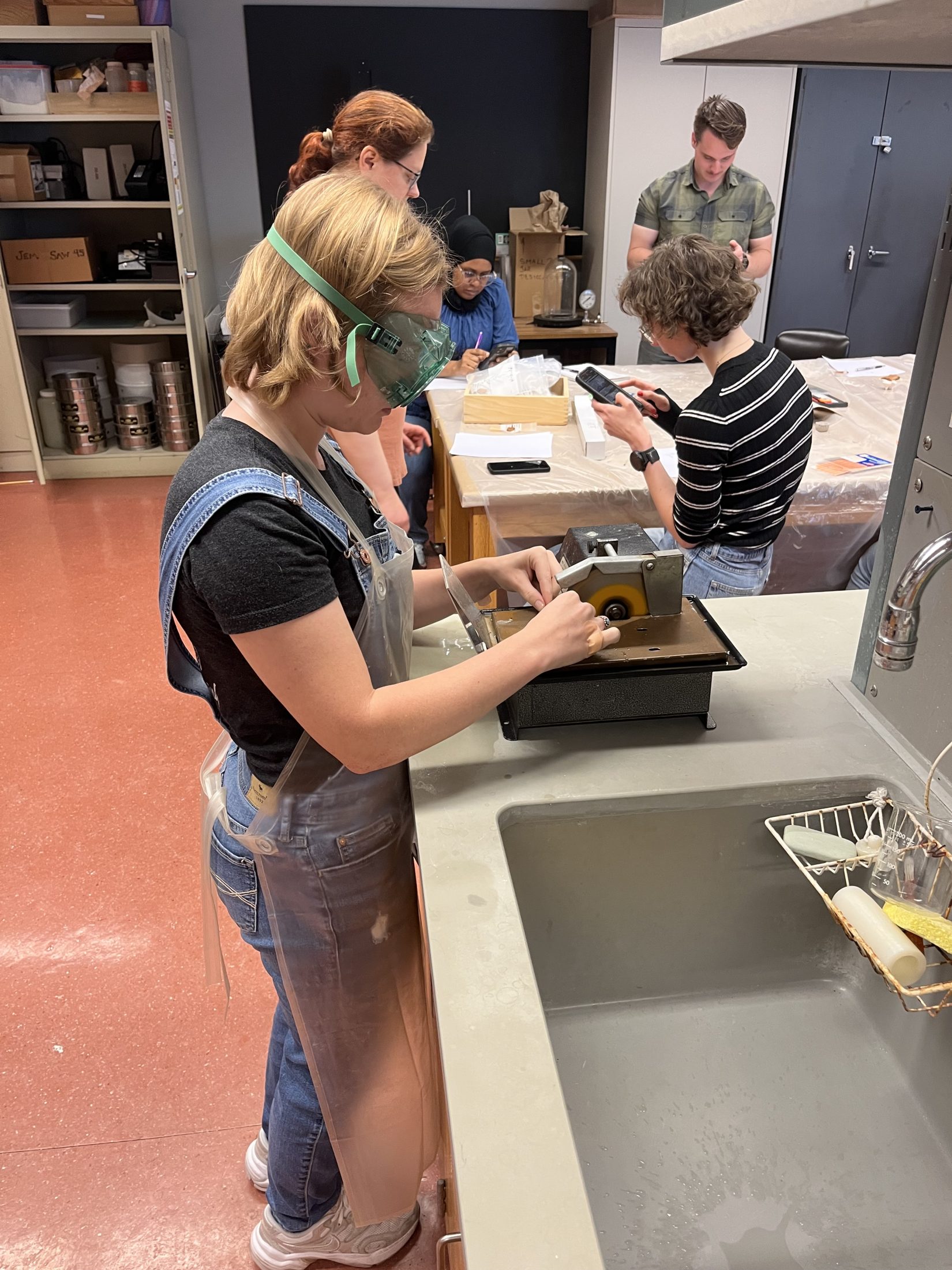
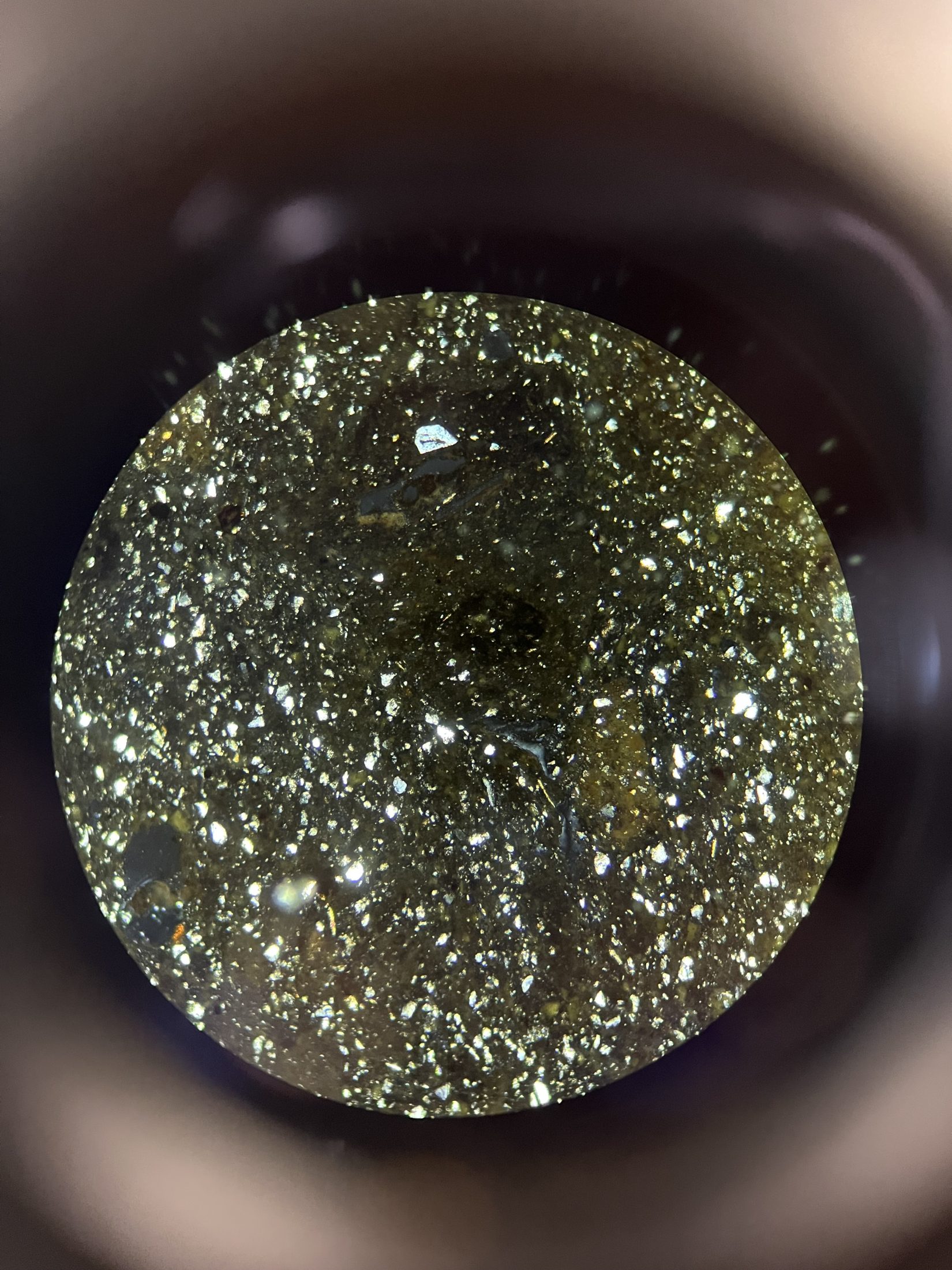
From June 8th to June 27th, 2025, I completed the Summer Intensive Course in Ceramic Petrography with the Center for Materials Research in Archaeology and Ethnography at the Massachusetts Institute of Technology. This three-week intensive course was an introduction to the geological technique called petrography and how this technique can be applied toward archaeological ceramics. Going into this experience, I already understood that petrography was when you observe a sample in a microscope slide through a specialized microscope to characterize the sample. Through this program I was able to learn more about mineral identification, how to prepare thin section samples, and how to categorize ceramic assemblages through petrography. My first week at MIT was focused on minerology and how to identify minerals through petrographic microscopes. We spent much of this time looking at rocks of various sizes to become fluent in recognizing some of the main mineral types present in clays.
My second week of the program was focused on archaeological pottery. We observed a variety of pottery in thin section to become familiar with different types of clays, clay-additives, and crafting techniques found across the world. During this time, I was able to apply my learnt knowledge about minerals and pottery techniques to categorize pottery with shared characteristics. Learning how to categorize pottery in thin section was one of the most important techniques I took away from this experience. By learning how to group the pottery samples, I can identify different types of pottery, regional differences, and/ or cultural preferences within an assemblage of pottery.
The third week of the intensive course was when I was able to take the information I learned from the previous two weeks and apply it to the ceramic assemblage I brought with me. I brought ten thin sections from my sample pottery found at sites in northern Louisiana. This sample is the focus of my master’s project revisiting Late Woodland and Early Mississippian period pottery in northern Louisiana. During the third week of the course, I was able to observe my samples with my instructors and MIT resources to create a layout for my master’s project. After spending the last week studying my ceramic assemblage, I was able to group my samples based on the techniques I learned during this course.
Leaving this experience, I know I learned a lot of new information that I will be able to apply and build upon for my master’s project and beyond. At the Florida Museum of Natural History’s Ceramic Technology Lab, I will be able to continue my petrographic studies using the techniques I learned at MIT and the resources my instructors opened up to me. The Summer Intensive Course in Ceramic Petrography was a valuable program that I really appreciate having the opportunity to be a part of.
Gloria Church is a graduate student pursuing a M.A. through the College of Liberal Arts and Science, Department of Anthropology, advised by Dr. Neill Wallis, Curator of Florida Archaeology here at the Florida Museum.
The 2025 Summer Graduate Student Travel Awards are supported by the FLMNH Department of Natural History using funds from the Louis C. and Jane Gapenski Endowment. If you would like to help support these funds for future student awards, please go to:
Louis C. and Jane Gapenski Endowment