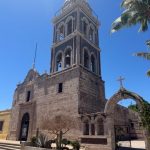
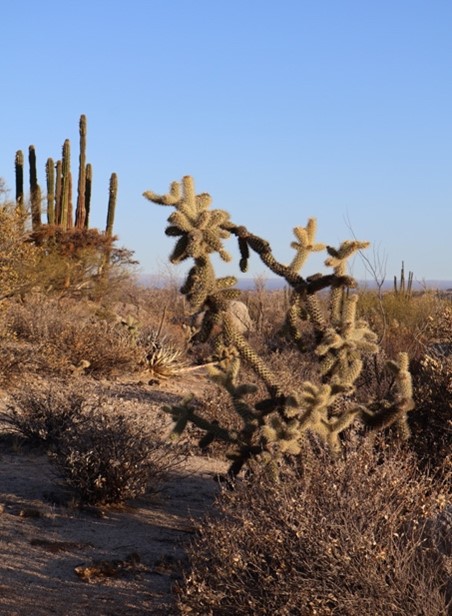
Tucked between the Pacific Ocean and the Gulf of California, the Baja California peninsula is a botanical treasure trove. This slender stretch of northwestern Mexico boasts an astonishing array of plant life, many species found nowhere else on Earth. From misty conifer forests in the north to sunbaked deserts in the south, Baja’s diverse habitats make it a living laboratory for scientists exploring how plants adapt and evolve.
The story of Baja’s flora is deeply intertwined with human history. When Jesuit missionaries first arrived in 1697, along with their efforts to spread religion, they were also taking notes. As they established missions across the peninsula, they carefully recorded the landscape around them: rugged mountains, hidden springs, fertile valleys, and the native plants that colored their surroundings. Their observations laid the groundwork for future botanical exploration.
Fast forward to the 20th century, and Baja California drew the attention of botanists like Shreve and Wiggins, whose 1964 work helped define four major floristic regions based on rainfall, climate, and vegetation types. Howard Gentry followed with his own influential studies, painting a more detailed picture of this ecologically rich peninsula.
Today, the work continues. Modern researchers are refining ecoregion boundaries and asking new questions about plant distributions, climate resilience, and evolutionary patterns. Each discovery adds another layer to the fascinating story of Baja California’s unique flora, one that still being written in the field.
One question in particular piqued my interest: Do changes in plant communities and environmental factors across Baja California’s different ecosystems influence the structure of flowers within a species?
To explore this, I’m focusing on an iconic desert genus: Fouquieria.
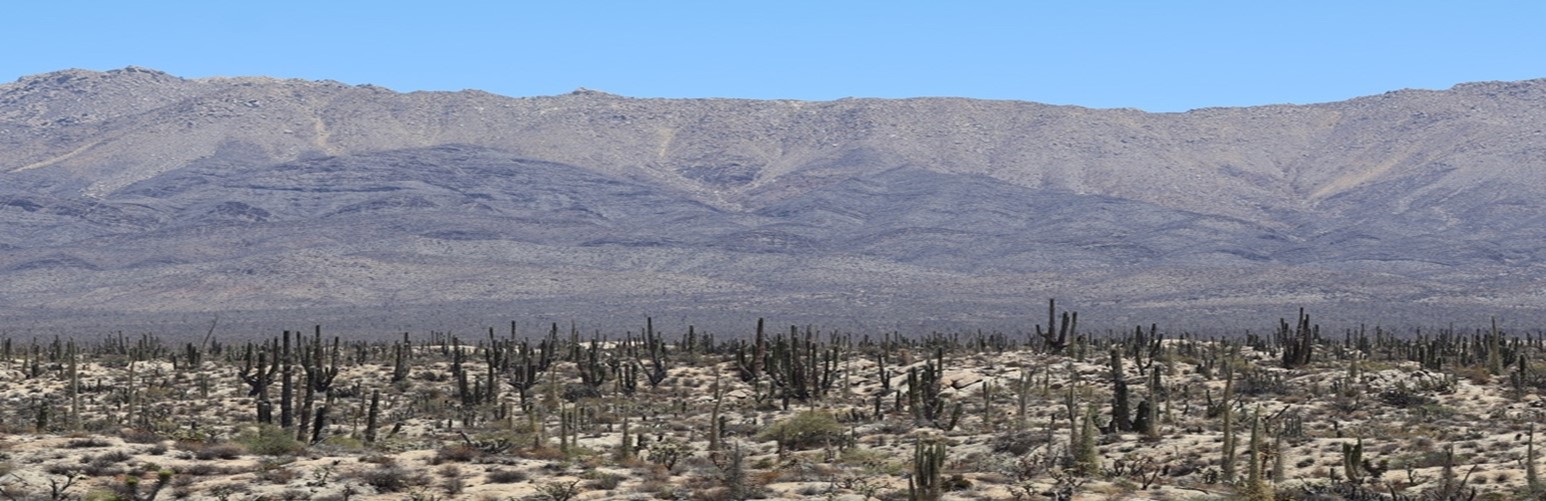
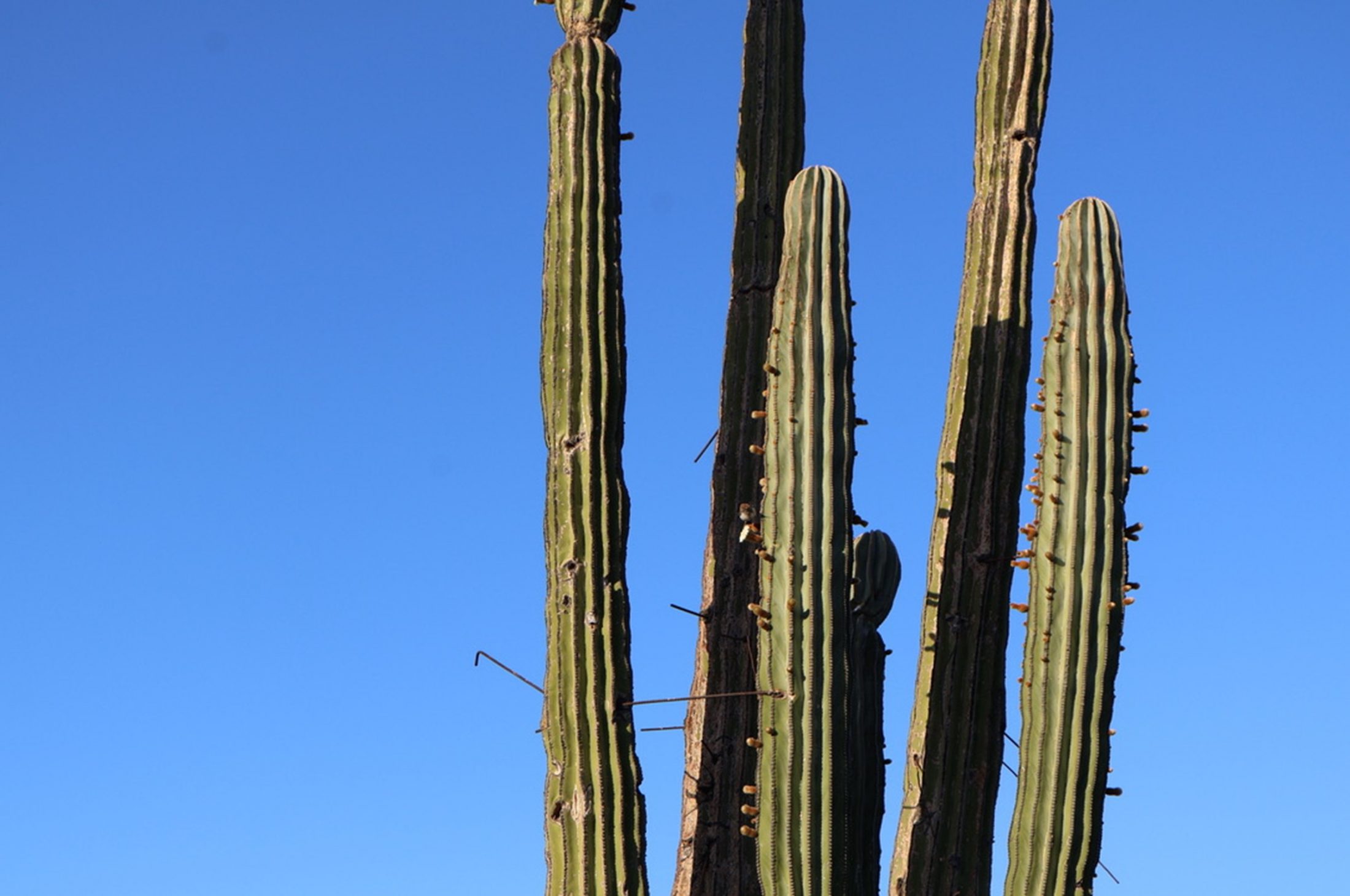
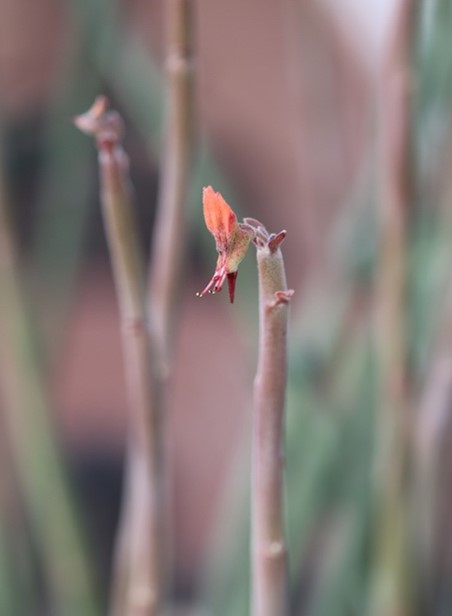
If you’ve ever wandered the deserts of the American Southwest or northern Mexico, you’ve probably seen a Fouquieria. Their tall, twisted forms and fiery flowers light up the desert landscape. Some, like Fouquieria splendens, commonly known as ocotillo, are widespread. Others, like F. columnaris, F. diguetii, and F. burragei, are found only in Baja California. What makes this group especially fascinating is that their ranges often overlap, and they thrive across different ecoregions, making them an ideal system for studying how environmental variation shapes floral traits.
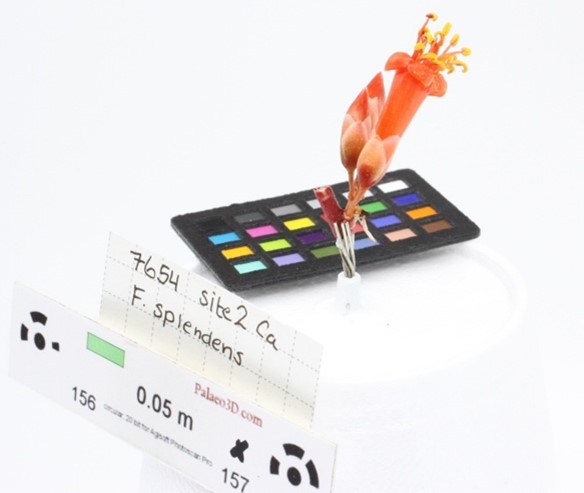
To tackle my question, I turned to photogrammetry. This method allows us to create 3D models of flowers from photographs, which we can then analyze using geometric morphometrics to study subtle differences in shape to even color. But before we can analyze, we need the real thing… fresh flowers.
Like many desert plants, Fouquieria species have evolved to make the most of fleeting moisture. Their flowering is closely tied to rainfall, which varies dramatically across the Baja California peninsula. In the north, most precipitation arrives in early spring, while the southern regions rely on summer monsoons. Timing is everything. So, in late April, just after the northern rains, I headed into the field to catch Fouquieria in bloom, supported by the B.J. and Eve Wilder Endowment at the Florida Museum.
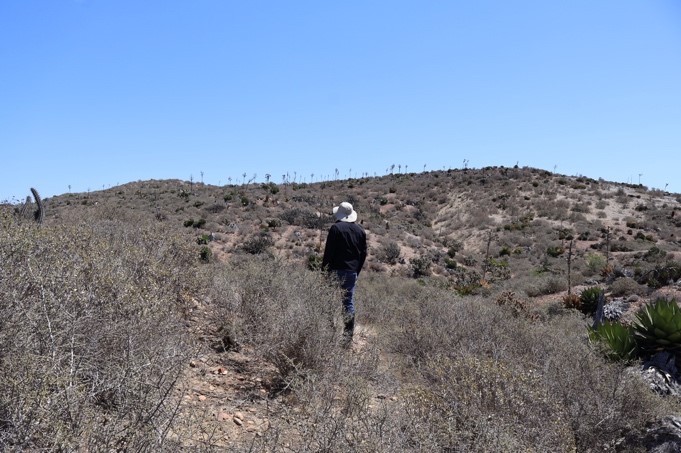
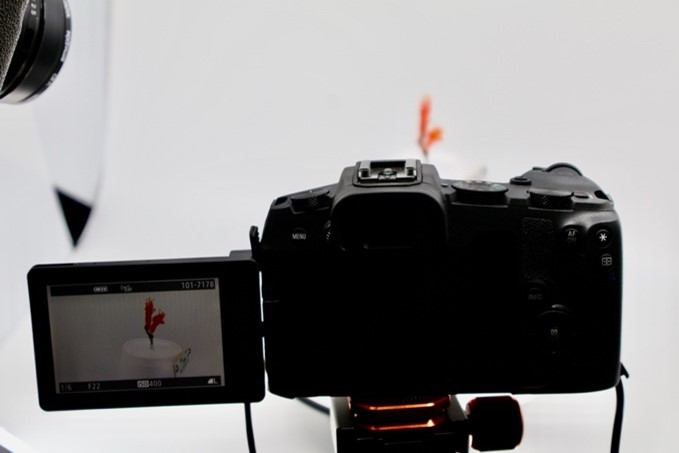
In collaboration with the Universidad Autónoma de Baja California, I teamed up with Carlos Hernández, a master’s student and botanist. Together, we set out into the desert, crisscrossing ecoregions in search of blooming populations. Every evening, after a long day in the field, we set up a photo studio at the hotel. Using equipment provided by the Imaging Department at the Florida Museum, we placed each flower on a turntable and captured it from various angles, to capture 180 images per specimen.
This project has given me more than data. It’s deepened my connection to my research system and built bridges with Mexican botanists whose knowledge and insight are invaluable. As we piece together the evolutionary story of these desert plants, we’re also writing a new chapter, one rooted in collaboration, curiosity, and a shared love for Baja’s extraordinary flora.
Emeline Pano is a graduate student pursuing a Ph.D. through the College of Liberal Arts and Sciences, Department of Biology, advised by Dr. Nico Cellinese, Curator and Professor in Herbarium and Informatics here at the Florida Museum.
The 2025 Spring Graduate Student Travel Awards are supported by the FLMNH Department of Natural History using funds from the Louis C. and Jane Gapenski Endowment, B.J. and Eve Wilder Endowment, and the Dr. Madelyn M. Lockhart Endowment. If you would like to help support these funds for future student awards, please go to:
Louis C. and Jane Gapenski Endowment
B.J. and Eve Wilder Endowment
Dr. Madelyn M. Lockhart Endowment