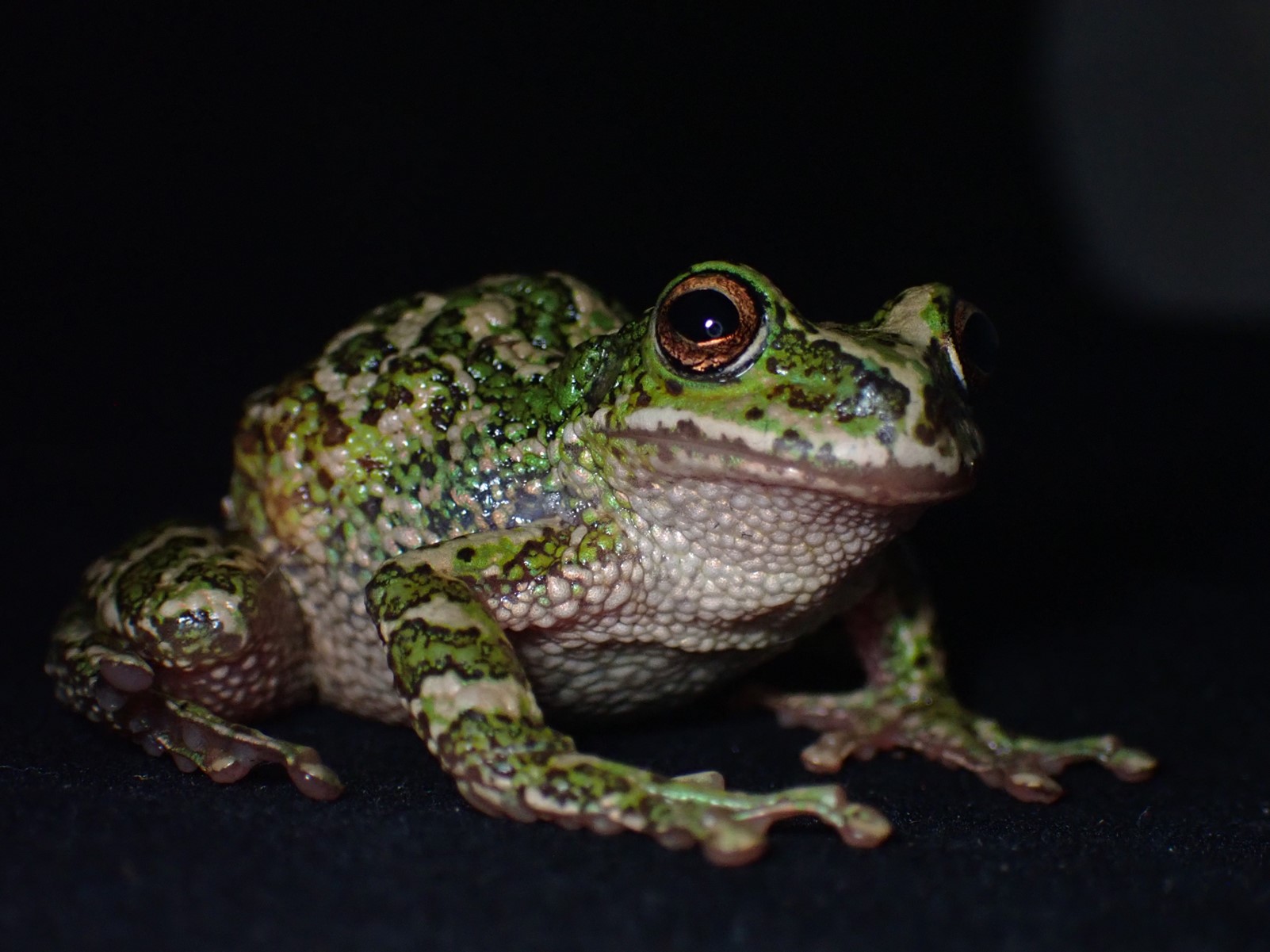
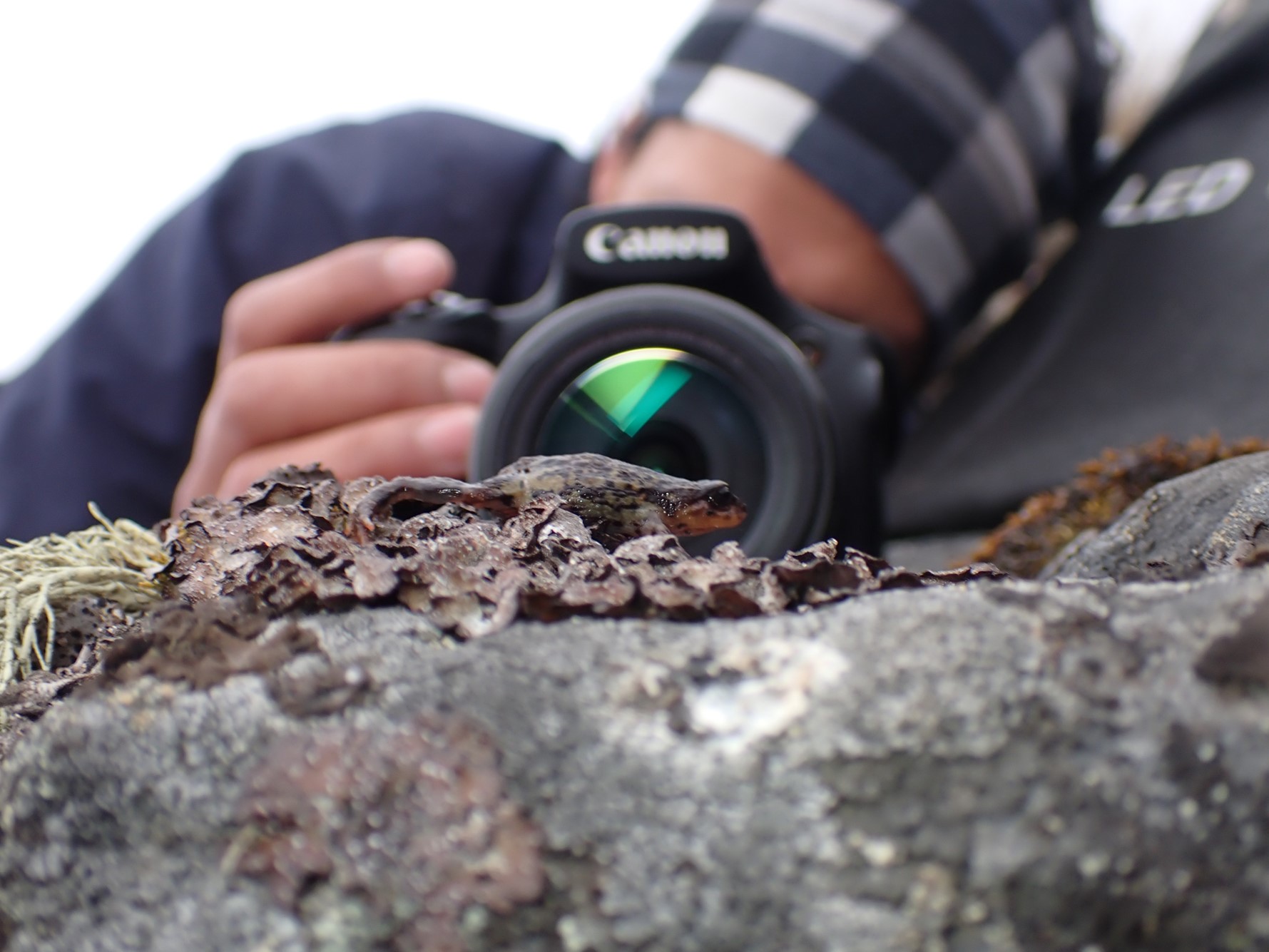
This summer I had the unique opportunity to conduct preliminary research in La Paz, Bolivia at the base of Mt. Illimani (Fig. 1). I was searching for Microkayla, a group of cryptic brown frogs found at high elevations within Bolivian mountains. These tiny marvels display high levels of microendemism and impressive ability to survive harsh climates. However, many Microkayla species are critically endangered or, at best, data deficient. My dissertation focuses on understanding the behavior, physiology, and distribution of these frogs in order to aid conservation efforts. My fieldwork this summer, supported by the FLMNH Summer Travel grant, allowed me to visit my field site for the first time and gain a better understanding of the logistical aspects of working in Microkayla habitat. Additionally, I was able to foster connections with Bolivian Amphibian Initiative (BAI), a non-profit organization dedicated to amphibian conservation within Bolivia. With the help of BAI, I was finally able to see individuals of Microkayla sp. Nov in person for the first time in Illimani near Totoral (fig 2). During this time, I also started cultivating personal relationships with the community of Totoral. I will be interacting with this community extensively over the next couple of years, so it was exciting to start building these friendships over afternoon soccer games and casual chats. These friendly matches also act as a humble reminder to constantly work on your cardio because it is extremely tiring to run at 3,600+ meters! In addition to fieldwork, I visited two museum collections; The Natural History Museum Alcide d’Orbigny in Cochabamba and the Bolivian Fauna Collection in La Paz. During my visits, I collected corporal measurements of museum specimens and occurrence point data. I also fostered meaningful connections with the museum staff over some delicious salteñas and tea.
Additionally, I had the opportunity to assist BAI on their summer expeditions funded by the National Geographic grant “In Search of the Remaining Amphibian Populations in the Bolivian Andes”. I went as a research assistant on two trips where the objective was to catalogue new localities of Telmatobius, aquatic water frogs, and Microkayla. We searched in two main areas; the mountains at the border of Bolivia and Chile and the mountains near Cochabamba. Excitingly, we may have found some new species, so keep an eye out for publications from BAI at https://bolivianamphibian.org/. These trips acted as a bootcamp of sorts, where BAI taught me how to prepare and plan for fieldwork in the Andes and the best way to find frogs once you got there. Something particularly cool was that we utilized an electric backpack to stun the aquatic frogs, allowing us to more effectively survey the boffedales (streams) that these frogs inhabit (fig 3). I am extremely grateful for the BAI team and the time we spent together this summer (fig 4). In addition to making me feel welcome and secure during these trips, they are going to act as vital mentors throughout my dissertation.
Aleida Iriarte is a graduate student pursuing a Ph.D. through the College of IFAS, School of Natural Resources and Environment, advised by Dr. David Blackburn, Curator of Herpetology and Associate Director of Research and Collections.
The 2025 Summer Graduate Student Travel Awards are supported by the FLMNH Department of Natural History using funds from the Louis C. and Jane Gapenski Endowment. If you would like to help support these funds for future student awards, please go to: