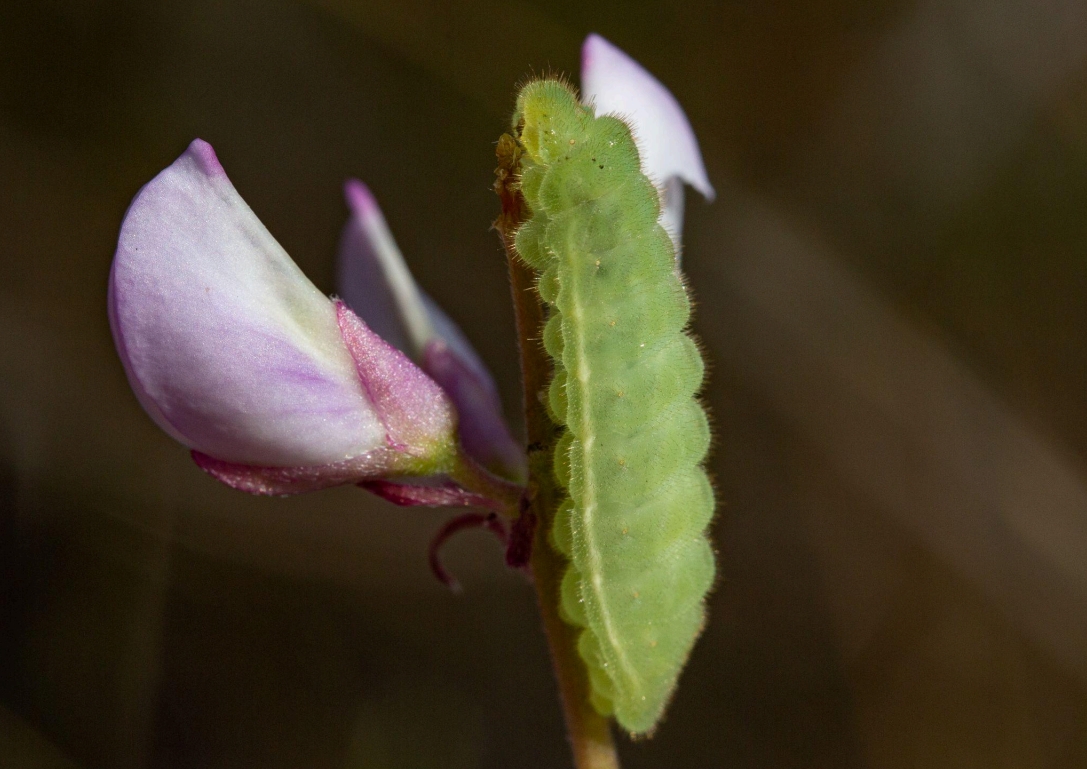
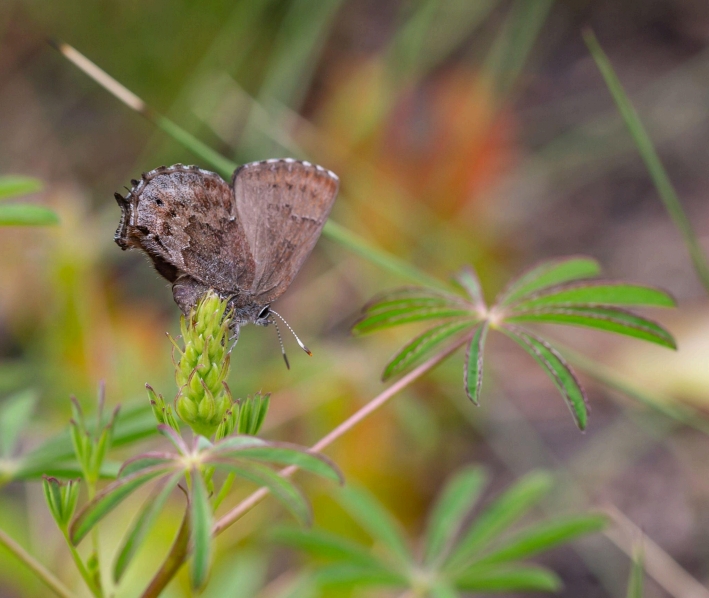
In April and May 2025, the Daniels lab traveled to several areas in Virginia and North Carolina for work focused on the frosted elfin butterfly, Callophrys irus. Though C. irus’ distribution historically occurred from Florida up the eastern seaboard to Canada, and west to Texas, it has been extirpated in portions of its former habitat, and its current status is unknown in many places. It is currently a candidate for listing under the Endangered Species Act. In 2020, US Fish and Wildlife Service asked our lab to assess the range-wide population genetic structure of this butterfly, to inform listing. Using nondestructive techniques, samples were collected by partners in eight states and sent to us in Florida for analysis. Our study generated the first population-level analysis for C. irus. We also generated the first genome assembly. And in 2022, our lab began a captive breeding program for this organism, based on Florida populations.
In early 2024, USFWS reached out to us after conversations with partners working in Virginia and North Carolina. These partners reported their C. irus populations were extirpated in portions of its range and were in decline in many places. They requested our lab’s assistance in starting an assurance population and subsequent captive breeding program to advance recovery efforts through future reintroductions and augmentations. Initial surveys by our lab in 2024 proved to be a little late in the season- elfins are univoltine, so adults/immatures can only be found for a short portion of each year, in the early spring.
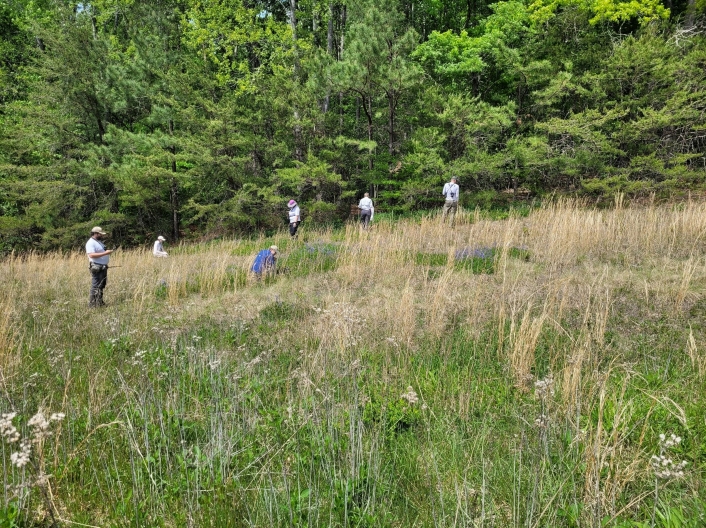
So, this is how we found ourselves on a military base in Virginia this April, looking for larvae. We had planned a whirlwind five-day trip, with field work planned for four of the five days. From small right of ways on private properties to gamelands to multiple sites within a military base, our goal was to locate elfin immatures to begin a VA captive colony, as well as adults for genetic sampling. We also surveyed and met with partners in North Carolina.
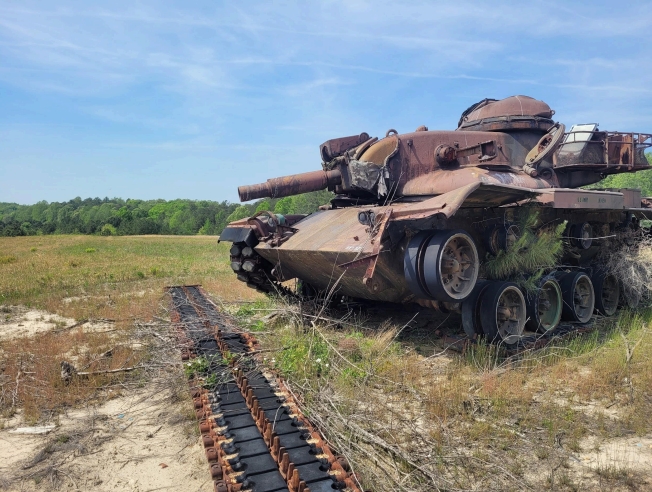
I’ve never thought about what aging explosive devices look like, or much about the dangers they present- but after watching a short presentation about unexploded ordnance, I resolved to just not pick up or get near odd looking trash on our surveys. One picture of an exploded hand was plenty to encourage an abundance of caution. The military base was very active, with lots going on, and actually quite beautiful. I’ve always thought it is an untapped PR story and very well kept secret that many rare and imperiled species of butterflies simply thrive on the disturbed habitats bomb ranges create. Bombs and butterflies? Maybe not the most likely pair, but it really seems to work! Elfin habitat needs intermittent and patchy fire to remain healthyprescribed fire (standing in for historic wildfires) maintains the ecosystem and prevents plant community succession. When the bombs explode, they often start fires, but the fires do not cover the entire habitat, so there is a refuge for organisms in adjacent areas. For this species, stability does not mean preventing disturbance but actually encouraging it as a feature of the habitat.
Our first trip placed us a bit early for immatures, but right on time to collect some adult genetic samples. We were also able to dial in on focal areas to search for the second trip, which resulted in an impressive collection of 150+ elfin larvae. These were transported back to our lab.
As work in Virginia came to a close, there were still a couple of weeks of lab work back in Gainesville, rearing our collected caterpillars through to pupae. We saw very low mortality and were thrilled by finding a few new parasitoids (the silver lining in losing a caterpillar is learning something new!) We are well situated for work in 2026. Thanks to the Department of Natural History’s summer travel awards and awards committee for helping to fund this work!
Kristin Rossetti is a Conservation Coordinator in the Daniels Lab, advised by Dr. Jaret Daniels, Curator of Lepidoptera.
The 2025 Summer CMSS Travel Awards are supported by a combination of the Special Projects Fund and department funds. If you would like to help support these funds for future CMSS awards, please go to: