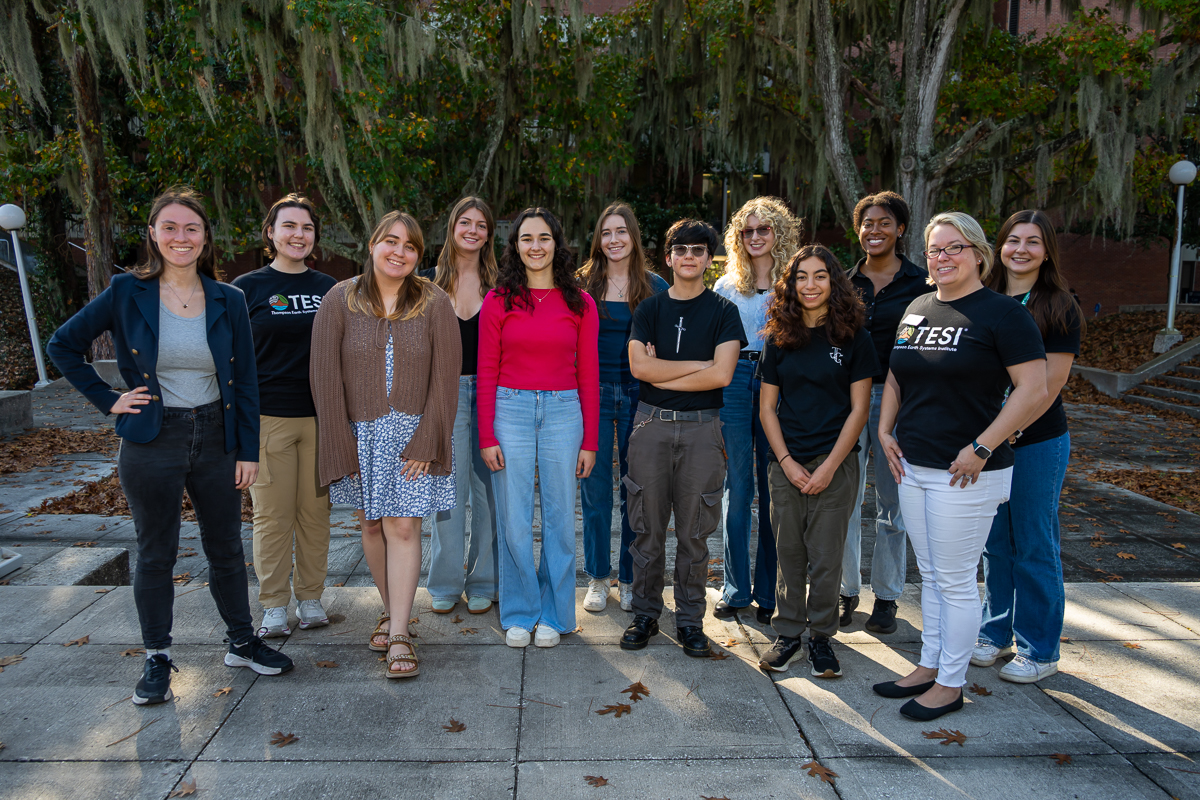
On January 9th-10th, 2026, the new cohort of the TESI Environmental Leaders Fellowship (ELF) started the semester with an orientation at Dickinson Hall and a field day banding birds at the UF Hague Dairy banding station with the UF Bird Observatory and Dr. Glaucia Del-Rio.
Continue reading to learn about what our spring 2026 cohort experienced and learned during these unique opportunities.
Friday, January 9
Location: Dickinson Hall
Activities:
To start off the spring semester, the cohort gathered at Dickinson Hall for an orientation. Introductions revealed common interests among the students, which will hopefully grow into a strong sense of fellowship throughout this program.
To introduce the ornithological theme of this semester, the students participated in a Merlin Bird ID and eBird training in Bartram-Carr Woods, where audio recordings revealed winter-resident warblers and a feral cat sighting resulted in reflection on ecological interactions. Upon returning to Dickinson Hall, fellows were joined by Dr. Glaucia Del-Rio, the assistant curator of ornithology at the Florida Museum. She gave a presentation on her collegiate journey and the formation of the UF Bird Observatory, which collects data on Florida’s birds through songbird banding at sites near UF campus.
ELF fellow Melina reflected on the value of Dr. Del-Rio’s talk, saying “my favorite experience from the orientation was listening to Dr. Del Rio’s presentation! I’ve always struggled with figuring out my own career path, so I thought her story was very inspirational. I think I would like to pursue a path like hers, where I can travel, do research, and spend time both outdoors & in museums.”
Saturday, January 10
Location: UF Hague Dairy Banding Station
Activities:
Fellows got up bright and early on Saturday, January 10th to get to the UF Hague Dairy banding station by 6:15am. It is important to arrive early when bird banding, as sunrise is the time when the birds are most active; when birds wake up, they start foraging for their important first meal of the day. This means that if the mist nets are set up before sunrise, it is likely more birds will be caught and thus banded. The early bird gets the band!
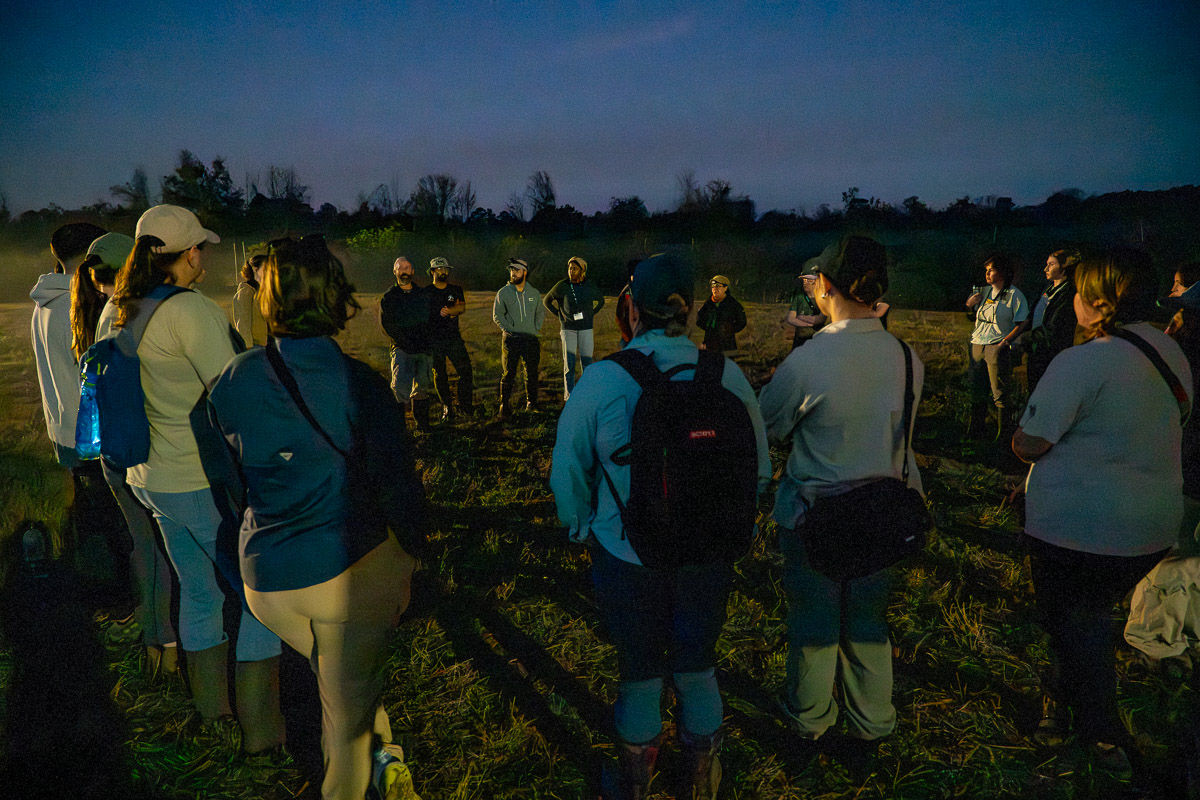
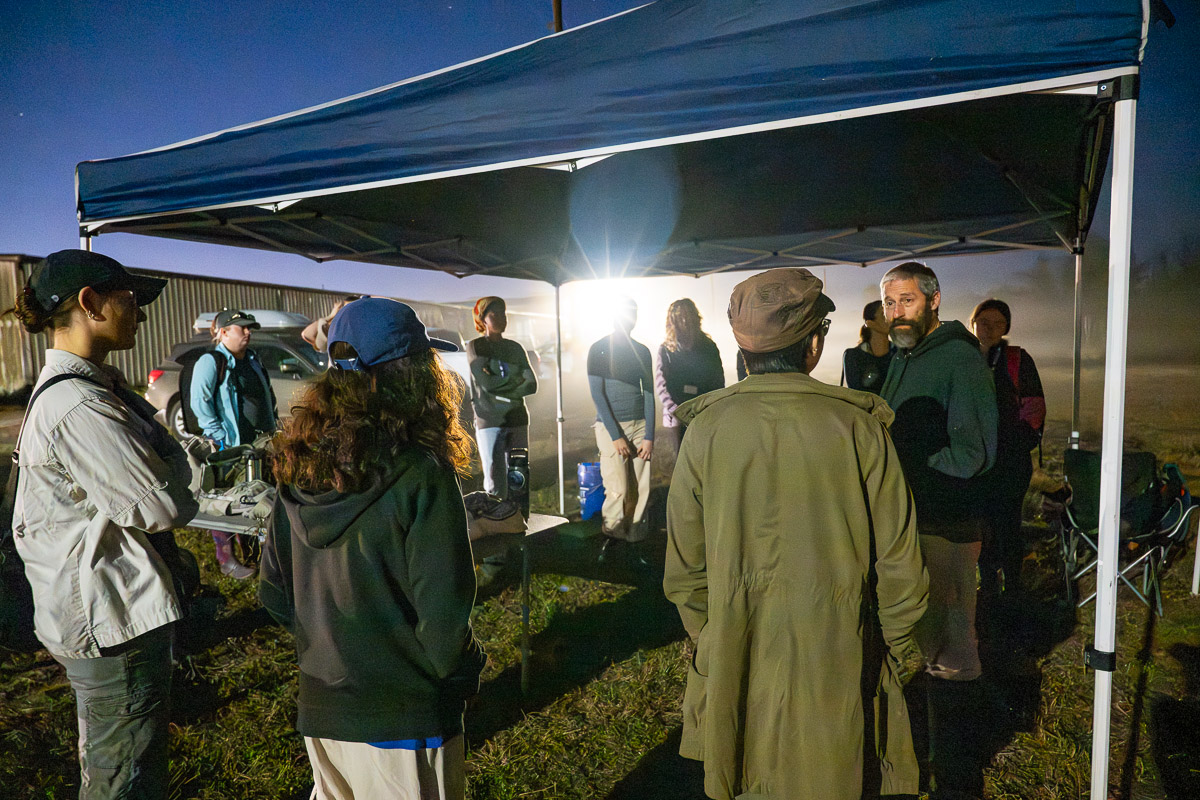
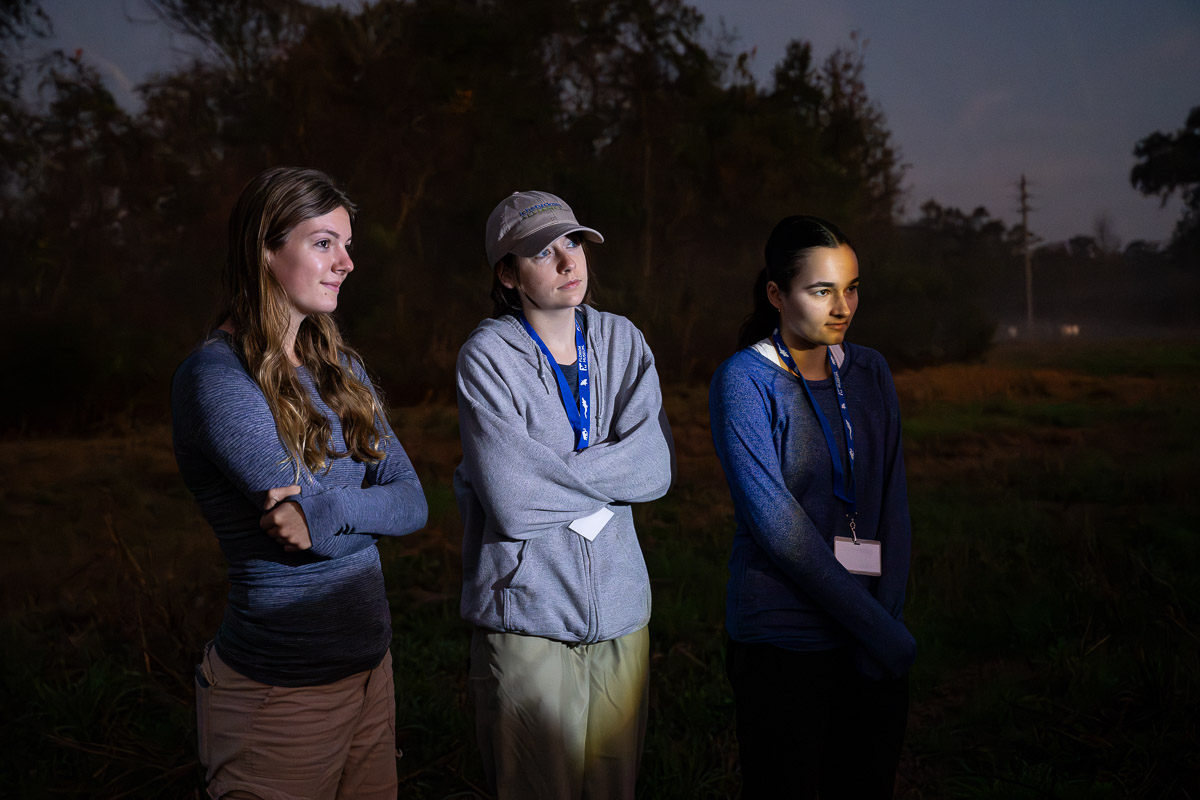
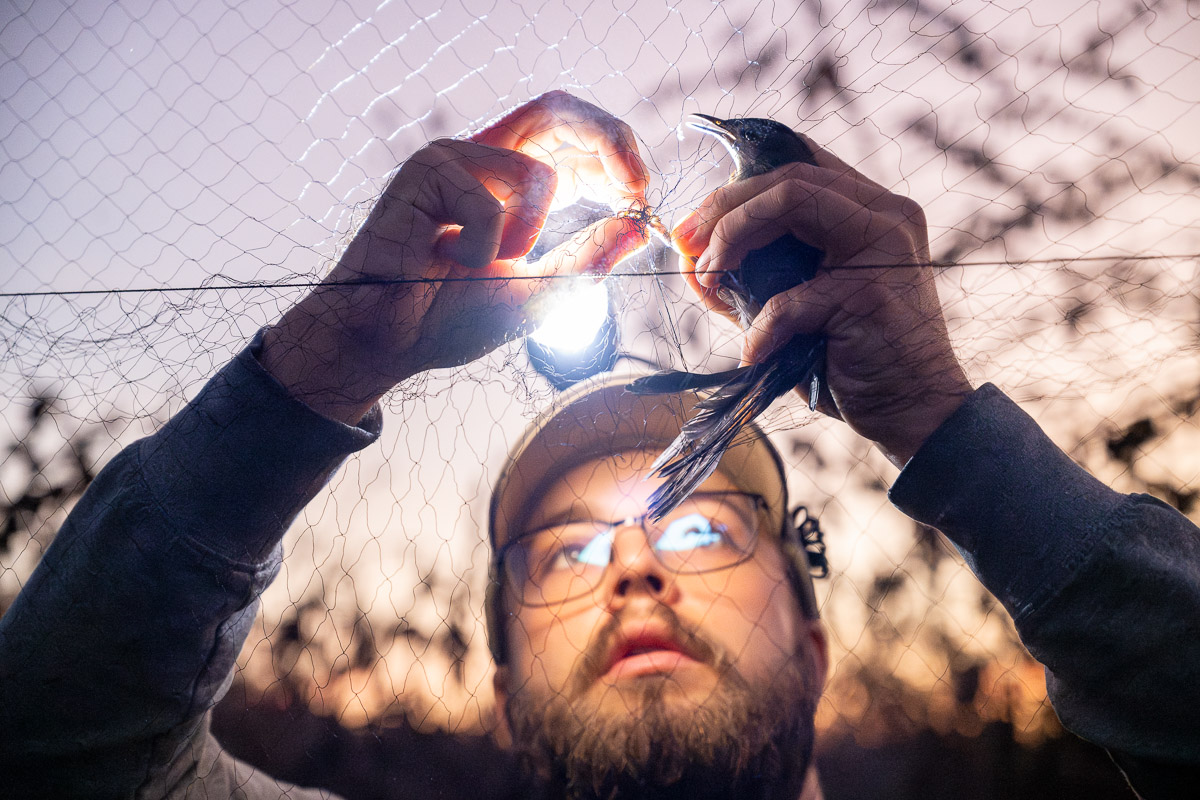
The cohort was groggy at first, but as the sun came up and volunteers began to bring birds from the nets to the station, eyes lit up with novelty and excitement. All of the fellows got to release at least one bird, and for many of them, this was their first time ever holding a bird. As the volunteer banders went about their duties, banding manager Charlie Muise explained the banding procedures and details about bird morphology and ecology with a contagious enthusiasm. This sort of hands-on experience with narration from a leader was a great way to allow the students to feel connected to nature and science.
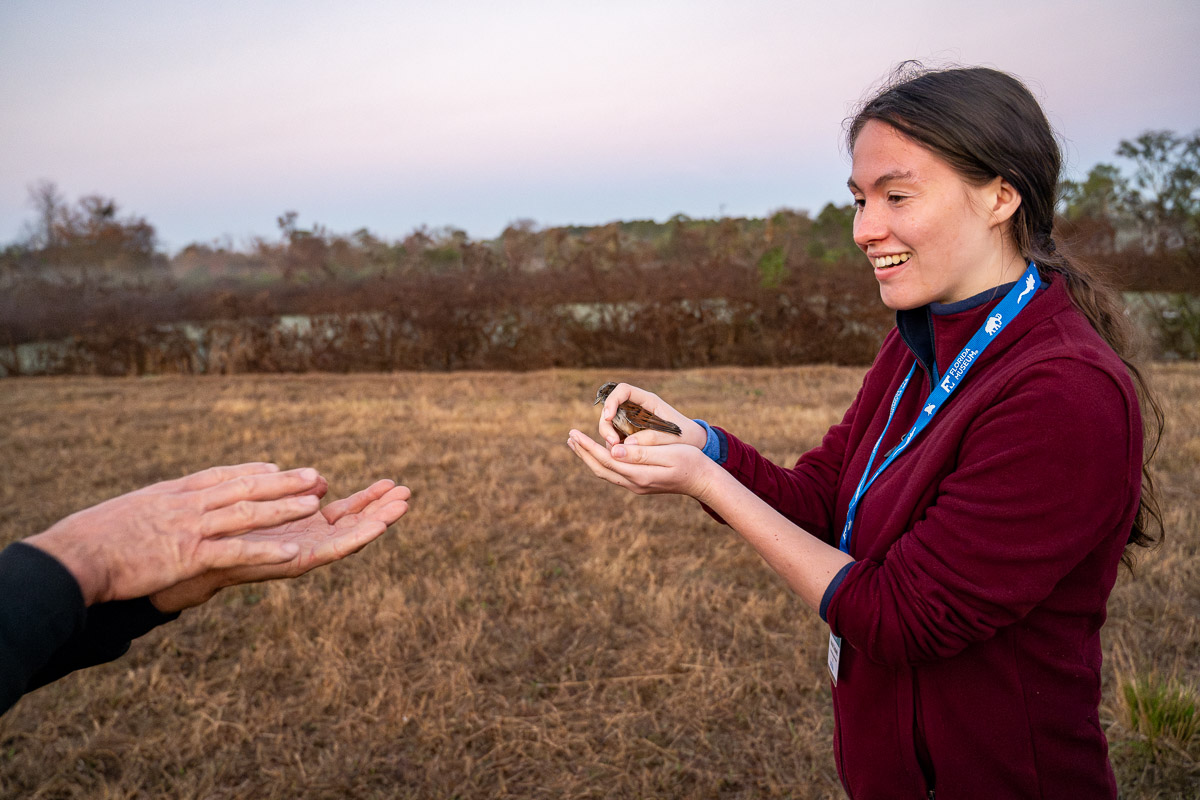
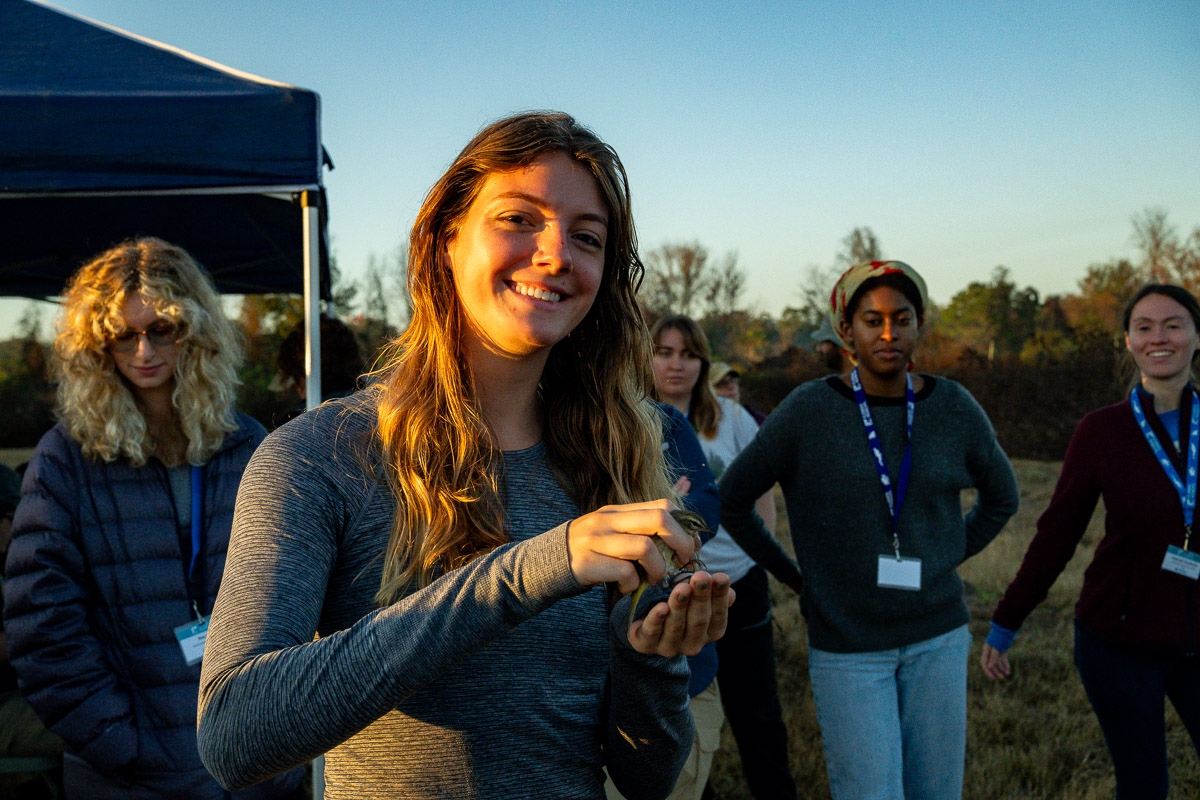
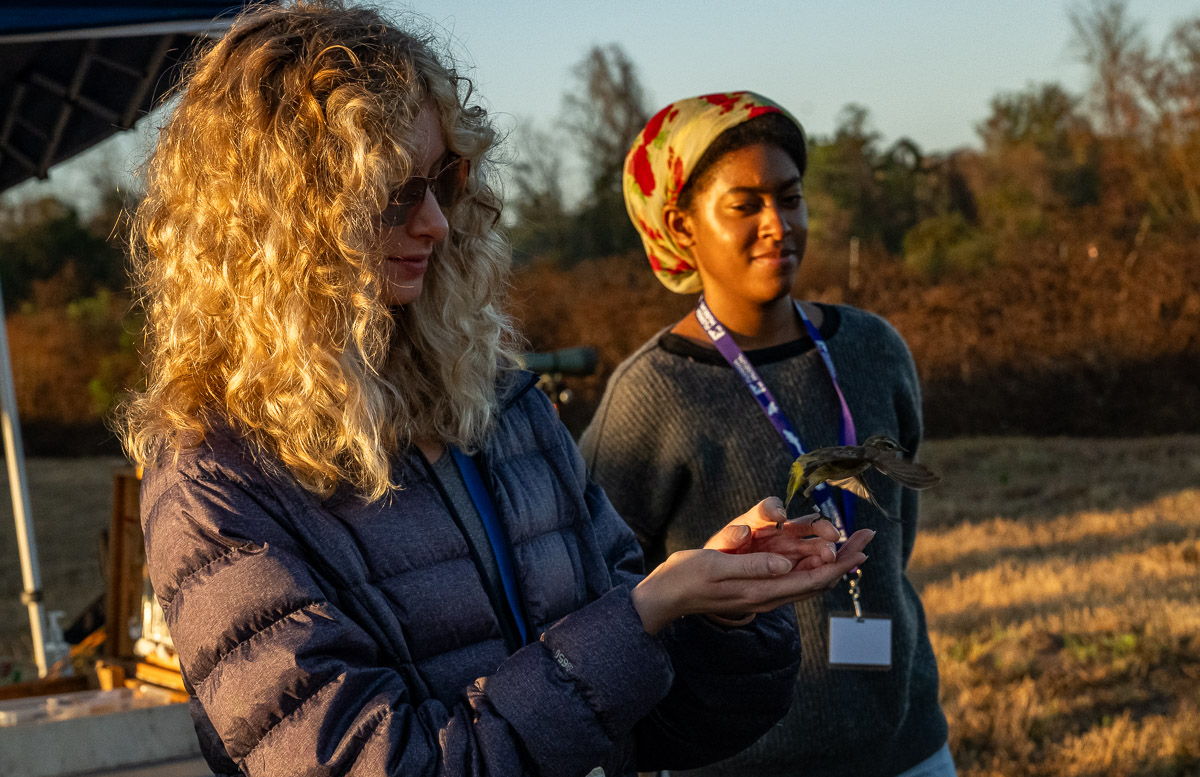
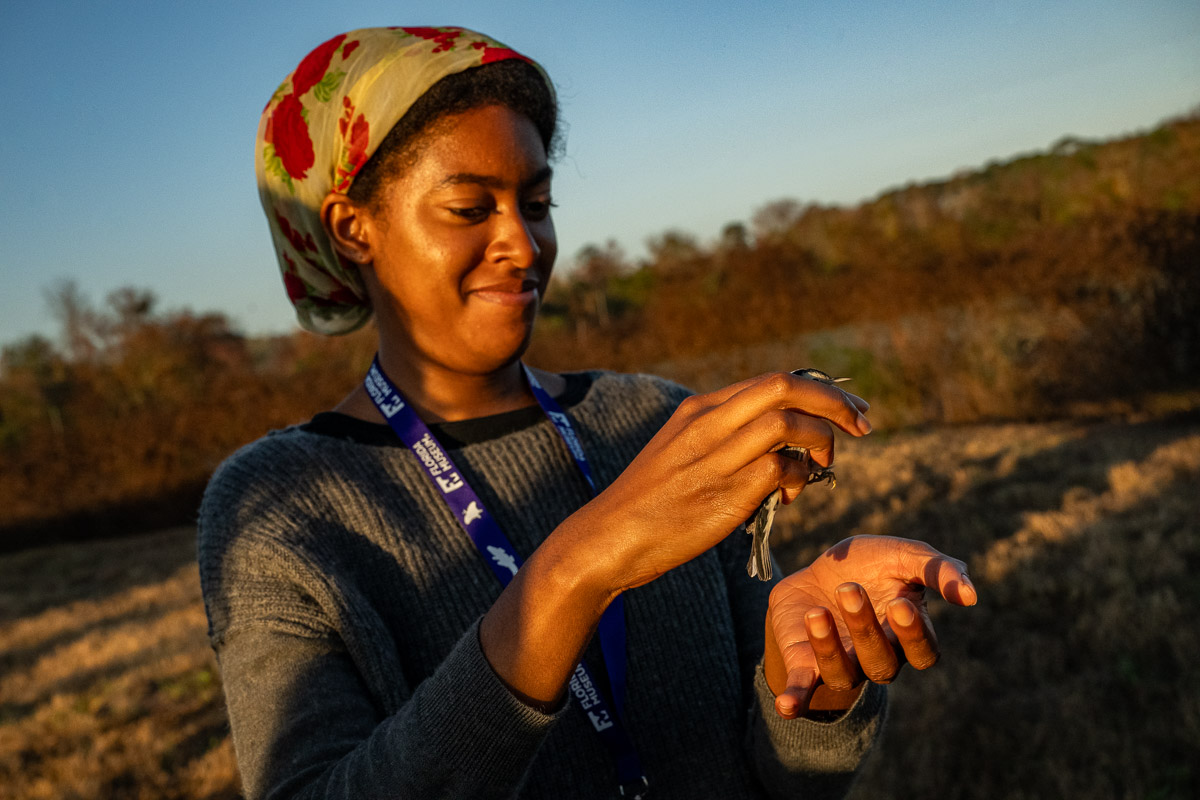
ELF fellow Azhalia gained insight from the experience, saying that “during the experience, I was quite nervous to handle any of the birds. I always viewed them as pretty delicate creatures, and I was super scared I would accidentally harm them. I learned safe handling ways which increased my confidence in interacting with species in the future. Most importantly, just learning the best practices in approaching habitats and conducting research where you are able to get the necessary information without causing harm to the environment or species.” Many other students also cited concern for the birds towards the beginning, which grew into a knowledge and appreciation of the banding process by the end of the day.
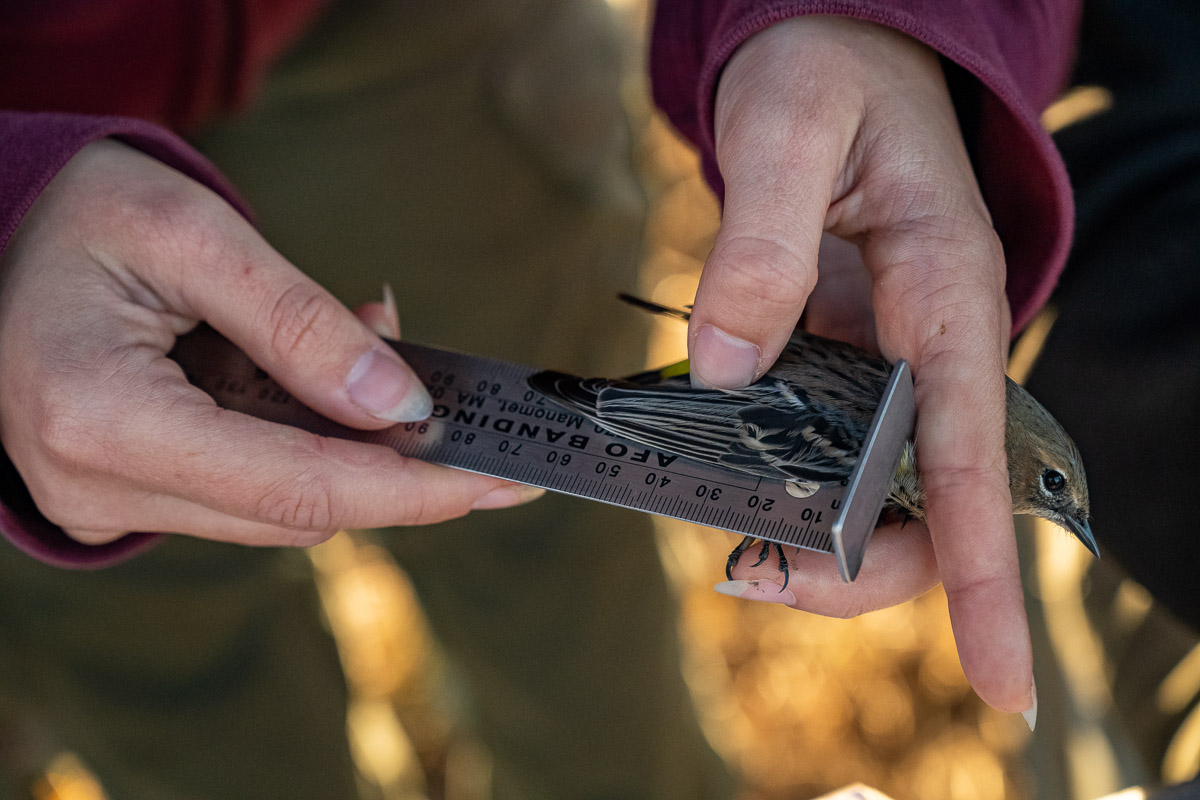
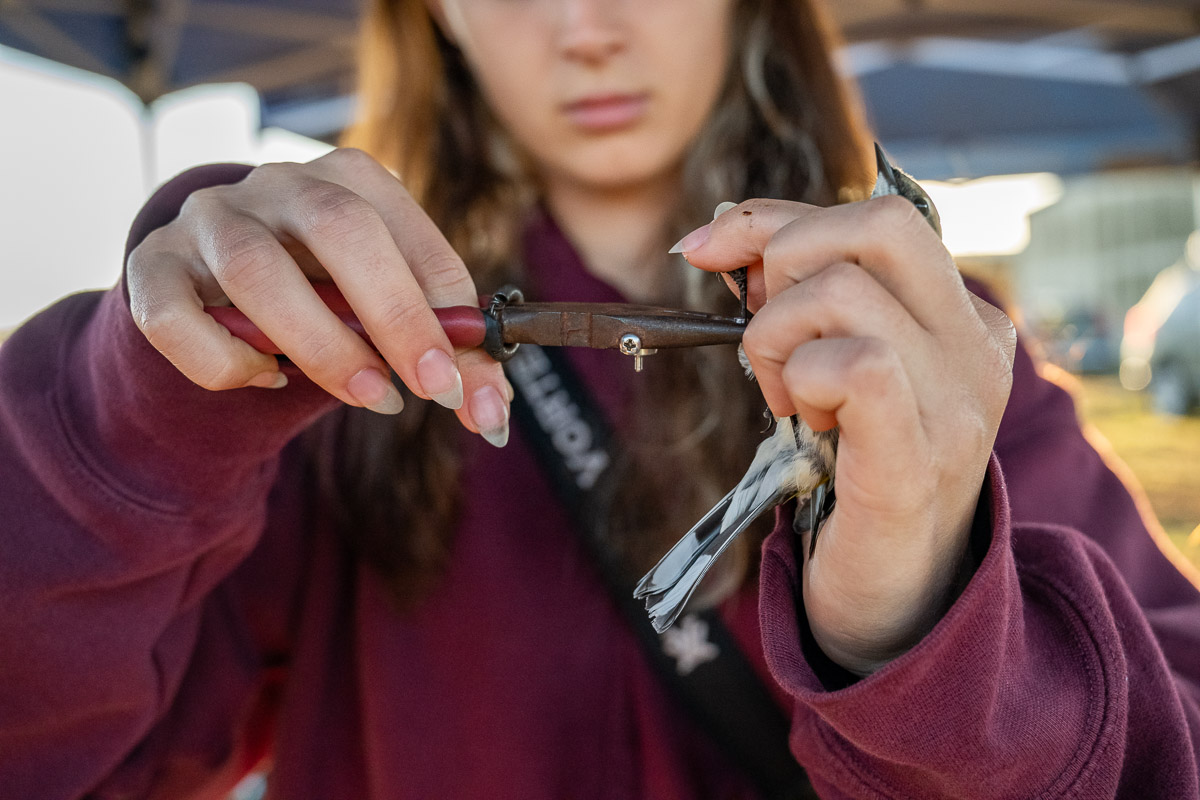
Throughout this semester, all the fellows are required to attend at least two more banding events, in order to complete the ELF program. This partnership with the Florida Museum’s department of ornithology and the UF Bird Observatory has provided this semester’s fellows with a framework for learning about research opportunities and ways they can get involved in the UF community.
One ELF fellow, Zoey, conveyed her appreciation for the resources gained through this experience, saying that “through the TESI orientation, I was connected with a network of peers and professionals who inspired me by their own journeys, and enhanced my understanding of environmental research, education, and collaboration. Through the bird-banding field work, I gained hands-on experience in field research and a better scientific understanding of wildlife and research methods, which both strengthened my skills and enhanced my passion for wildlife conservation. Ultimately, these experiences inspired and motivated me to continue pursuing a future in environmental science and exploring a pathway that aligns with my passion for conservation.”
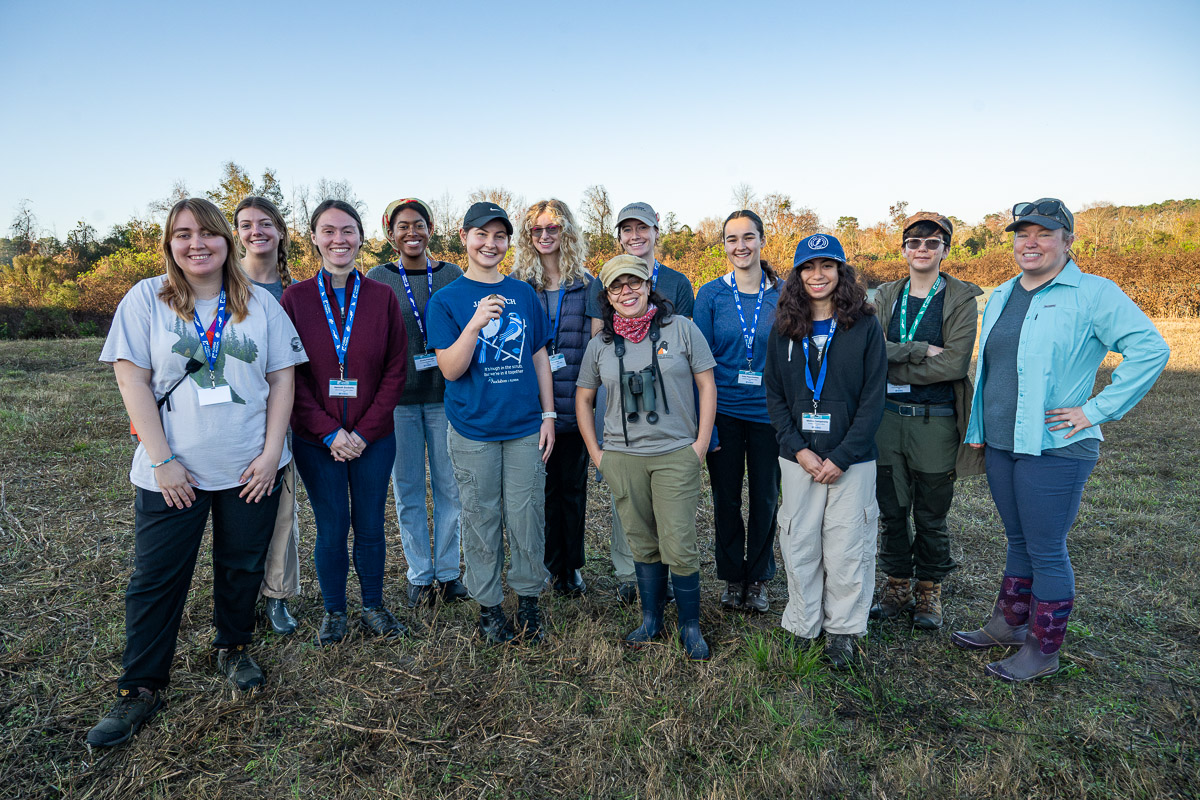
All bird banding was carried out under the appropriate required permits.
This project is funded by an Early Career Research Fellowship from the Gulf Research Program of the National Academies of Sciences, Engineering, and Medicine. The content is solely the responsibility of the authors and does not necessarily represent the official views of the Gulf Research Program of the National Academies of Sciences, Engineering, and Medicine.”
Support for these events was provided by the National Academies of Sciences, Engineering, and Medicine.
If you are interested in supporting the TESI Environmental Leaders Fellowship, please email Sadie Mills at smills@floridamuseum.ufl.edu.
 .
. 
Learn more about the TESI ELF Program and Cohort for Spring of 2026: