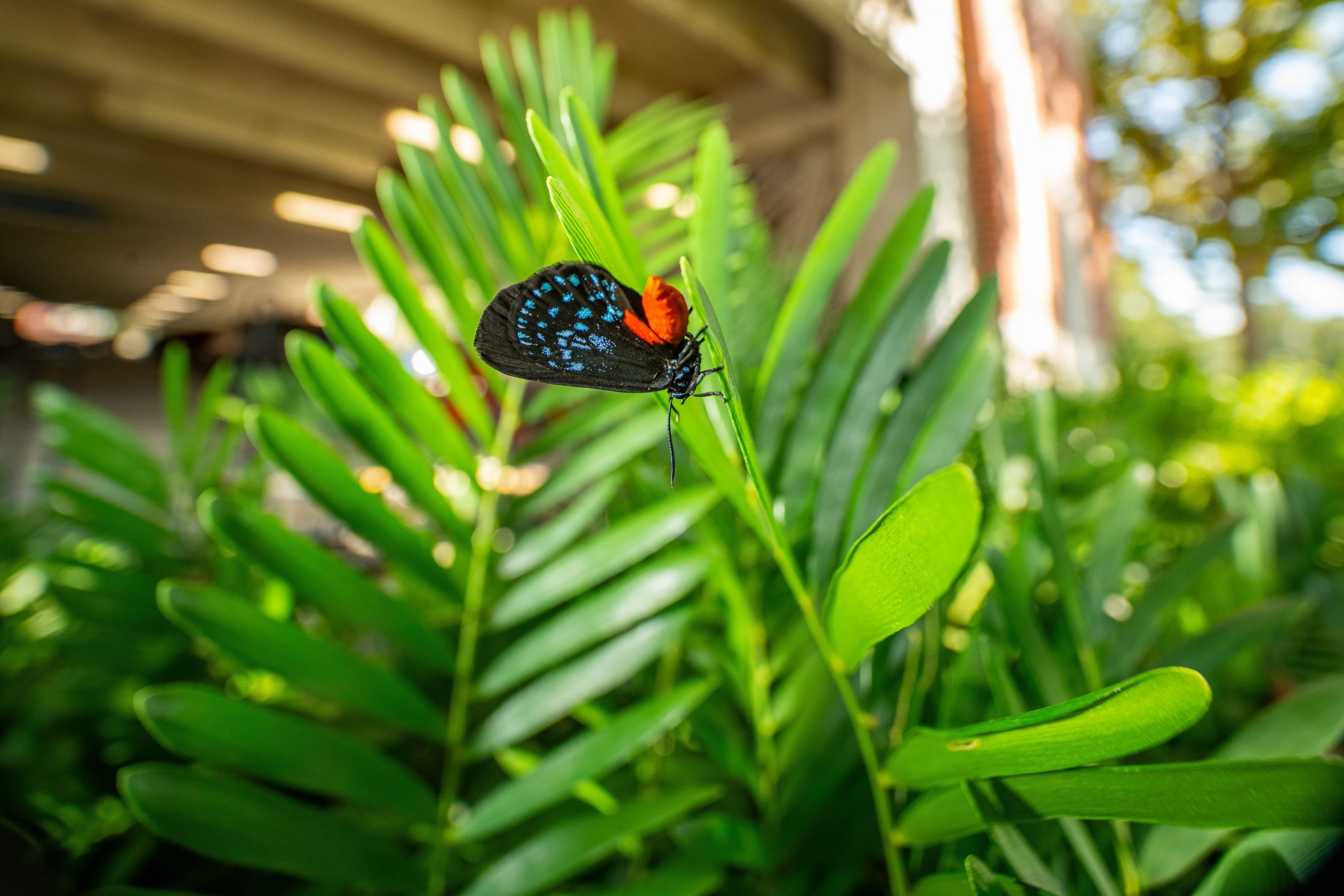
Southeastern Florida has historically been the stronghold of the atala butterflies in Florida, until now. It has slowly but surely fluttered its way into the backyards of Gainesville residences. Rising temperatures have expanded the atala livable habitat, but they couldn’t make the journey without help.
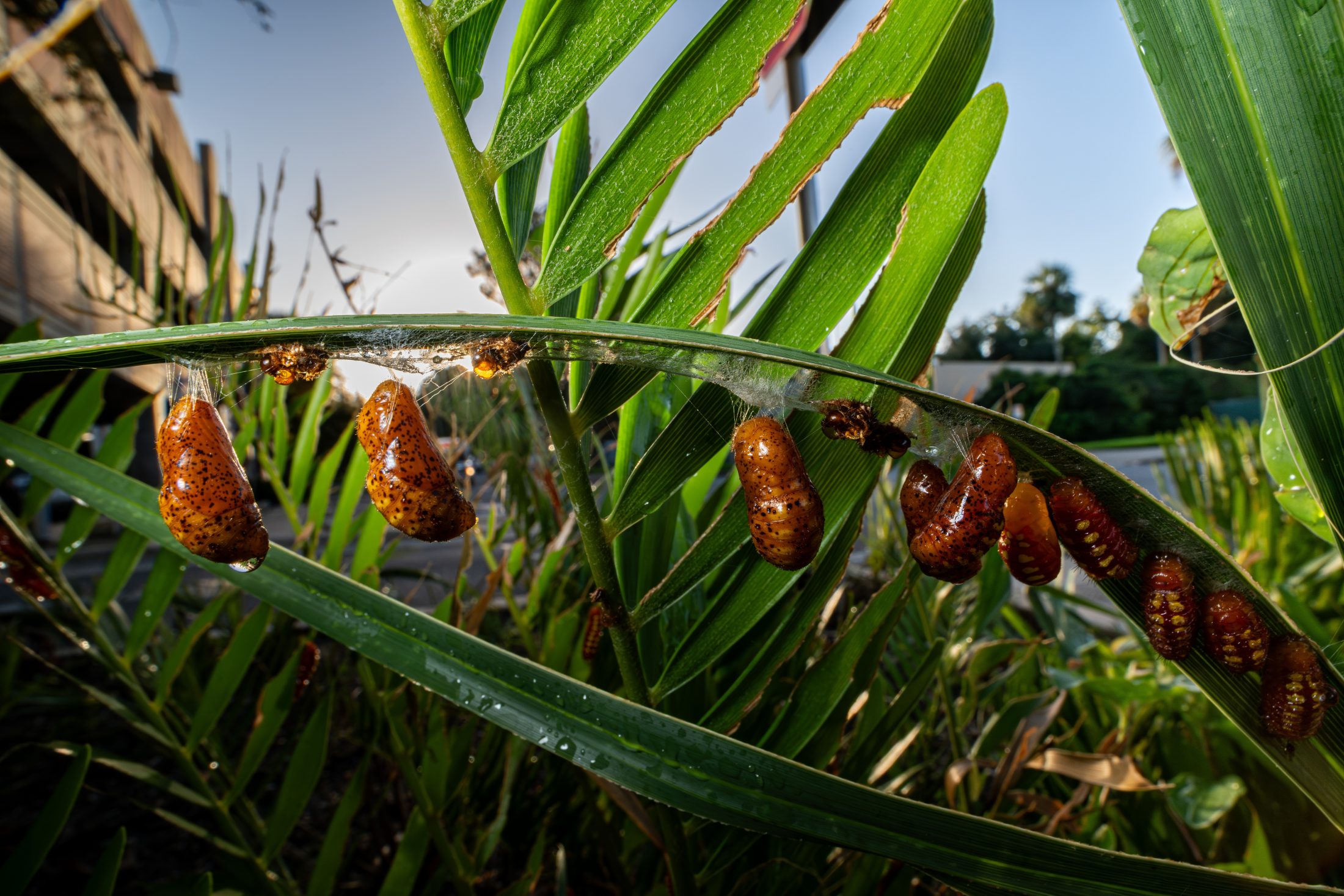
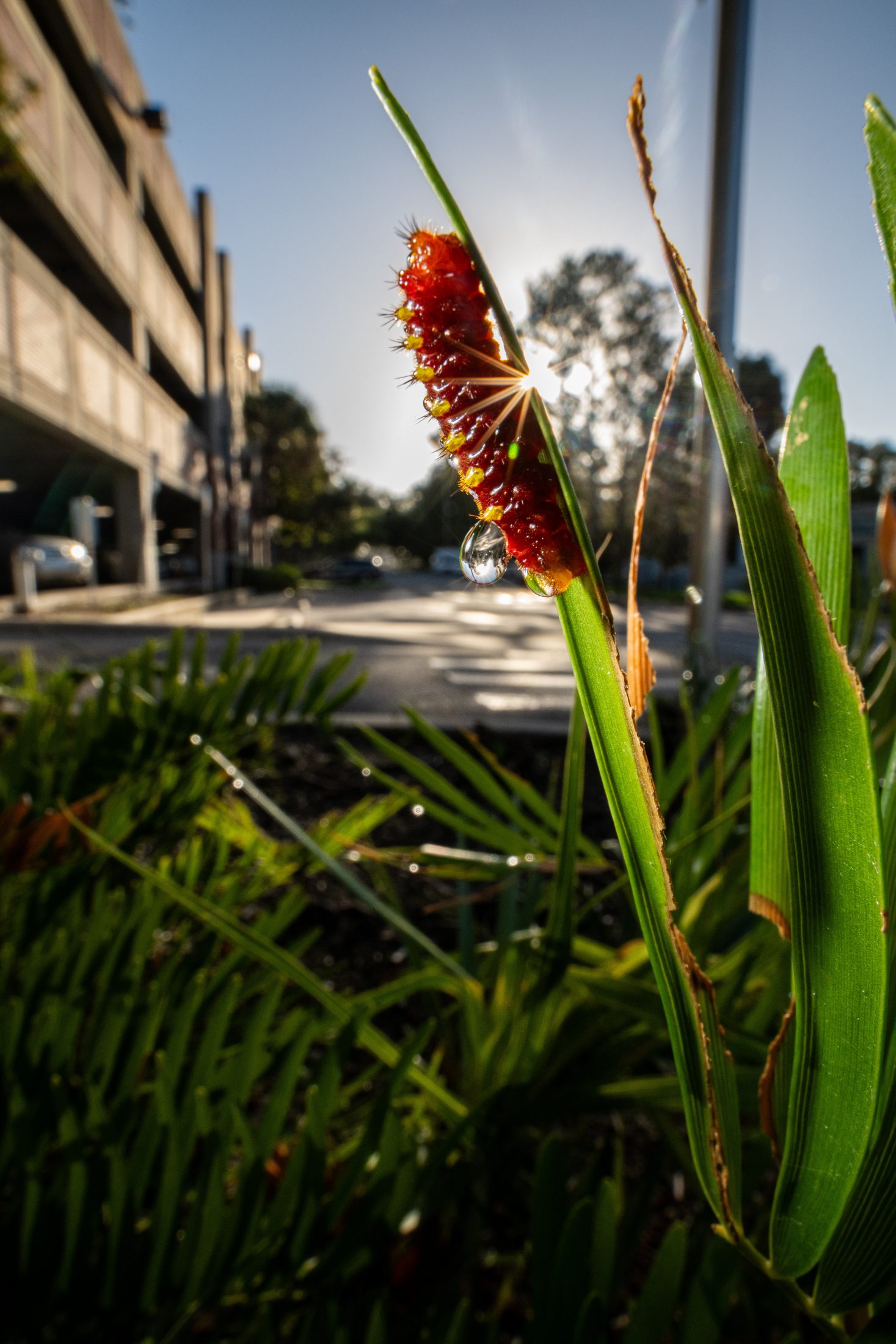
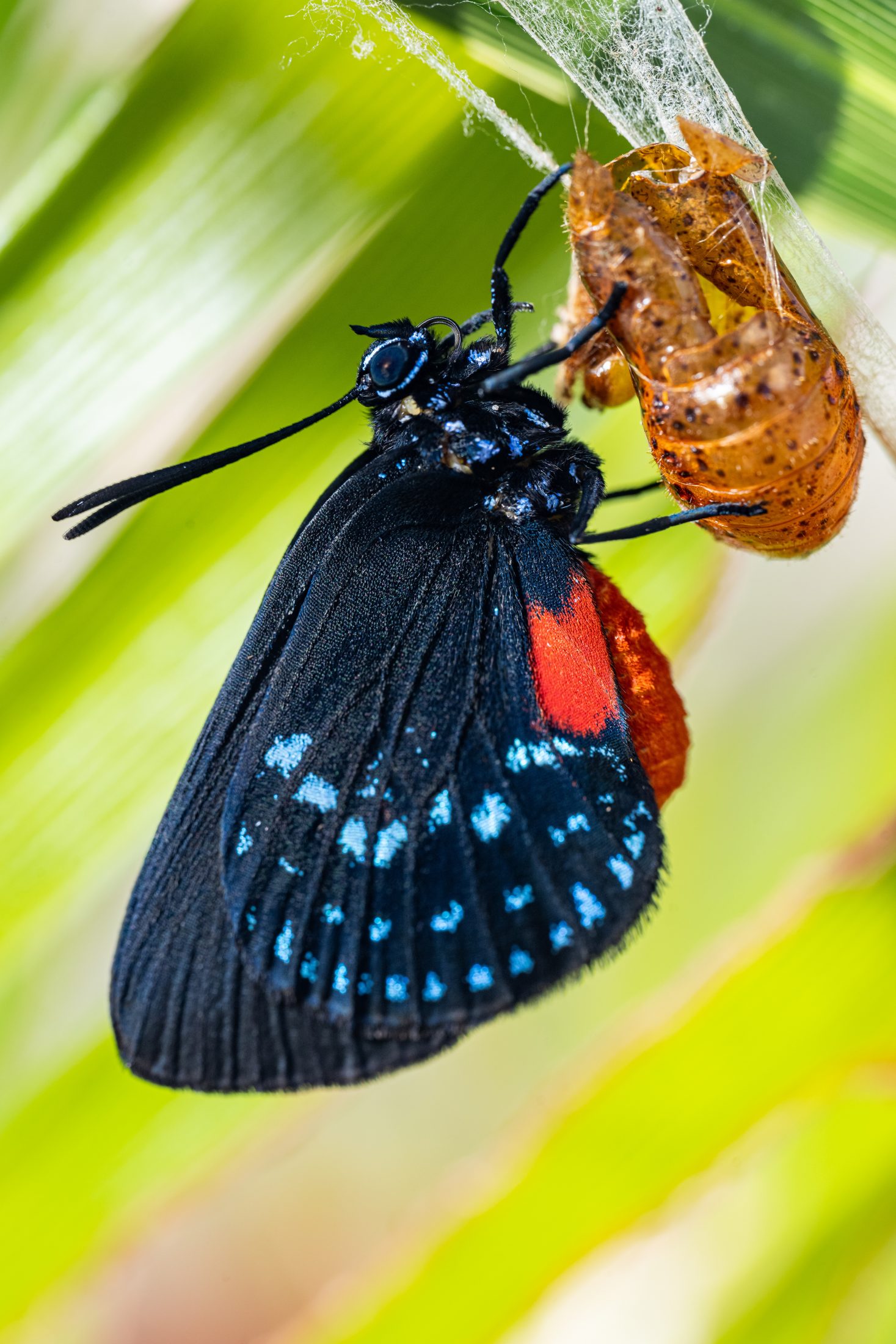
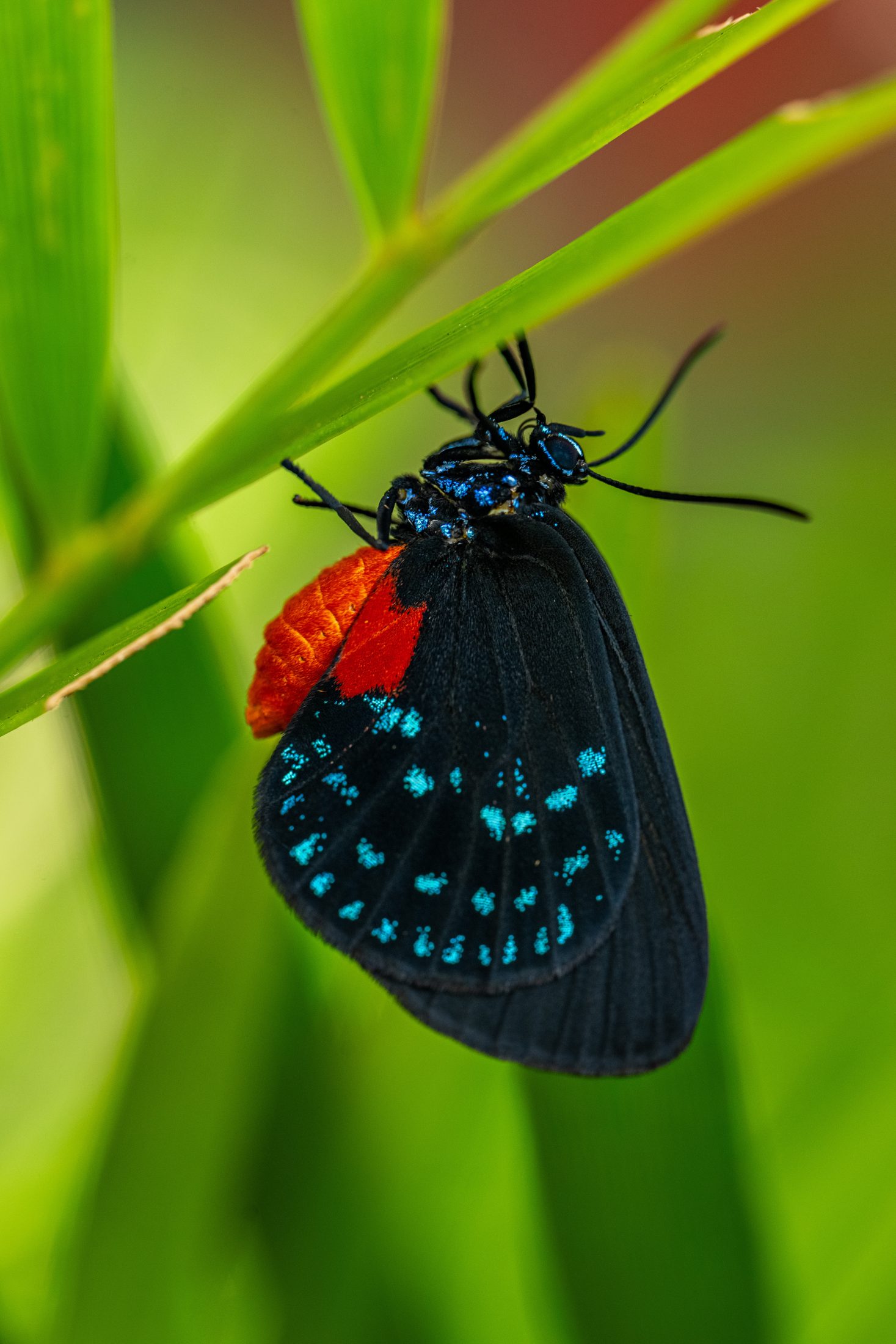
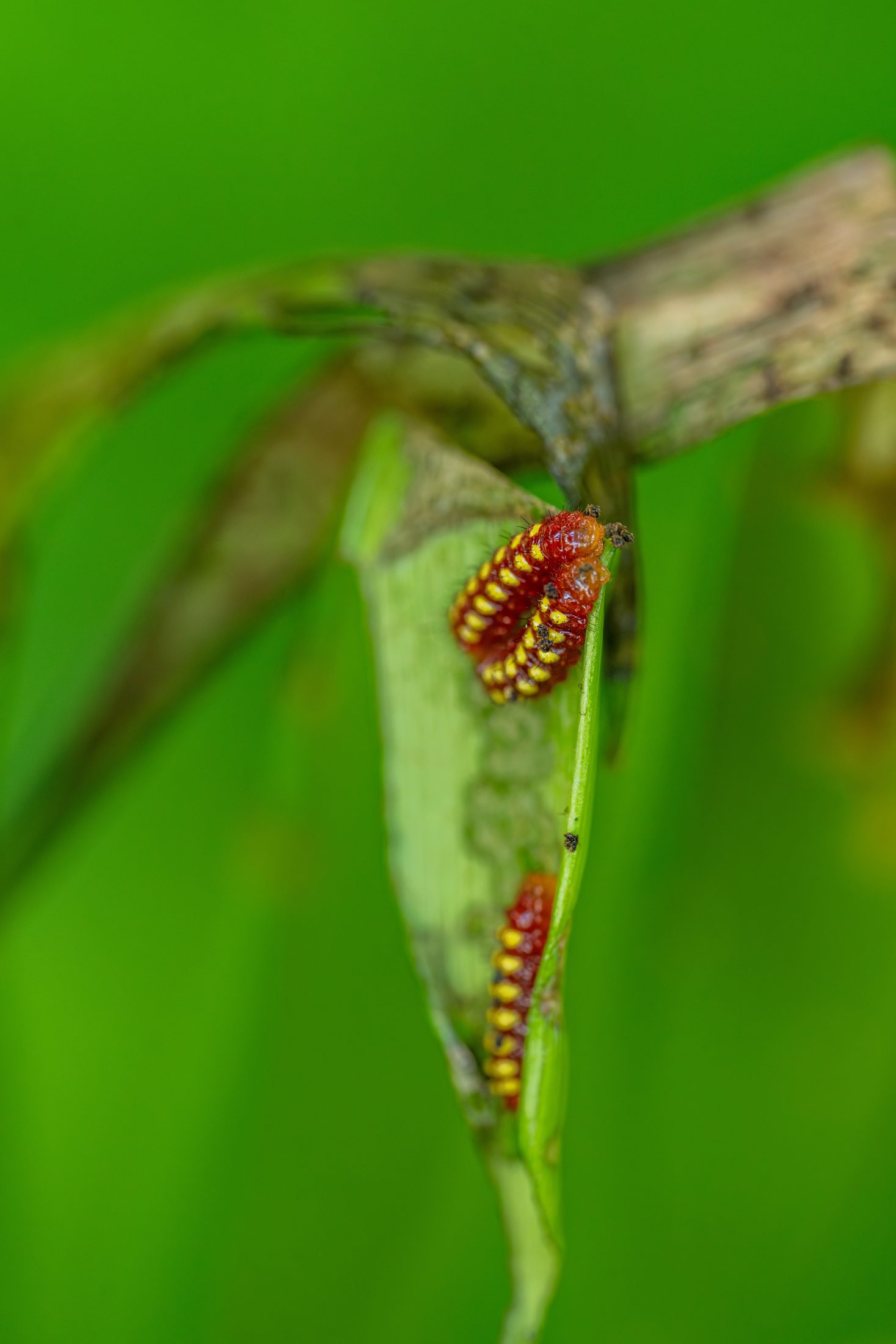
Eumaeus atala is the largest hairstreak of southeastern Florida. The atala is made up of a beautiful array of colors adorning pitch black wings carried by a vibrant reddish-orange abdomen. The atala is sexually dimorphic and seasonably variable. Females tend toward iridescent blue scales while males are more green. 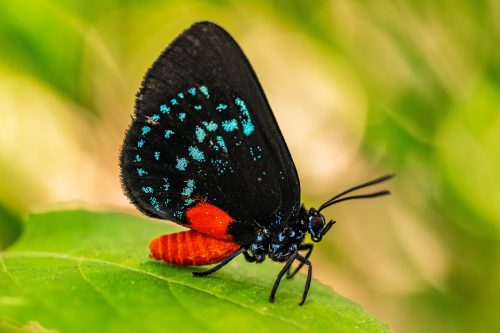 This is known as aposematic coloring, a warning to predators not to consume. Mature adult females lay their eggs on the toxic host plant, the coontie, and hungry caterpillars gorge themselves until it is time to pupate. The toxins live in their bodies even after they emerge, making the atalas very slow-moving. While the journey may be slow and steady, it has only made them that much easier to admire!
In the 1940’s the atala butterflies were believed to have gone extinct. Rediscovered in the mid-20th century, people began planting the host plant in their own gardens to bring this beautiful butterfly back from the brink.
The coontie, Zamia intergrifolia, is the atala host plant. It is the only native cycad in the United States. It is a remarkably average-looking plant, with an anything but average history. The coontie plant has an abundant amount of starch contained in its roots and stems, along with a toxin known as cycasin. The Native American tribes of South Florida learned how to remove this toxin and harvest the starch for cooking. For generations, these Indigenous communities sustainably harvested coontie, ensuring the plant’s continued abundance. When settlers learned of these processing techniques, production of the starch, dubbed ‘Florida Arrowroot,’ became commercialized. However, large-scale harvesting soon exceeded what the slow-growing cycads could replenish. This led to a steep decline in coontie populations and, in turn, the near disappearance of the atala butterfly that depended on it.
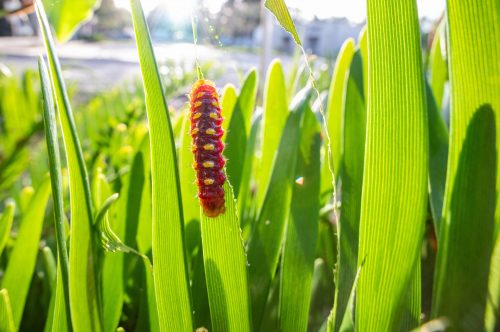 When the atala was rediscovered, it became a success story of local conservation. Assisted relocation programs were developed to help atala find remaining natural areas and conservationists took it upon themselves to ensure the survival of the species by planting the native coontie in their backyards. In managed landscapes, coonties were able to thrive even more than those found in the wild, and the atala population began to recover.
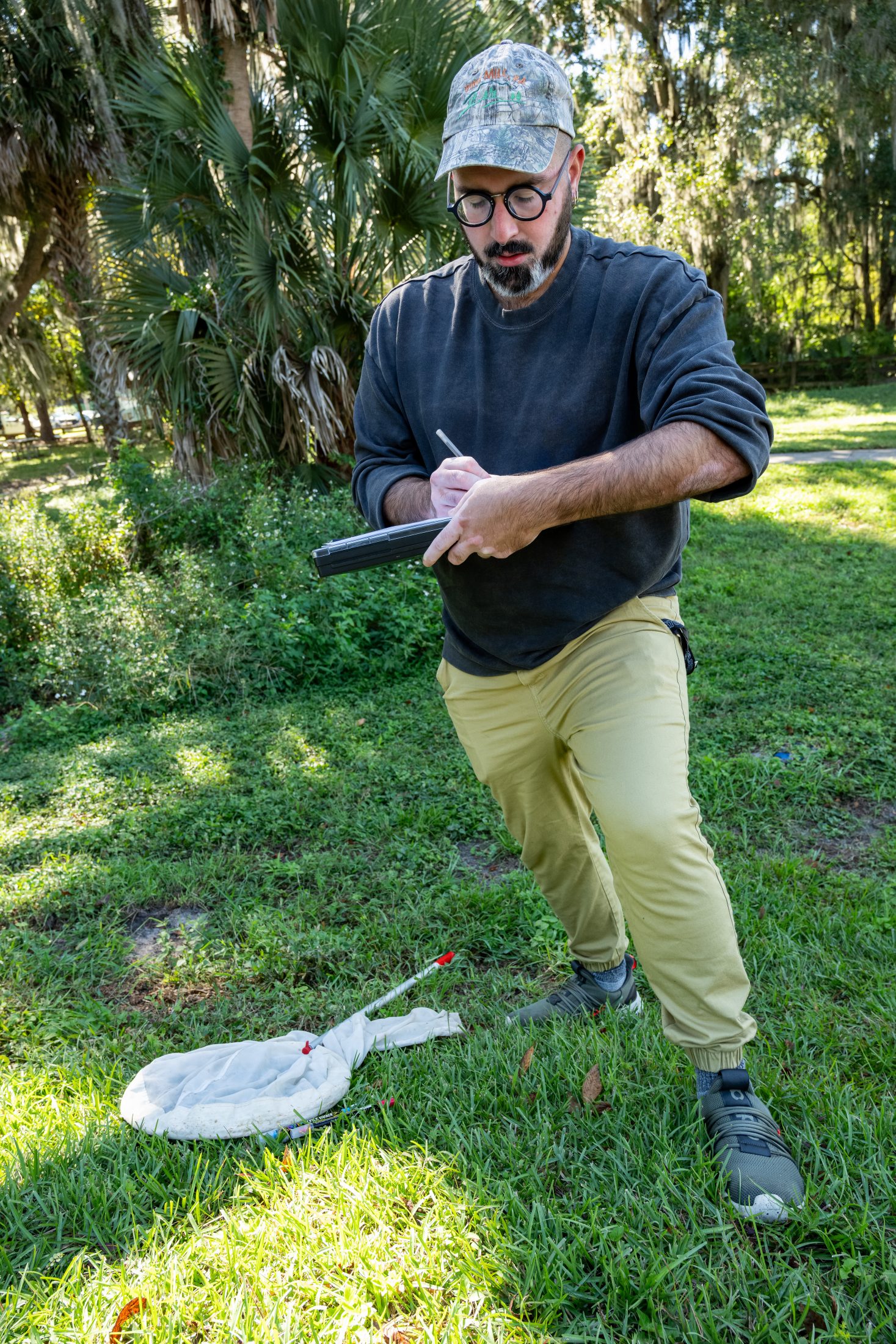
These butterflies can now be found in fragmented colonies across the state of Florida, including in Gainesville, because of the united efforts of scientists, conservationists, and most importantly, regular people. The Florida Museum of Natural History studies atala through the Daniels Lab, promoting the education of threatened species in order to increase conservation efforts. But will they last in North Florida?
“While adult abundance has decreased due to the recent cold snap [in Gainesville], many caterpillars and 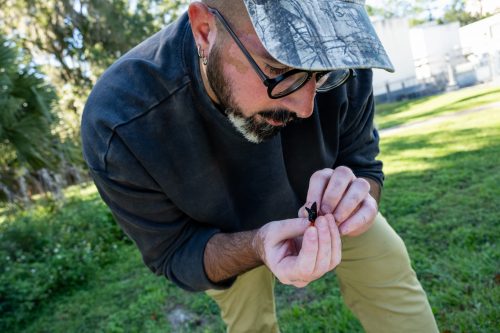 pupae remain, a hopeful sign that the species will survive the winter. For poleward-expanding species, harsh winter conditions can be a significant barrier,” states Vaughn Shirey, Assistant Curator of Lepidoptera, McGuire Center for Lepidoptera and Biodiversity, UF Florida Museum of Natural History. His and Daniels Lab postdoc Sarah Steele’s “current study will give unique insight into the mechanisms of population establishment from the ground up.”
That is the best part of the atala conservation story. A common theme of conservation stories is being told that the actions of an individual matter, but it can be hard to believe. The atala comeback is a testament to the ability to make important change happen. People cared enough to learn, people cared enough to engage with their communities, people cared, and it made a difference. The story of the atala is a beautiful sentiment to what can happen when a community bands together.
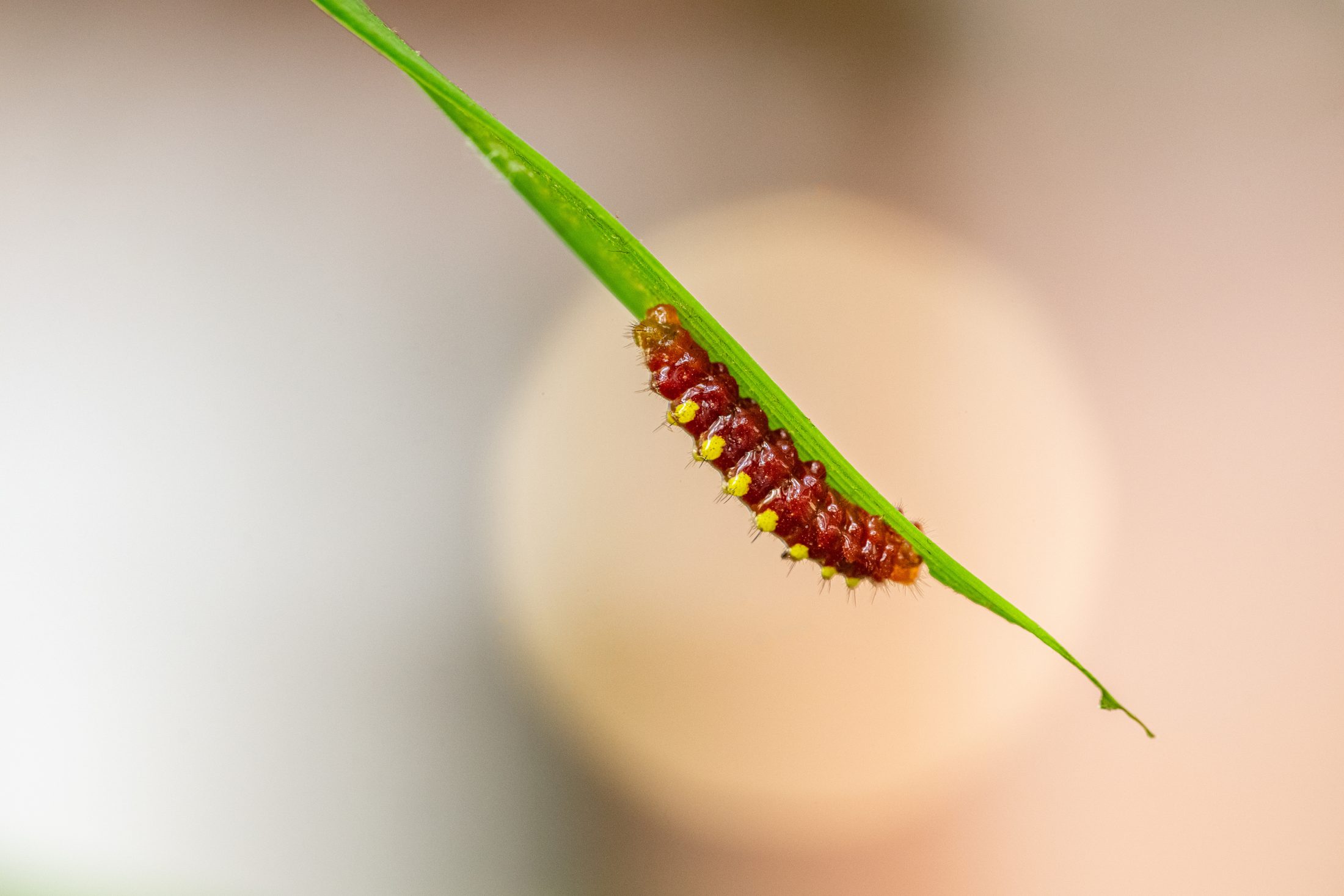
images ©Florida Museum/Kristen Grace
Information from Florida Wildflower Foundation, WUSF, and Conservancy of Southwest Florida
Miranda Guse is an Outreach and Education Coordinator at the McGuire Center for Lepidoptera and Biodiversity. She is a senior at the University of Florida studying integrative biology.