Children can explore, observe, study, pretend and play at the Florida Museum’s Beverly and Jon Thompson Discovery Zone permanent exhibition. The exhibit includes educational materials as diverse as the natural world, allowing children and their caregivers to engage in science-oriented interactives and experience display cases with stunning collections, true-to-scale touchable objects and various activity stations.
The exhibit entrance closes at 4:30 p.m.
The exhibit features a central area that resembles Earth’s spherical shape and showcases the biodiversity of our natural world.
Florida Museum photo by Kristen Grace
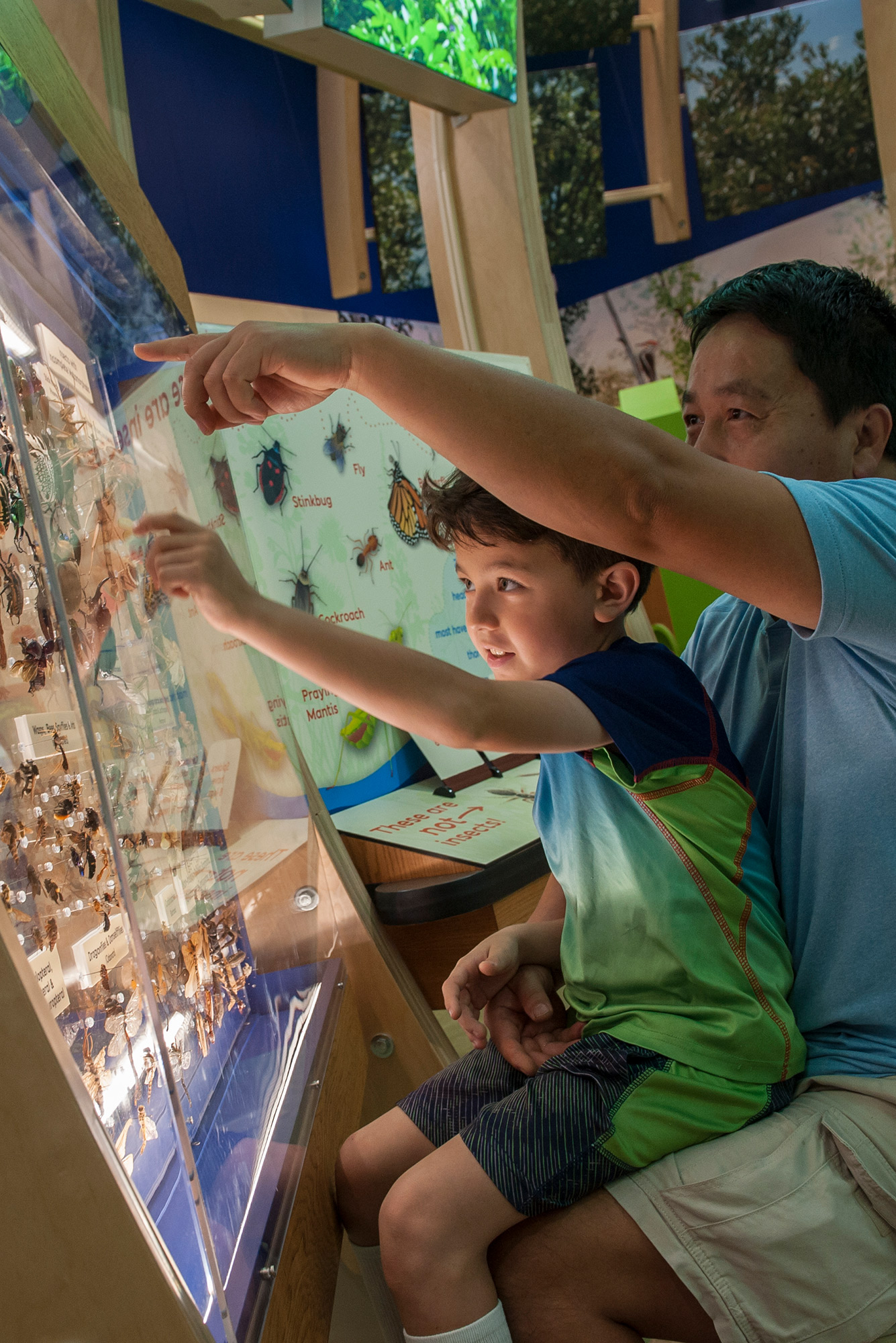
Visitors examine beautiful displays illustrating insect diversity and classification in the “Discovery Zone.”
Florida Museum photo by Kristen Grace
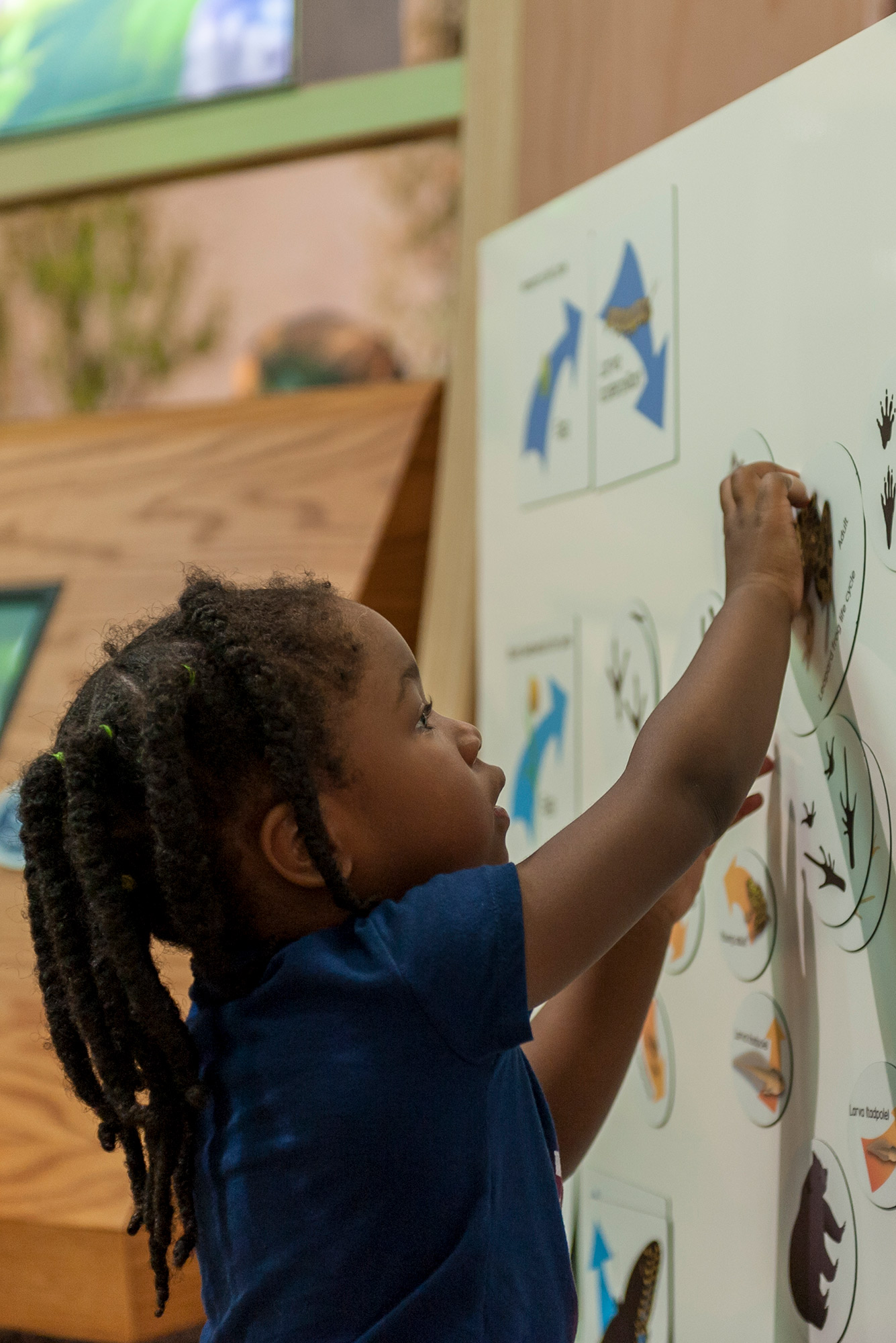
The exhibit features a magnet wall where kids learn about the life cycles of different organisms. Florida Museum photo by Kristen Grace
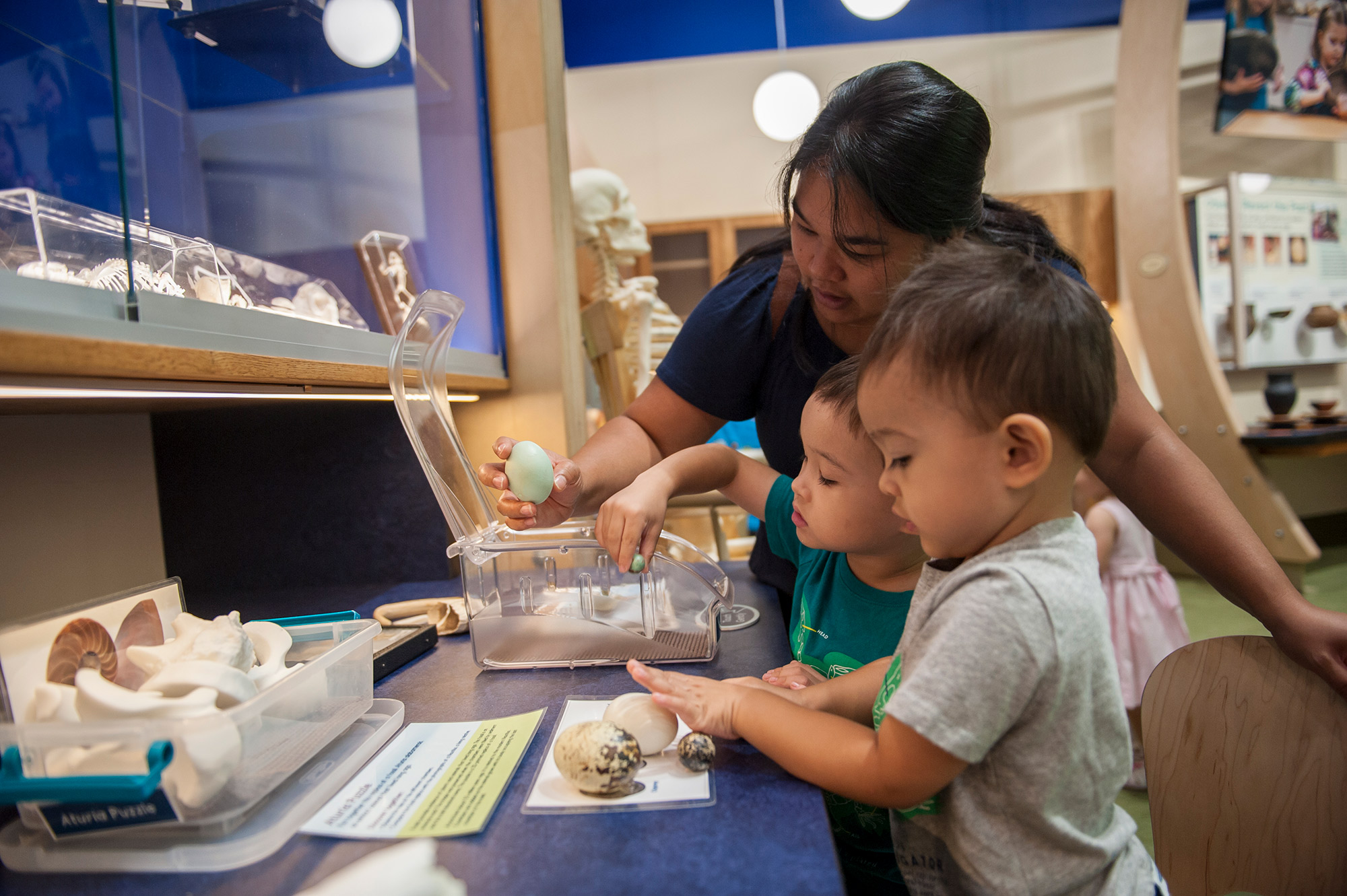
In the “Discovery Zone” study area, families interact with an array of skeletons, skulls, bones and teeth.
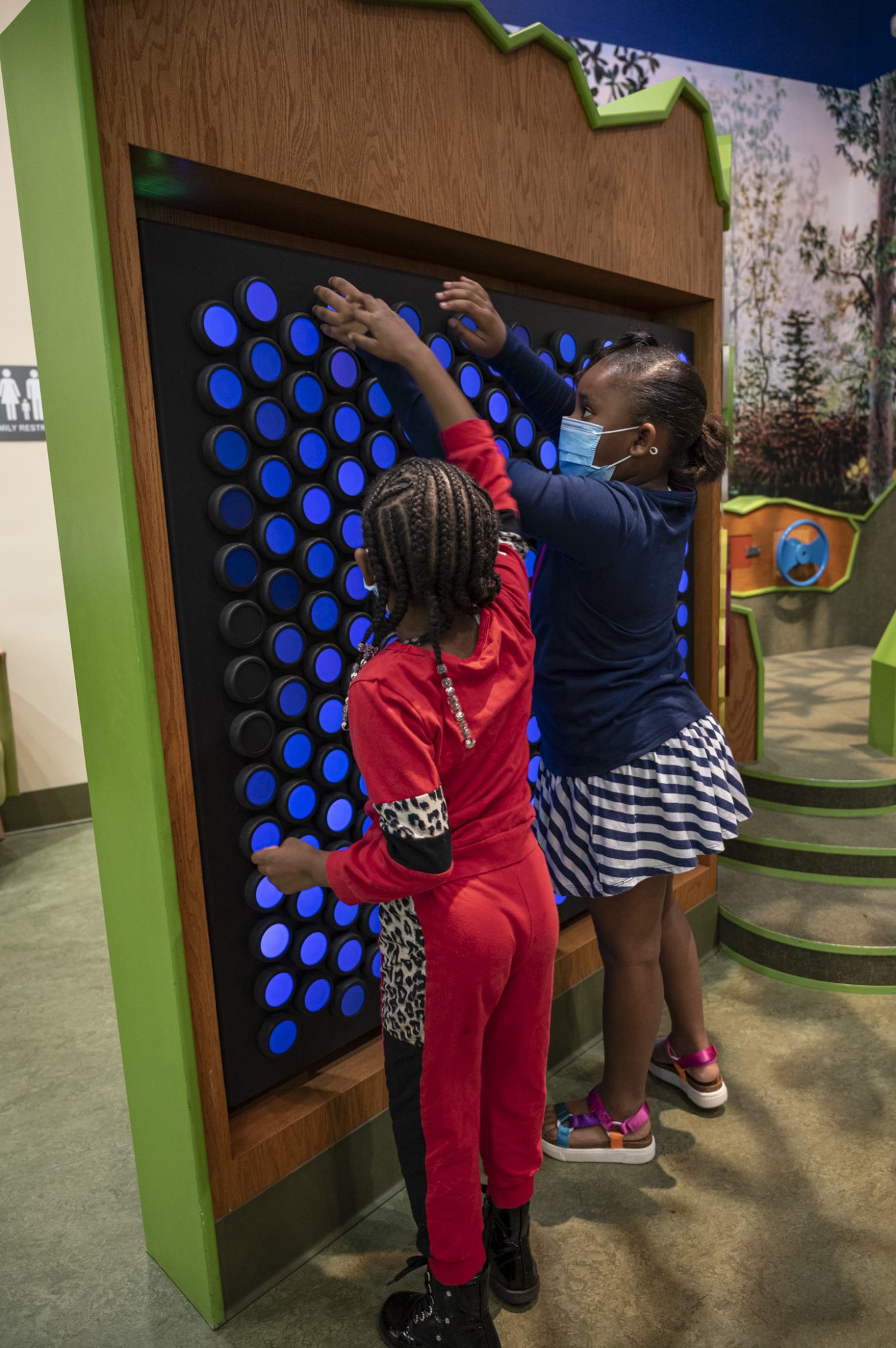
Visitors let out their creative side on an interactive wall featuring changeable lights of various colors.
Florida Museum photo by Kristen Grace
Florida Museum photo by Kristen Grace
Highlights
Lactation Room Conveniently located near the exhibit’s family restroom, this private space allows nursing mothers to feed their children in a calm environment. The room includes a comfortable chair, sink and baby changing station.
Early Childhood Learning The Florida Museum has housed a popular temporary Discovery Room for years. After assessing the room’s value as a learning center to engage younger visitors and their families, the Museum created a permanent, more interactive-based and technologically advanced exhibit to spark a sense of curiosity about the surrounding world. The exhibit also introduces fundamental science and cultural heritage concepts.
Interactives A modern boat model for navigation allows children to explore the Gulf of Mexico and its native species of marine life. Other interactive technology activities include excavating an archaeological site and a “color your fish” activity on a large touch screen, where participants can color and name animated fish that swim with other Gulf species.
Biodiversity The exhibit introduces concepts such as the butterfly life cycle and the differences and similarities between a fossil and replica cast. Microscopes show a detailed perspective of tiny objects, and touchable displays introduce more sensory forms of learning. Live bugs and themed areas, such as the marine and forest units, capture the variety of ecosystems on Earth.
Design The Discovery Zone central construction design resembles the Earth’s spherical shape. The large-scale centerpiece featuring Florida’s state butterfly, the Zebra Longwing, and its passionflower host plant, along with large murals and video screens, help provide an immersive experience.
Entry
Beautiful displays of feathers, shells, ammonites, a coelacanth model and man-made objects, including Eskimo snow goggles and a child’s beaded vest, showcase our biological diversity and cultural heritage.
Insects & Plants
A sculpted, larger-than-life passion flower vine features the egg, larva, pupa and adult life stages of the Zebra Longwing, Florida’s state butterfly.
Beautiful displays illustrate insect diversity and classification.
Discovery drawers provide opportunities to explore the world of plants, from seed dispersal to products made from plants.
Look closely at live insects in a terrarium.
The collections station includes a variety of objects to examine and sort.
Create a masterpiece at the digital drawing station.
Exploring Past & Present
Closely examine three large, touchable ammonites and a large touchable meteorite.
Investigate past life in the fossil discovery drawers.
Explore how different tools are made and learn how archaeologists study the past in the discovery drawers.
Participate in an archaeological excavation at the touch table.
Discover wildlife in your backyard from its sounds, tracks and scat.
Study Area
Compare and contrast an array of skeletons, skulls, limb bones and teeth.
Use magnifiers to closely examine the details of insects, shells, fossils, bones and more.
Investigate objects from nature in discovery boxes.
Assemble replicas of ancient pottery vessels.
Pretend
Navigate a small fishing boat and identify Gulf species caught during a fishing activity.
Investigate how different objects float in the wind tunnels.
Color sea creatures and add your creation to an animated underwater scene.
Infant and Toddler Area:
Look for the animals hidden in the tree peepholes and forest mural.
Find baby animal photos behind doors with different latches.
Peek through the kaleidoscope at the colors and shapes.
Crawl through the log, hear nature sounds and discover animals.
Turn dials to create color patterns with a large light board.
Explore books, puzzles and interactive toys.
During the first years of life, children build basic concepts about the physical and natural worlds that form the foundation for later science understanding.
Young children who talk about science with their families develop larger, more sophisticated vocabularies. This, in turn, helps with reading comprehension later in elementary school and beyond.
Encouraging children to pursue their early interest in science can promote positive attitudes toward learning and dispositions such as curiosity, persistence in solving problems, and motivation to learn more.
Tot Trot Nature Walks
Get your toddler excited about exploring the great outdoors! Join Discovery Zone nature ambassadors for safe and interactive nature walk on Tot Tuesdays. Each program has a focused theme and encourages exploration with a close look at the natural world while also sharing Museum treasures.
Age: Recommended for children ages 2-5 years old (child must be accompanied by an adult chaperone) Length: About 1.5 hours When: Most Tuesdays
The Florida Museum has partnered with Episcopal Children’s Services, the leading provider for Head Start and Early Head Start education in north and central Florida to provide Head Start families and staff an hour of hands-on exploration in the Discovery Zone exhibit from 9 to 10 a.m. one Saturday a month. The Family Discovery Time program also includes free entry into all exhibits, including the Butterfly Rainforest.
This partnership aims to create a space for hands-on learning through play, allowing participants to experience all that the museum has to offer in support of early childhood education. Head Start teachers are provided training and special tours and activities to better support and engage with the program’s participants.
Check out our Discovery Time video series! Watch family-friendly videos hosted by the Florida Museum’s Discovery Zone Nature Ambassadors. Designed for families with young children, each episode uses the Discovery Zone as a launch pad for exploring life on Earth. Watch now…
The Beverly and Jon Thompson Discovery Zone was made possible by the generous support of Museum donors and is sponsored in part by the Florida Division of Cultural Affairs, Florida Division of Historical Resources and Alachua County Board of County Commissioners through the Tourist Development Tax.