updated 9/16/25
Livestream Launch Success
The first session of Unbagging the Biology of Bagworms took off with great enthusiasm! Fourteen classrooms, six additional educators, and a total of 362 students joined in from across nine Florida counties, including Indian River County, which participated in its very first SEFS program. Students from grades 1 through 6 tuned in to learn about these fascinating insects, and the excitement carried well beyond the screen.
Mary Lynn Hess from Goldsboro Elementary Magnet School shared her class’s experience:
“We went outdoors to find some. And we did! One was actually on the move… it was so awesome! Now I’m inspired to develop a lesson using phenomenon and bagworms. I can’t wait! Thank you again presenters for sharing and giving your time to educate others.”
The energy from this kickoff sets the stage for an engaging series ahead.
This fall, the TESI Scientist in Every Florida School (SEFS) program is teaming up with the Florida Museum’s McGuire Center for Lepidoptera and Biodiversity, the Florida Museum of Natural History Museum Education team, and the UF/IFAS Entomology and Nematology Department to launch a new three-part livestream series, Unbagging the Biology of Bagworms.
The series will bring the mysterious lives of these unusual insects into classrooms and homes across Florida and beyond. “Bagworms are a really weird and cool group of insects,” said Andrew J. Mongue, Assistant Professor in the UF Entomology and Nematology Department. “They bring the familiar biology of the insect life cycle (caterpillar, pupa, adult), but with unique twists that showcase the diversity of life and different adaptations.”
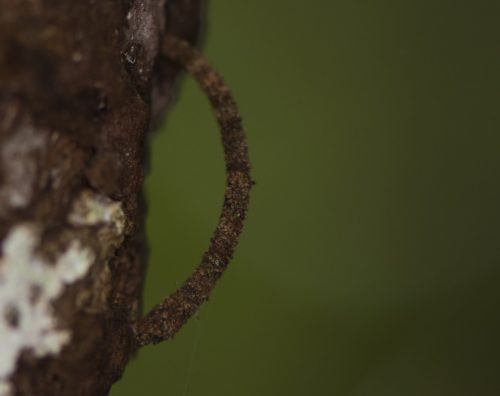 “The collaboration…will enhance the livestream by creating an engaging experience that sparks curiosity and deepens understanding of the remarkable research conducted by UF scientists,” said Alberto Lopez Torres, Manager of Museum Education.
Three Sessions, Endless Discovery
Each 60-minute livestream is designed for learners of all levels, with opportunities for students to ask scientists their questions in real time. The series will explore not only the biology of bagworms, but also the practice of science and careers in entomology.
September 9 – The Practice of Science: What is a Lepidopterist and How Does that Relate to Bagworms?
October 7 – Heredity and Reproduction: What are Bagworms and What Does Their Life Cycle Look Like?
November 4 – Diversity and Evolution of Living Organisms: Join Us for a Bagworm Bioblitz!
Why Bagworms?
Bagworms may not be a household name, but their biology makes them remarkable. These caterpillars construct protective cases, or “bags,” using bits of leaves, twigs, and other natural materials. “The architecture of the cases that these caterpillars make is absolutely stunning,” noted Akito Kawahara, Director of the McGuire Center. “Some make incredible spiral-shaped cases, while others create snail-like structures, using many different kinds of materials.”
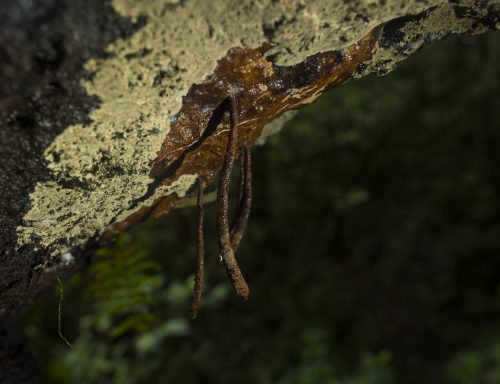 Because bagworms build their homes from their surroundings, they carry clues about their ecosystems right on their backs. “By seeing what plant and other material is incorporated in their bags we can have an idea of what they interact with, even if we don’t see it,” explained Mongue.
Inspiring Exploration
Mongue notes that bagworms are common across Florida, but many people don’t notice them. “I hope students get motivated to go out and look for bagworms and in the process all sorts of other organisms that aren’t flashy or large but still charismatic in their own way,” he said.
Whether you’re a student curious about science, a teacher looking to enrich your classroom, or simply someone fascinated by the hidden diversity of life, this series promises to spark discovery and wonder.
Mark your calendars and join us for a journey into the science, diversity, and surprising beauty of these extraordinary insects with Unbagging the Biology of Bagworms.
images courtesy of Andrew Mongue