Background
 Outdoor landscapes and lawns make up about 70% of a home’s total water use. In many urban and suburban neighborhoods, inefficient in-ground irrigation systems and limited awareness of water restrictions are leading to unsustainable freshwater consumption. Despite existing policies, poor communication and low compliance are making it difficult for residents to conserve water effectively.
A study from the UF Department of Agricultural Education and Communication aims to address this communication and compliance gap to help more Florida residents follow the proper irrigation policies and procedures. Researchers are attempting to find the best method for reaching residents of all backgrounds and irrigation knowledge levels to encourage more individuals to practice sustainable irrigation behaviors.
Current Research
Drs. Laura Warner, Jamie Loizzo, and Sadie Hundemer along with UF/IFAS Seminole County Extension agent Tina McIntyre, studied communication methods around irrigation regulations and restrictions. They created a communication campaign that targeted communities where water use has exceeded the underground freshwater stores.
Participants received a survey with messages varying in complexity and visual components. The study found four main conclusions:
- Any form of messaging increased the likelihood that participants would seek more information.
- The recipients of visual messages with the most complexity had a significantly higher chance of seeking information than those that did not view a visual message.
- The participants who already had a prior knowledge of irrigation restrictions engaged more with the messages after receiving any message regardless of complexity.
- The participants who had prior understanding of irrigation policies and received the most complex messages were more likely to engage in sustainable irrigation behaviors. This demonstrated that central (most effortful) messaging is most effective when communicating to individuals who have prior knowledge of irrigation restrictions.
The authors employed the Elaboration Likelihood Model (ELM) to come to this conclusion, as it demonstrated that detailed and complex messages are more effective for an audience that is already aware of the topic and is motivated to learn more.
Why it matters
This study revealed a more efficient way to reach individuals who already understand safe and sustainable irrigation behaviors. However, individuals who have no prior knowledge of these behaviors and policies still have a knowledge gap. Future studies will need to look at how to inform this particular audience and how to increase their motivation to participate in these sustainable behaviors.
The authors recommend that future policy should take the results of this research into account when enforcing irrigation regulations. The policy should include both simple and complex messaging for audiences with different levels of knowledge.
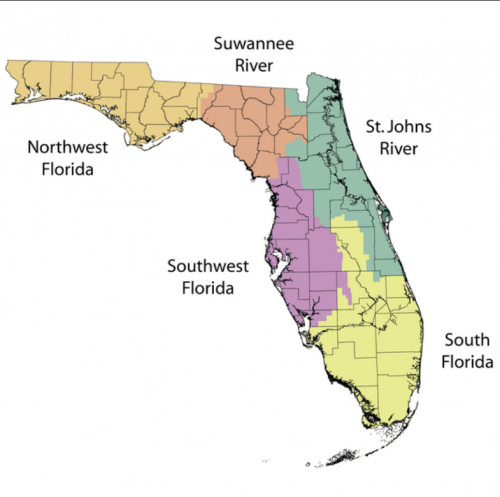
Safe irrigation is possible with the right messaging and cooperation among the community. To learn more about your own irrigation regulations, visit your local water management district webpage:
To learn more about this study click here or email Dr. Warner at lsanagorski@ufl.edu.