On a crisp Saturday morning, 250 people congregate in the midst of McCarty Woods, a 2.9-acre Conservation Area that serves as a haven for wildlife, a place of recreation, and a living classroom. Here, teams of students, faculty, staff, and community members work side by side to restore and protect one of the University of Florida’s most treasured green spaces.
As McCarty Woods approaches the fifth anniversary of its Restoration Project, an initiative launched to safeguard the woods from campus construction, stakeholders reflect on the profound benefits of keeping this natural refuge at the heart of the University of Florida (UF).
The Spark: Saving McCarty Woods
McCarty Woods has long been a fixture of campus life, but its future was threatened in 2021 when plans emerged to remove its title of conservation status, established in 2000, via a construction project. The proposal sparked widespread concern and galvanized the campus community.
Students, faculty, and staff rallied to preserve what many saw as the last meaningful green space in the center of campus. “It represents our ‘Central Park,’” said Dr. Doug Soltis, Restoration Committee Leader and Distinguished Professor in the Florida Museum of Natural History and Department of Biology.
The restoration committee of the McCarty Woods Restoration Project has worked to bridge the gap between conceptual and practical experiences. Dr. Doug Soltis, Dr. Pam Soltis, Dr. Matt Gitzendanner, and Dr. Lucas Majure have contributed to plant conservation research for decades; however, they had not participated in or organized hands-on conservation events. And then the opportunity arose to tackle McCarty Woods as a restoration project.
“It felt good to have a hands-on project, especially something so local, like literally right across the street from our lab,” said Dr. Pam Soltis, Distinguished Professor and Curator at the Florida Museum of Natural History and Director of the UF Biodiversity Institute.
The Save McCarty Woods campaign began in August 2021, when the area was officially approved for restoration. By August 29, 2026, the project will reach its five-year milestone, marking a full circle of community-driven conservation.
Dr. Pam Soltis reflected on the early challenges: “Eventually, somebody made the comment that ‘It’s just a bunch of invasive plants there anyway, so why do you even care?’ This was not true, but it gave us the impetus to remove the invasive trees.”
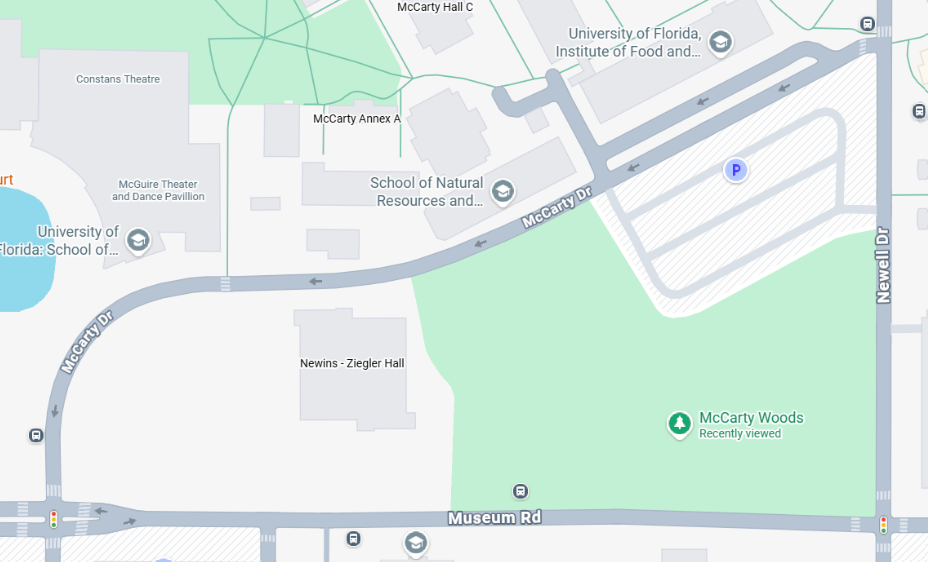
The initial team quickly realized the scale of the problem. Invasive trees had spread widely, crowding out native species. Their action plan began with removing invasives, followed by planting natives. The same process also applied to Harmonic Woods, another UF Conservation Area located along Museum Road across from Lake Alice. A boundary survey revealed that a significant area east of McCarty Woods actually belonged to the Conservation Area, prompting the team to enlist a landscape architect to enhance the border between the Woods and the lawn near Newell Drive.
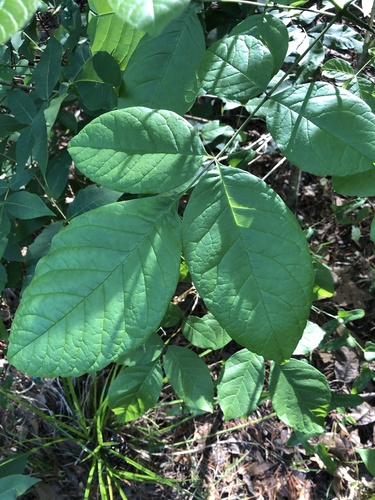
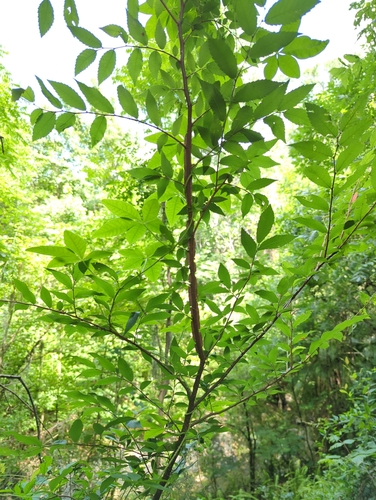
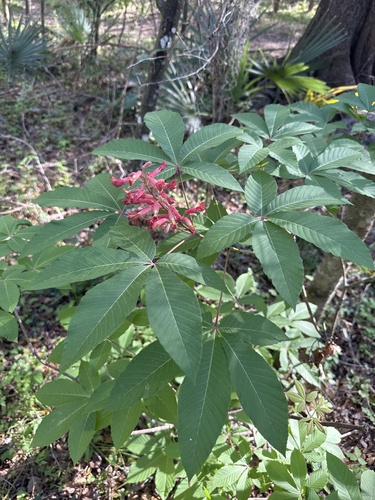
Several invasive species still require monitoring, including the glossy privet, paper mulberry, and cat’s claw vine to keep their populations low. Volunteers also actively manage the elm and ash species and red buckeye, in an effort to stay true to Florida’s native plant life.
The trail through McCarty Woods opens into a quiet stretch where uneven ground shifts gently beneath each step. Dense greenery forms a canopy overhead, offering a moment of calm in the heart of campus.
For many, this pocket of nature provides solace. McCarty Woods has come a long way since its restoration began, a testament to the resilience of both the ecosystem and the community that protects it.
In addition to serving as a sanctuary, McCarty Woods is recognized as a hotspot of biodiversity on the UF campus, meaning it is biologically rich, yet threatened. It is also widely used for research and teaching, reinforcing its ecological, educational, and social significance.
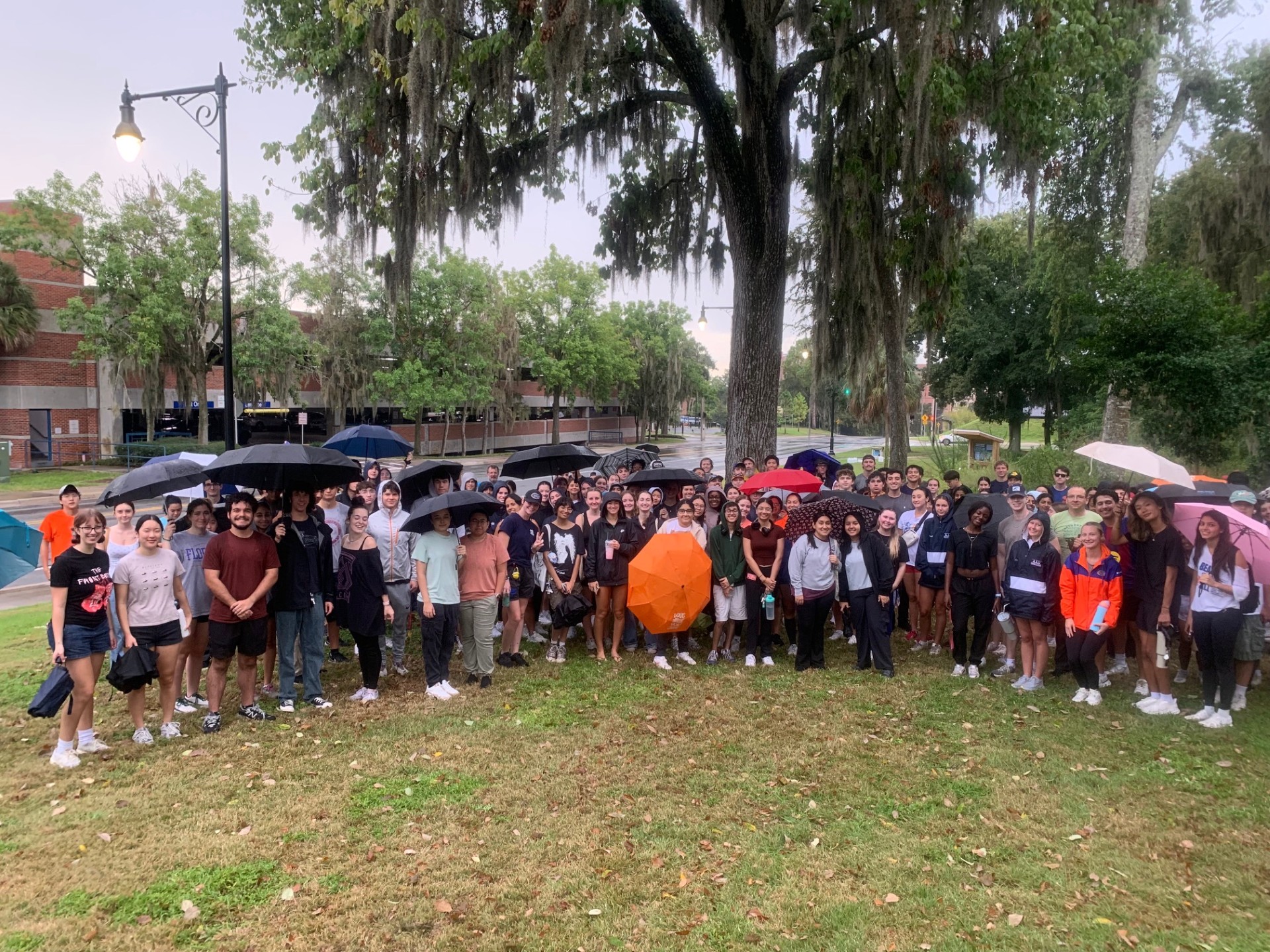
The impact of the restoration is visible not only in the Woods themselves but also in the people who care for them. In September alone, more than 250 volunteers participated, including large groups from UF classes like Integrated Principles of Biology 2 (BSC2011) and Plant Taxonomy (BOT2710). UF’s Fencing Club also made an appearance. Together, they removed over 80 bags of invasive plants.
The People of the Woods
The restoration project has benefited not only the Woods but also the participants.
The mix of participants is diverse: townspeople, artists, teachers, alumni, and students. Some arrive with years of conservation experience, while others have never lifted a shovel before. Yet all contribute to the shared mission of renewal.
From the beginning, students played a central role. They led conservation activities, including invasive species removal at Harmonic Woods, and partnered with events at McCarty Woods.
Volunteers have experienced emotional growth and personal well-being by engaging in outdoor activities with others.
Dr. David Blackburn, Curator of Herpetology and Associate Director of Research and Collections at the Florida Museum of Natural History, as well as Chair of its Natural History Department and a regular volunteer, emphasized the educational value. “I like to participate as much as I can in this because it is an important opportunity for our faculty and staff to engage with students who come from across UF’s campus community,” said Blackburn.
Reflecting on the changes, Blackburn added: “I’ve particularly enjoyed seeing the transformation of McCarty and appreciate it every time I cut through the Woods between meetings on campus.”
Today, the McCarty Woods Restoration Project continues on a monthly basis on Saturday or Sunday mornings. Summaries of more than 50 past events can be found on the project’s website, documenting years of steady progress.
Volunteers are encouraged to join whenever they can spare time. Tasks vary from month to month: planting native species, spreading bark along trails, removing downed limbs, posting new signage, cleaning kiosks, tagging trees, marking boundaries, removing invasive species, and more.
Participants meet at the McCarty Hall Parking Area, just north of the woods. Long pants and closed-toed shoes are recommended. Supplies such as water, loppers, and hand saws are provided, though volunteers often bring their own gloves, water bottles, or garbage bags. And in a tradition that underscores the community spirit of the project, donuts are offered as a thank-you.
Looking Ahead
As McCarty Woods remains secure, program leaders agree that a long-term plan is essential for sustainable management. One proposal is for UF to hire an arborist dedicated to campus natural areas, a position common at many universities. “A few of us can’t keep doing this forever. A UF arborist needs to be a priority,” said Dr. Doug Soltis.
He also suggested that graduate assistantship positions could provide valuable training opportunities for students, preparing them to take on tasks such as planting, invasive removal, event planning, and more.
For updates and to volunteer, sign up for email notifications by contacting biodiversity@research.ufl.edu.
Information from the UF Center for Aquatic and Invasive Plants, the UF Institute of Food and Agricultural Sciences, the UF Biodiversity Institute, the Gitzendanner Lab, and the Florida Museum of Natural History. Thank you to Dr. Pam Soltis, Dr. Doug Soltis, and Dr. David Blackburn for their input.