Branham Lab
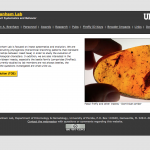 Research in the Branham Lab is focused on insect systematics and evolution, especially the fireflies (Lampyridae). The lab focuses on reconstructing phylogenies in order to study the evolution of behavior and morphological characters.
Hulcr Lab
 The Hulcr Lab focuses on the ambrosia symbiotic complex – beetles, fungi and bacteria. The lab focuses on the most fundamental questions about the evolutionary origin of this fungus-farming symbiosis, and the chemistry that makes it function, but also how the tree-killing symbiosis is impacting trees, forests, and people.
Kawahara Lab
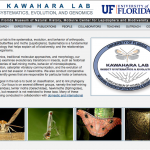 The focus of our lab is the systematics, evolution, and behavior of arthropods, especially the butterflies and moths (Lepidoptera). Utilizing genomics, traditional molecular approaches, and morphology, our research group examines evolutionary transitions in insects and arthropods, such as host-use evolution, caterpillar vibratory communication, and the evolution of hearing organs and bat evasion in hawkmoths.
Lucky Lab
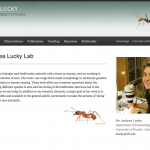 The Lucky Lab focuses on the evolution of insects, especially in the evolution of ants. The tools used range from insect morphology to molecular genetics to phylogenetic statistics to remote sensing. A major goal of the lab’s work is to make science accessible and available to the general public, particularly to make the process of ‘doing’ science accessible to non-scientists.
J. Miller Lab
 Miller’s interests broadly range across systematics, taxonomy, biogeography, and life history of Lepidoptera, especially in the Castniidae, Hesperioidea, and Nymphalidae. Fieldwork and research has focused heavily in the Caribbean.
Willmott Lab
 The Willmott Lab focuses on the systematics, ecology and biogeography of the butterflies of the Andes. A special focus is on the Nymphalidae.
Also Related:
Hahn Lab
 The Hahn Lab uses a combination of physiological, biochemical, and evolutionary ecology approaches to understand fundamental questions in insect biology.
Miller Lab
 The Miller Lab works on the evolution of morphology, function, and behavior. Much of their research examines sexual selection and phenotypic plasticity in the family Coreidae, the leaf-footed bugs.
Paulay Lab
 The Paulay Lab studies the biogeography, evolution, systematics, and natural history of invertebrates, especially in marine systems. The lab has an active field program on tropical coral reefs, with focus on the Ind-west Pacific.