About 5 to 5.5 million years ago (latest Miocene – earliest Pliocene) the area of the Montbrook fossil dig site in eastern Levy County, Florida was a freshwater ecosystem teeming with fish, amphibians, snakes, turtles, alligators, and water birds.
The majority of the fossils found at the site are from freshwater animals, with some shark and ray teeth leading us to believe that this site is an ancient river system relatively close to a coast (See the images above and below for a modern-day analog to our Montbrook fossil site).
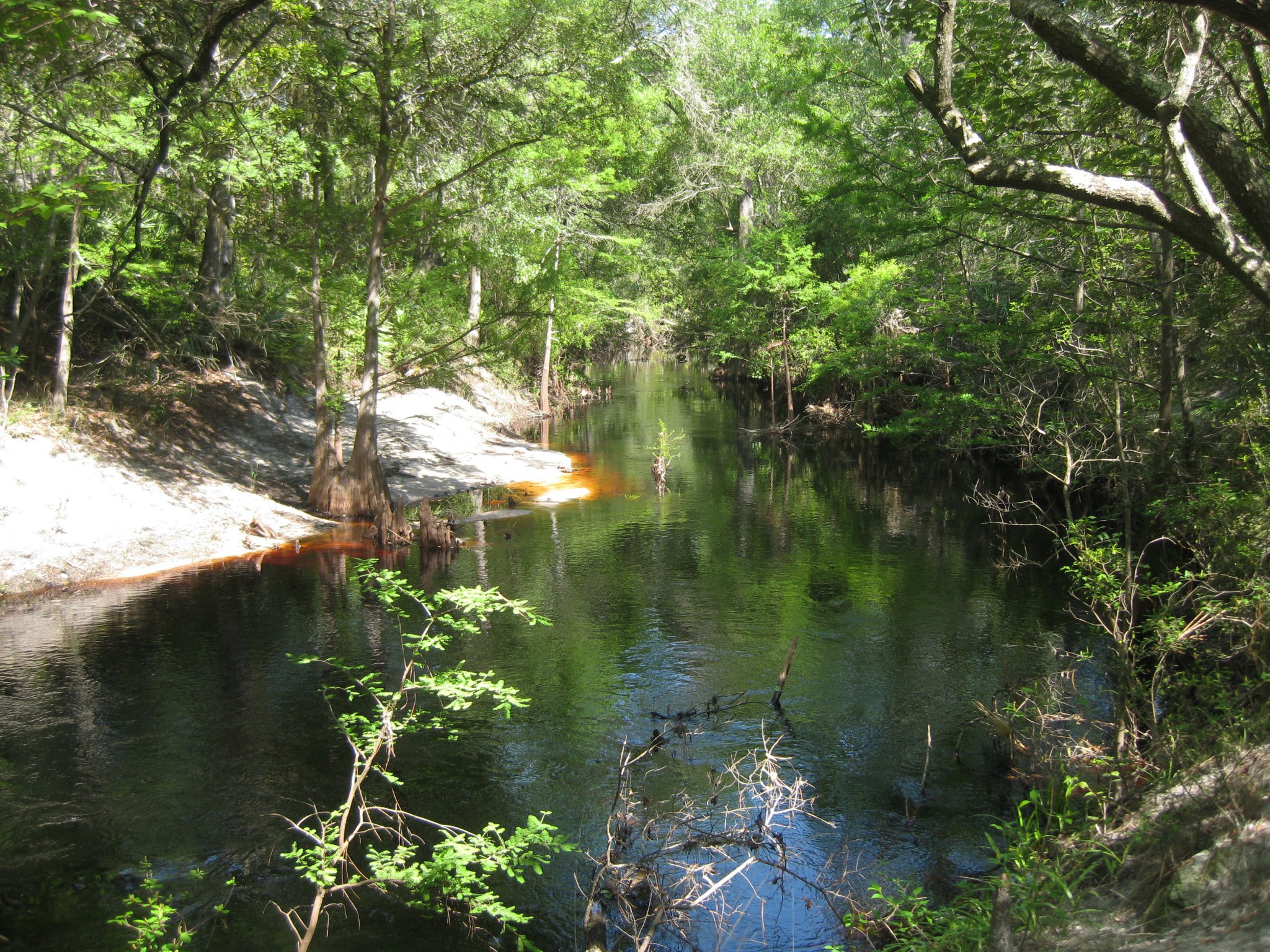
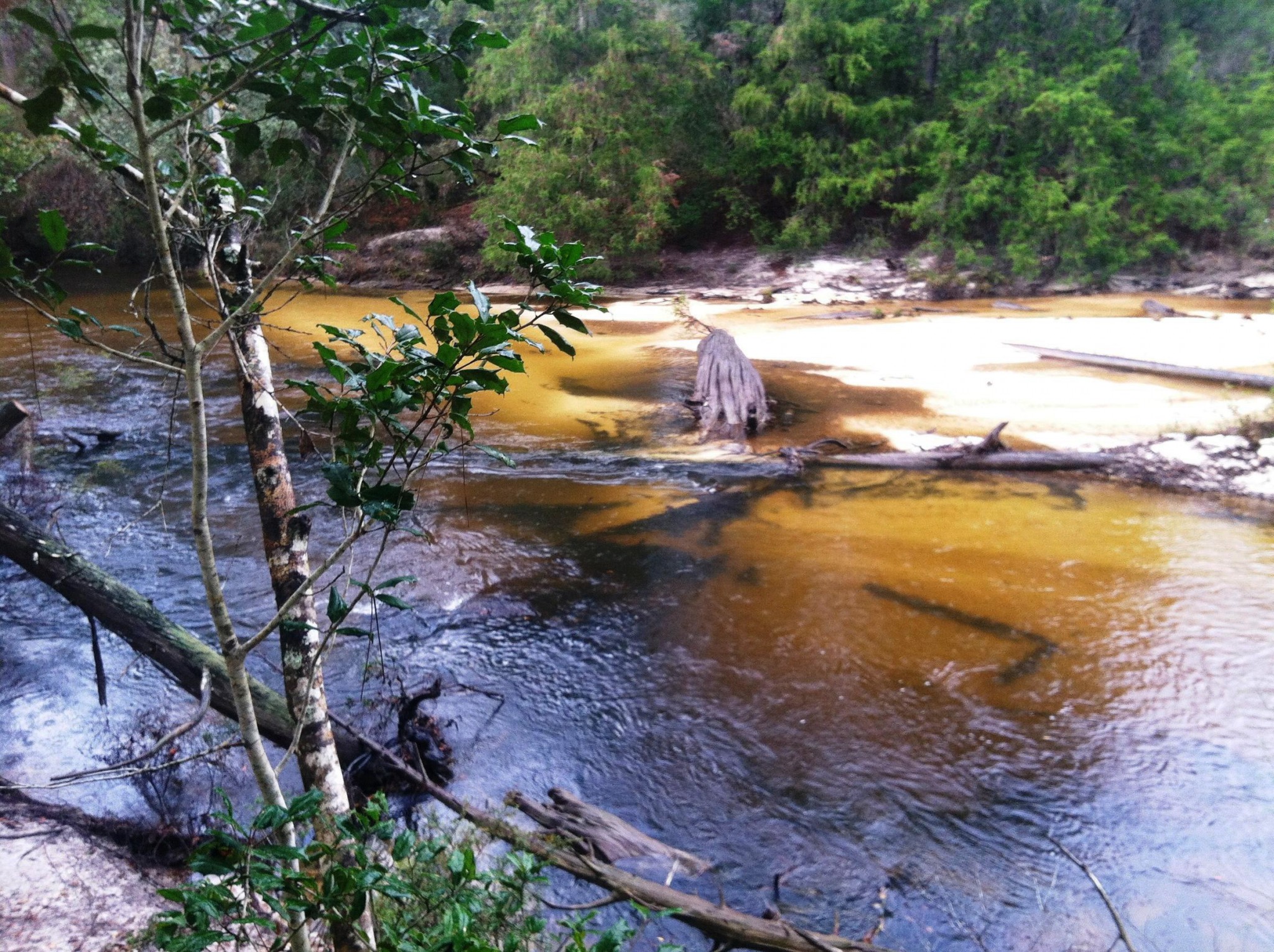
Living along the banks and on the floodplain of this river were mammals ranging in size from small shrews and mice to large rhinos and elephant-sized gomphotheres and mastodons. Most of the fossil remains of the larger land mammals are from juveniles who were more likely to die than adults crossing the river or to get fatally trapped in mud. We typically find isolated bones and teeth, with a few articulated skeletons, strengthening the idea that a flowing river may have scattered the remains after death and decay of the soft tissues.
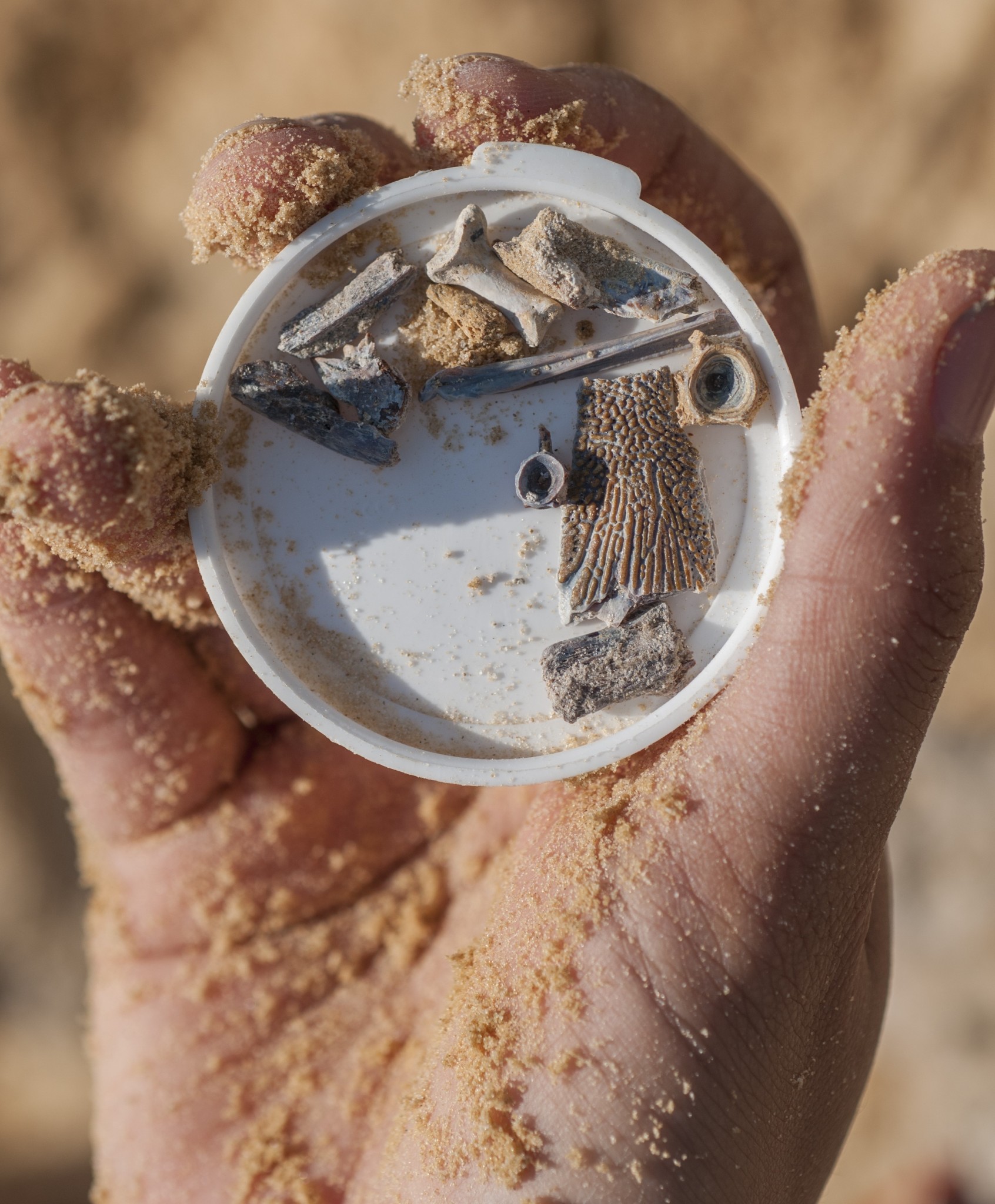
Montbrook is the first late Hemphillian (NALMA) site found in north Florida. It is located about 120 miles (200 km) north of the Palmetto Fauna, the state’s only other source of late Hemphillian fossils. But unlike that region, Montbrook is producing more complete specimens and contains the first significant land-dwelling fauna of this age from Florida. The Palmetto Fauna is rich in marine species, while the aquatic species discovered at Montbrook are mostly from freshwater habitats. So, Montbrook is providing the first direct evidence of its age about animal life in a coastal river and adjacent habitats in the Southeastern United States.
The Montbrook Site is located on private property and public access is not allowed. The landowner contacted the Florida Museum about fossils discovered on the property. Once they learned the scientific importance of the discovery, they allowed Florida Museum staff and volunteers to conduct an excavation between mid-November 2015 and mid-May 2016. Needing something to call this new site, ‘Montbrook’ was agreed upon, taking its name from the nearby, now-defunct town of Montbrook (see this blog post for more information). This effort involved nearly 150 persons and 5,000 person-hours, resulting in the recovery of 8,000 fossil specimens. The digging season following this was even more extensive, running from October 1st, 2016 through May 21st, 2017. The effort made by Florida Museum volunteers, staff, students, and teachers resulted in 9,221 person-hours put into digging at the site. Subsequently, volunteer digs have been held at Montbrook ever since with future digs planned and preparation and curation currently ongoing.
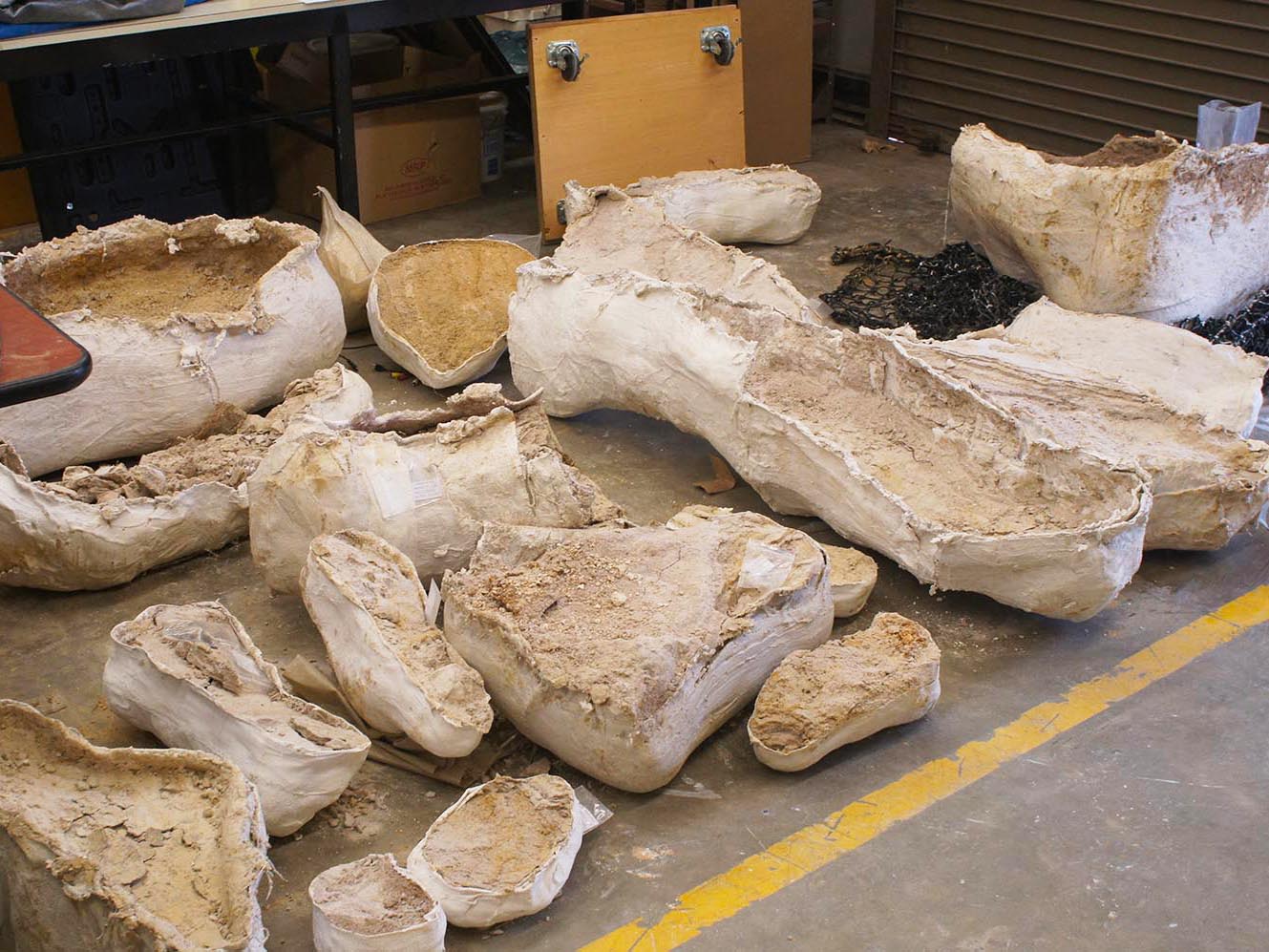
Learn how to volunteer in the lab or in the field
Details about the Montbrook Fossil site