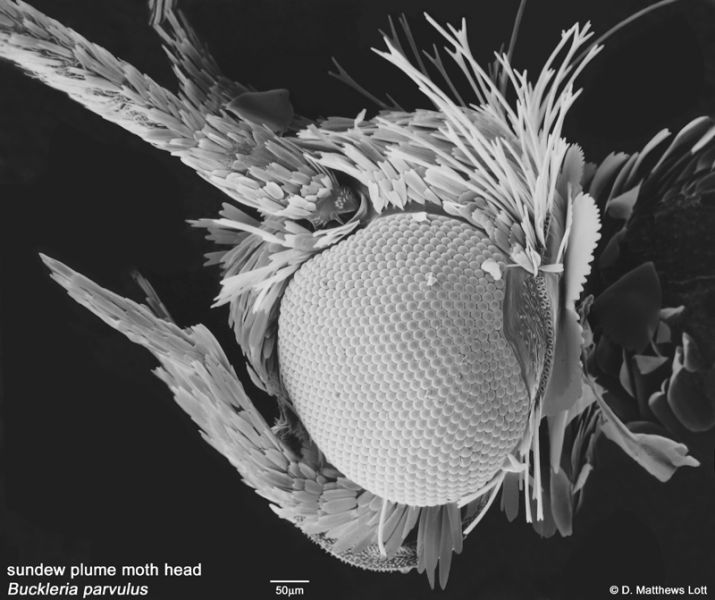
This scanning electron micrograph illustrates the head of an adult sundew plume moth (Buckleria parvulus [Lepidoptera: Pterophoridae]). The lateral view shows the compound eye, antenna base, labial palp, and part of the proboscis. The tuft of elongate bifurcate-tipped scales adjacent to the eye is characteristic of this moth family. Plume moths (family Pterophoridae) are unique in having the wings divided into several feather-like lobes, hence the common name. The larva of this particular species feeds on leaves of the carnivorous plant genus, Drosera (sundews). Before eating a leaf, the tiny larvae first consume the sticky plant hairs that ordinarily trap small insects. The larva pupates above the leaves on the flower stalk so the tiny adult moth, with a wingspan less than 12 mm, escapes the peril of the sticky leaves when emerging from the chrysalis.