Pleistocene Epoch
2.58 million to 11,700 years ago
Global temperatures during the Pleistocene fluctuated dramatically creating glacial periods of extremes. During cooler glacial periods, sea levels dropped and the land area of Florida’s peninsula expanded. During warm interglacial periods, sea levels rose, making the peninsula smaller. Paleontologists have found Pleistocene fossils in dig sites in almost every county in Florida, speaking to our state’s rich biodiversity during this period. Explore some of the terrestrial animals of Florida’s Pleistocene:
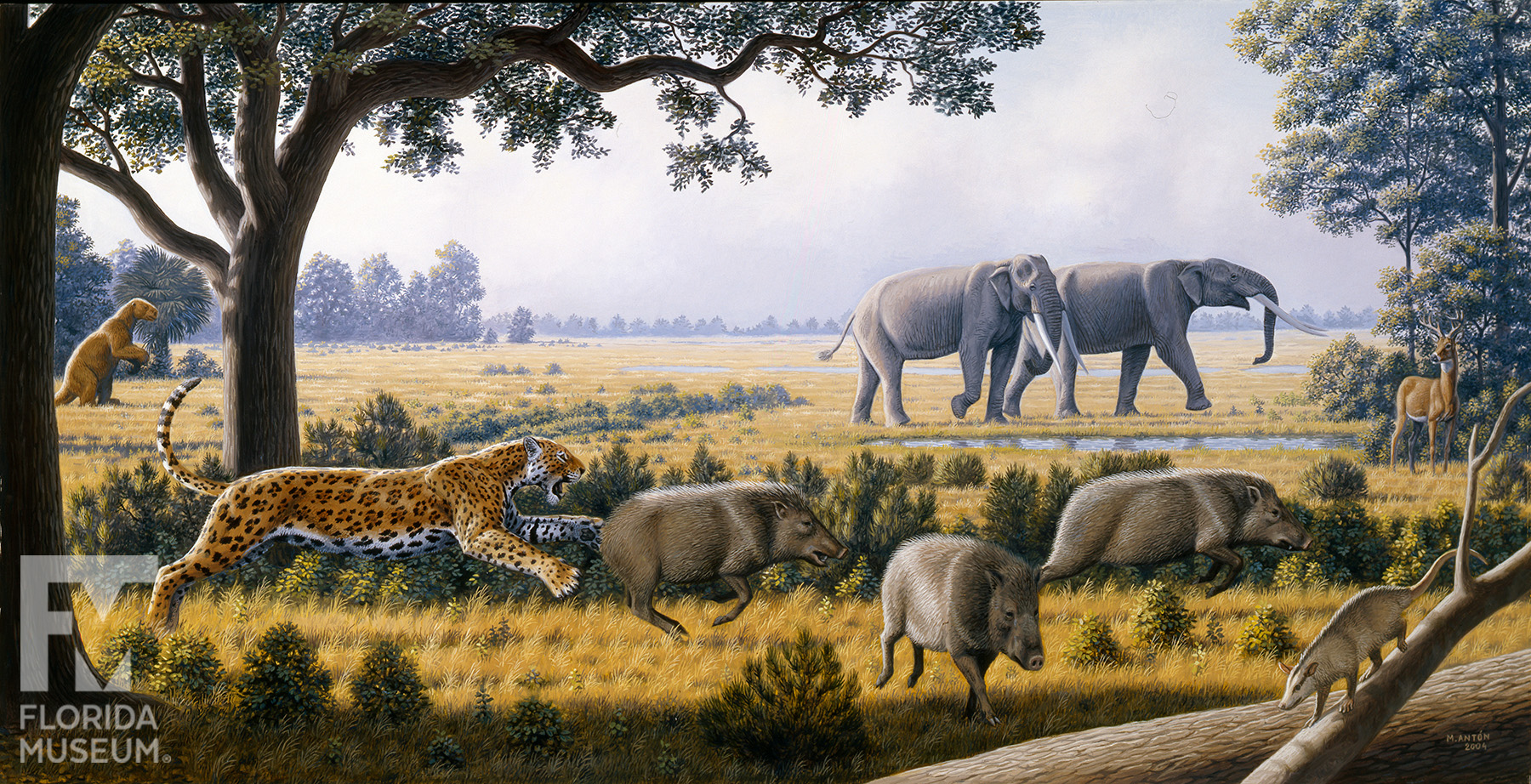
This painting was commissioned from artist Mauricio Antón for our Florida Fossils exhibit. Learn about the Pleistocene animals represented:
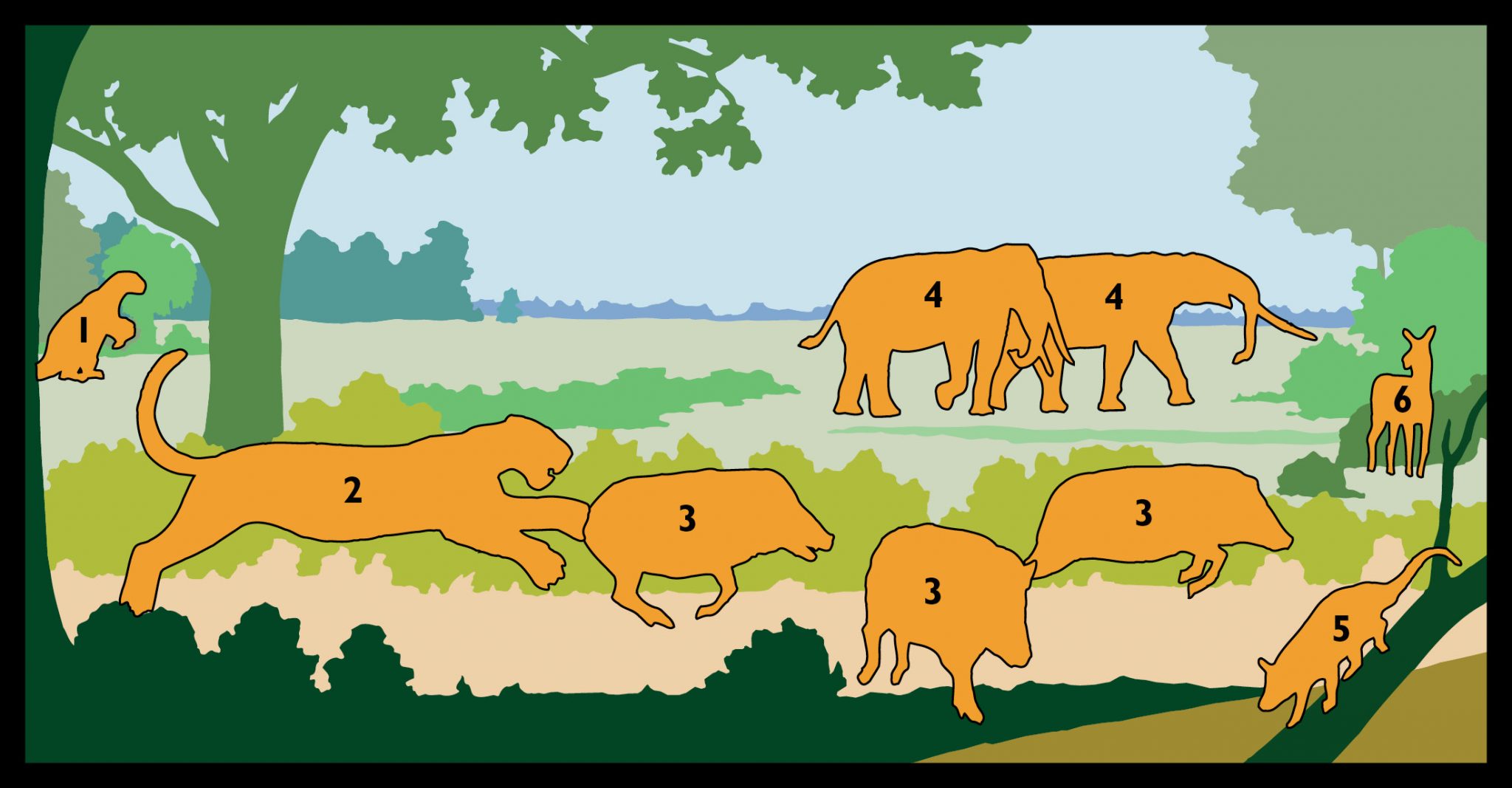
- Paramylodon harlani (Harlan’s ground sloth)
- Panthera onca (jaguar)
- Platygonus sp. (peccary)
- Cuvieronius tropicus (Cuvier’s rhynchothere)
- Didelphis virginiana (Virginia opossum)
- Odocoileus virginianus (white-tailed deer)
Highlights
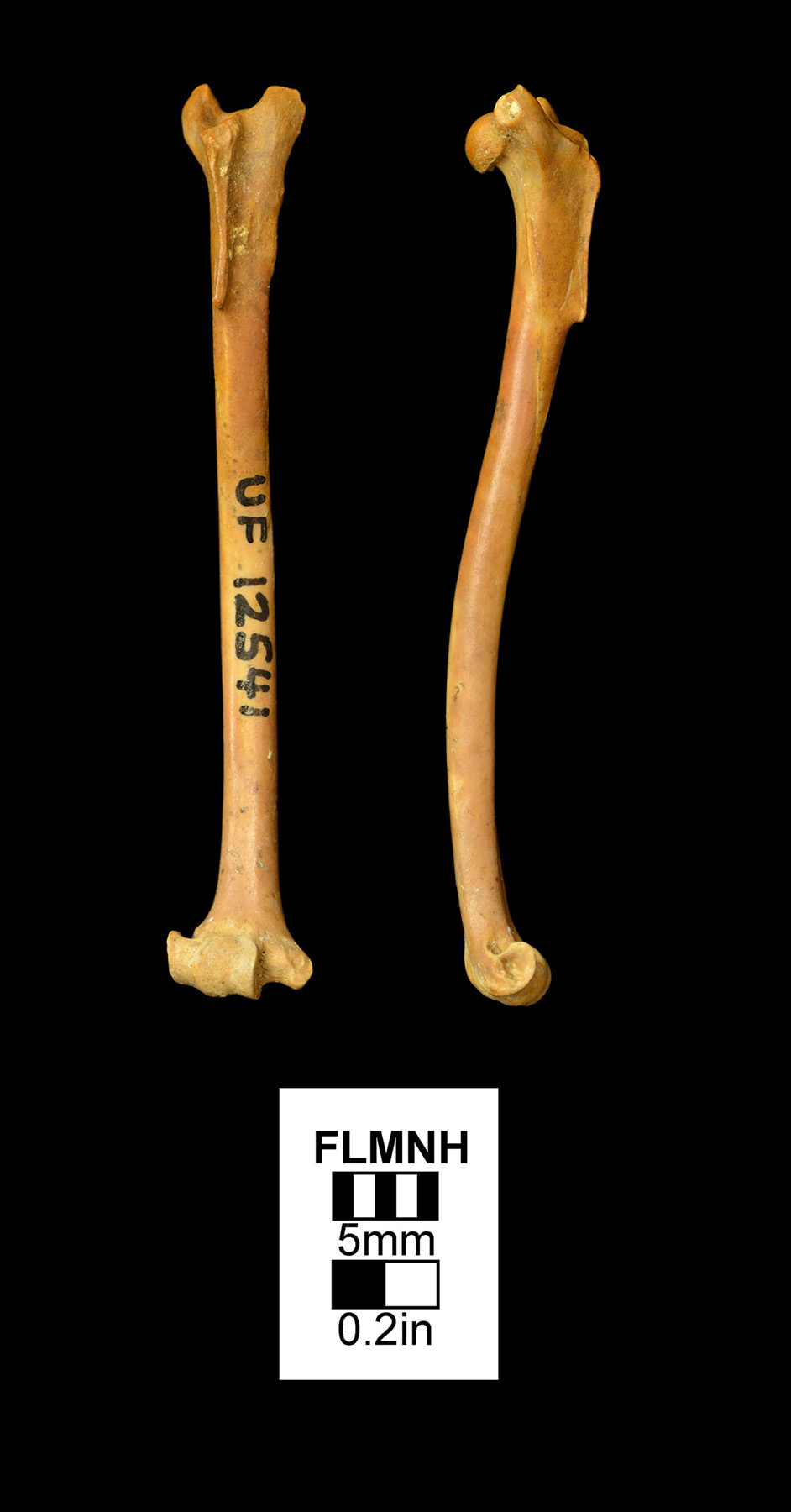
Specimens of jaguars (Panthera onca) are somewhat common in Florida’s fossil record compared to other felids of its time like the American lion and saber-tooth cats. And based on the specimens found, these jaguars were much larger than those living in Central and South America today. Jaguars arrived in North America by crossing the Bering Land Bridge in the Pleistocene. Read about jaguars in Florida’s fossil record
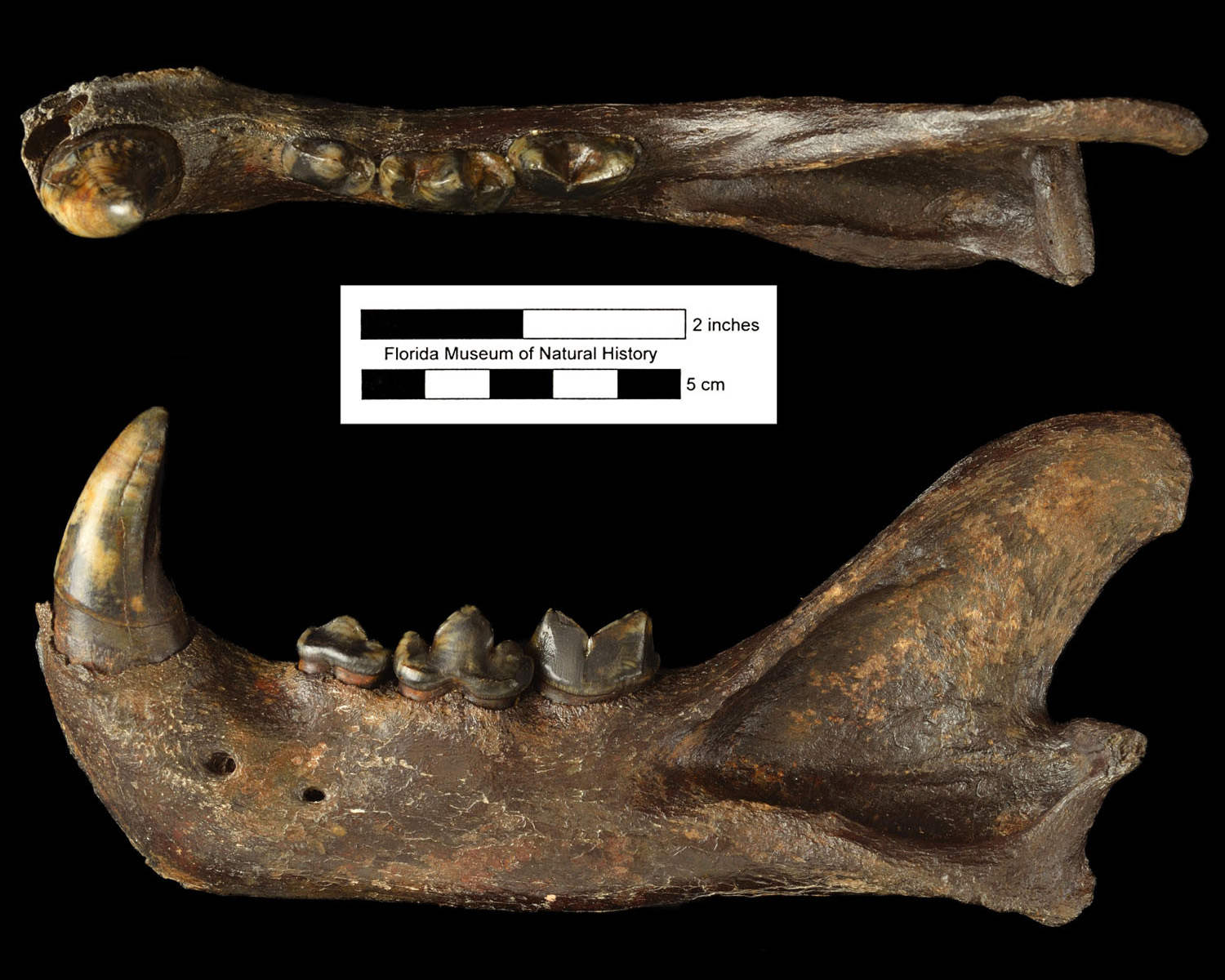
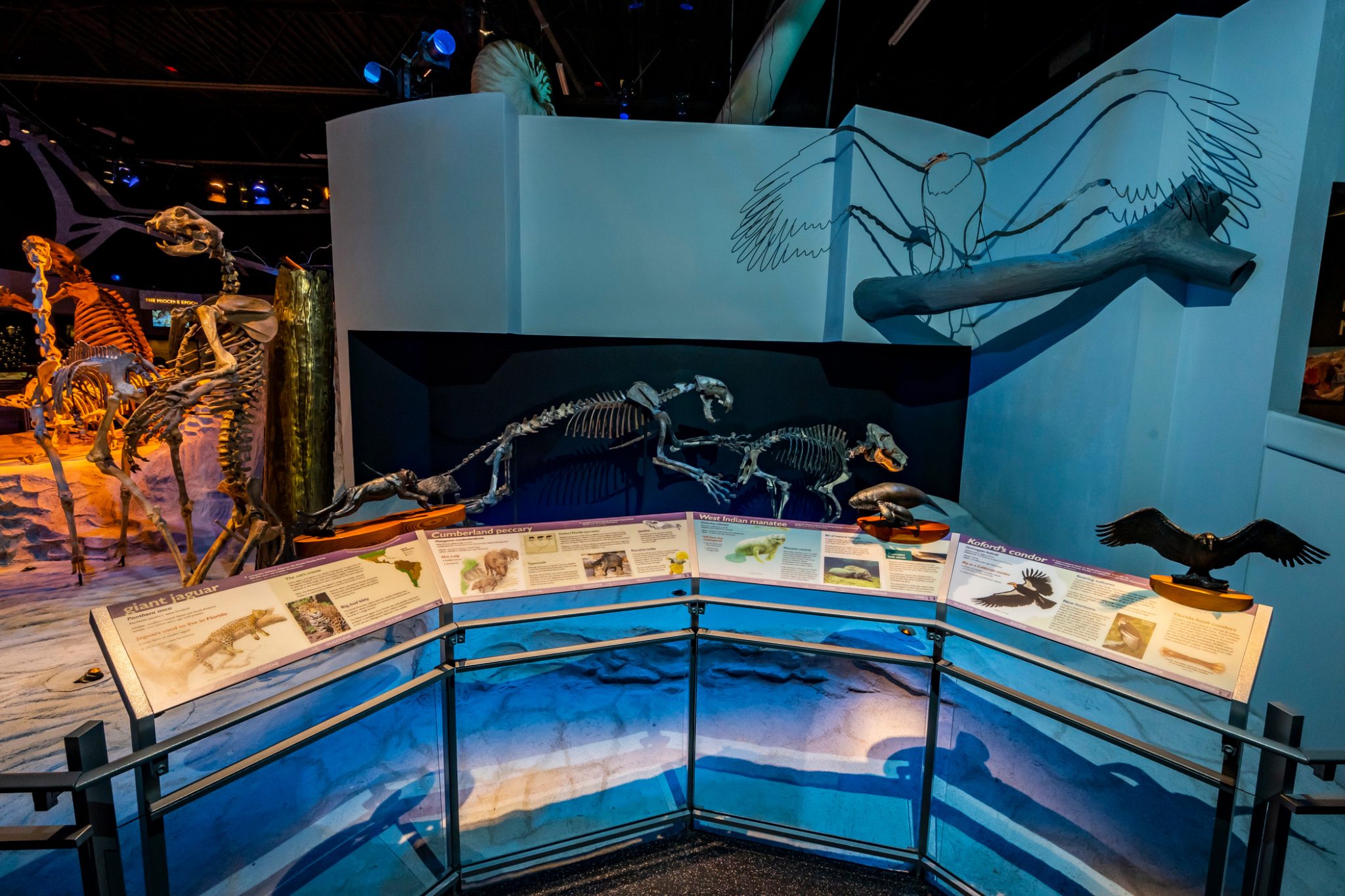
Other animals from Florida’s Pleistocene might look familiar, like white-tailed deer, peccaries, and Webb’s marsh rabbit (Sylvilagus webbi) which was similar to today’s modern marsh rabbit. Now extinct, the Lesser short-faced bear (Arctodus pristinus) is most closely related to the spectacled bear of South America among living bear species.
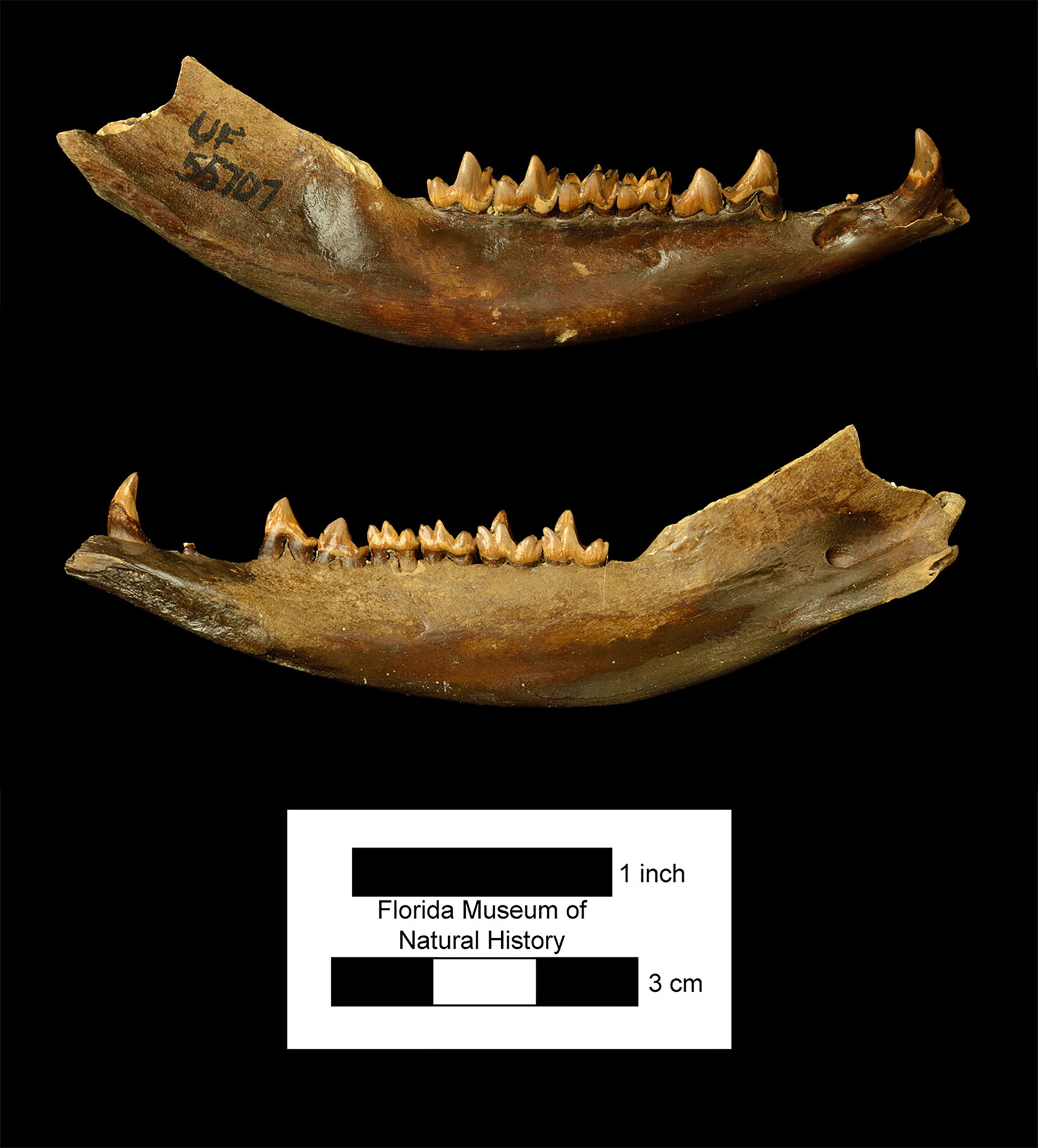
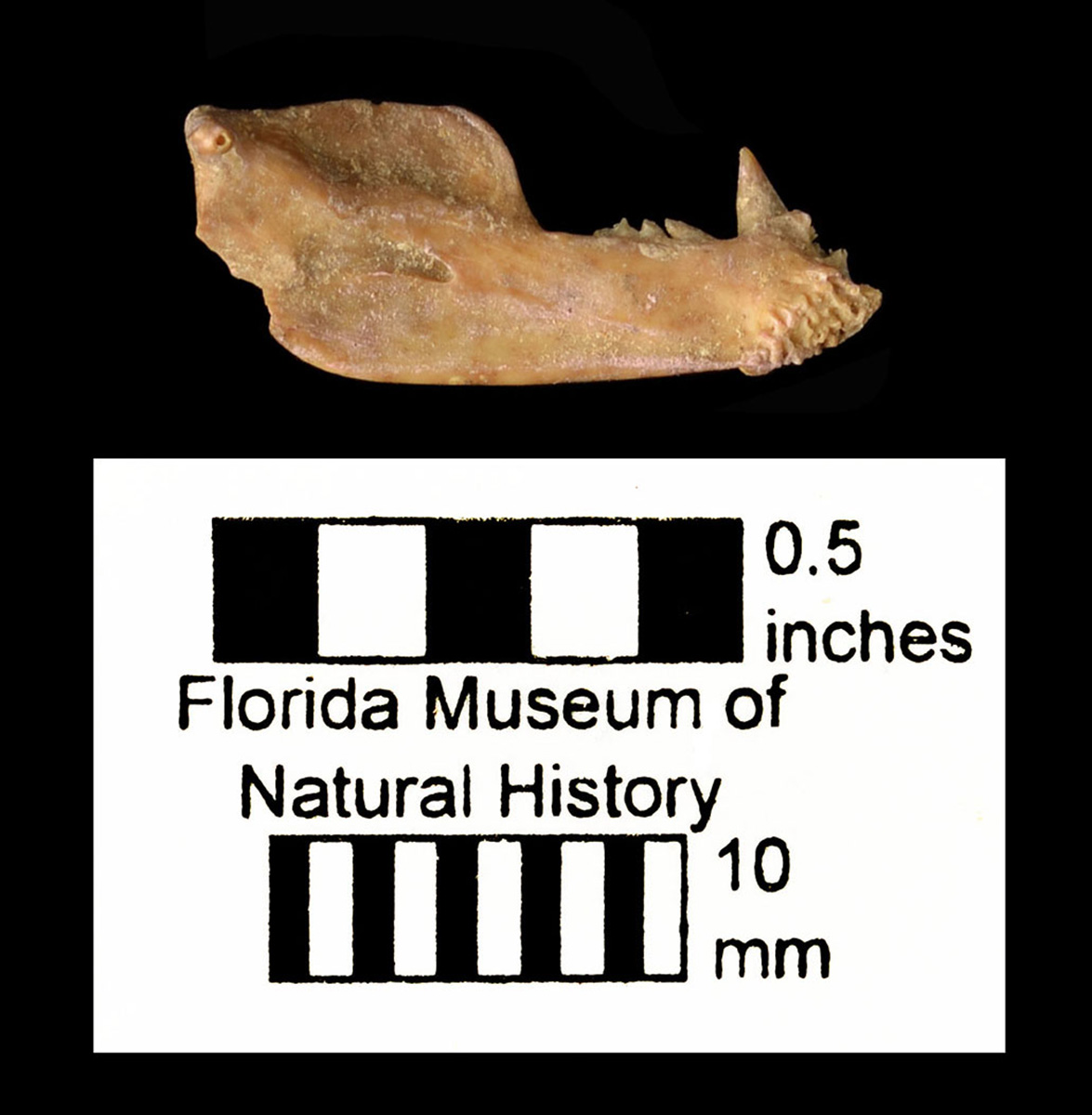
On the other hand, Virginia opossum (Didelphis virginiana) is an adaptable opportunist that has settled in human-inhabited areas and is still very common in Florida. This opossum species evolved in South America and arrived in North America during the Great American Biotic Interchange. Read about the Virginia opossum in Florida’s fossil record
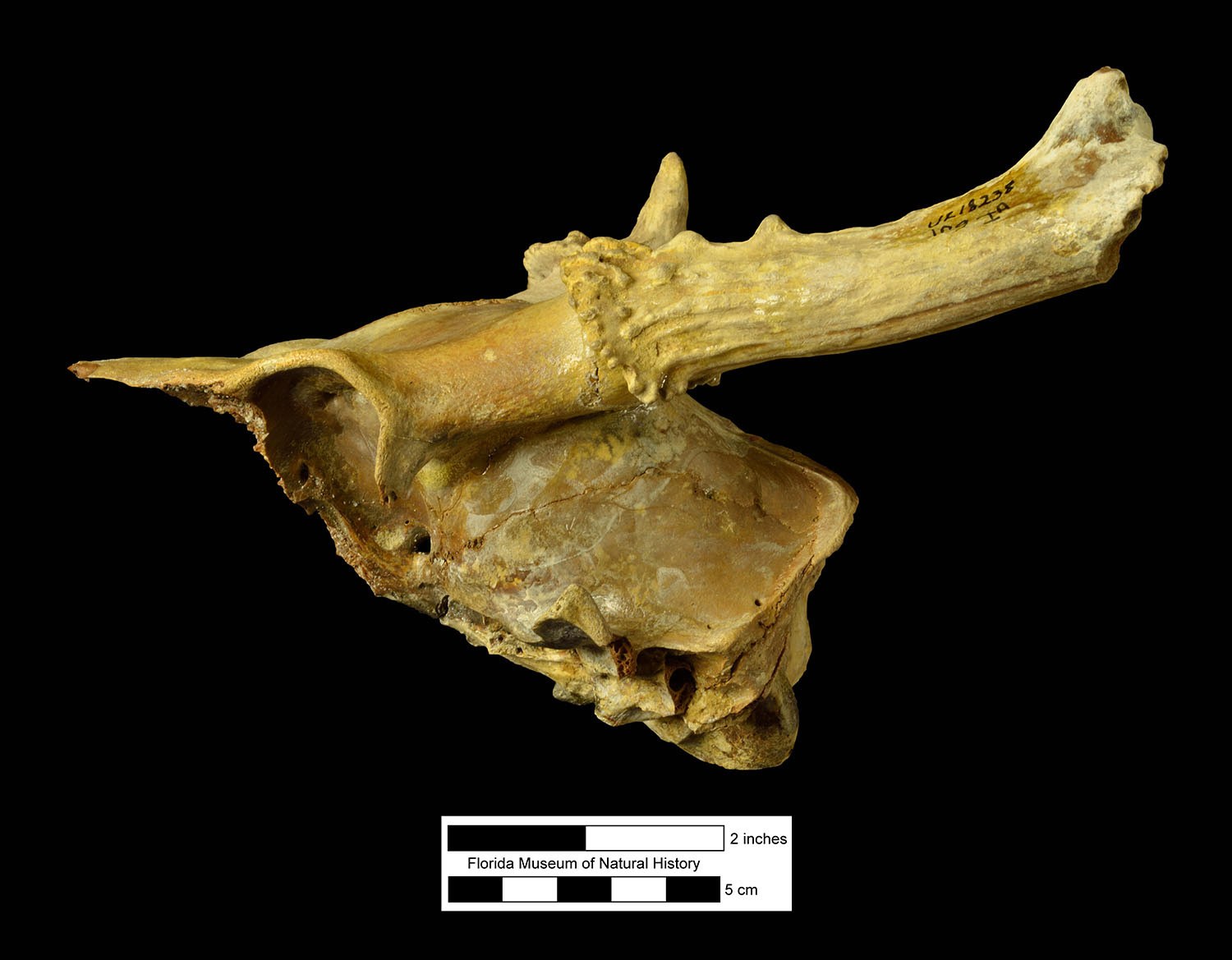
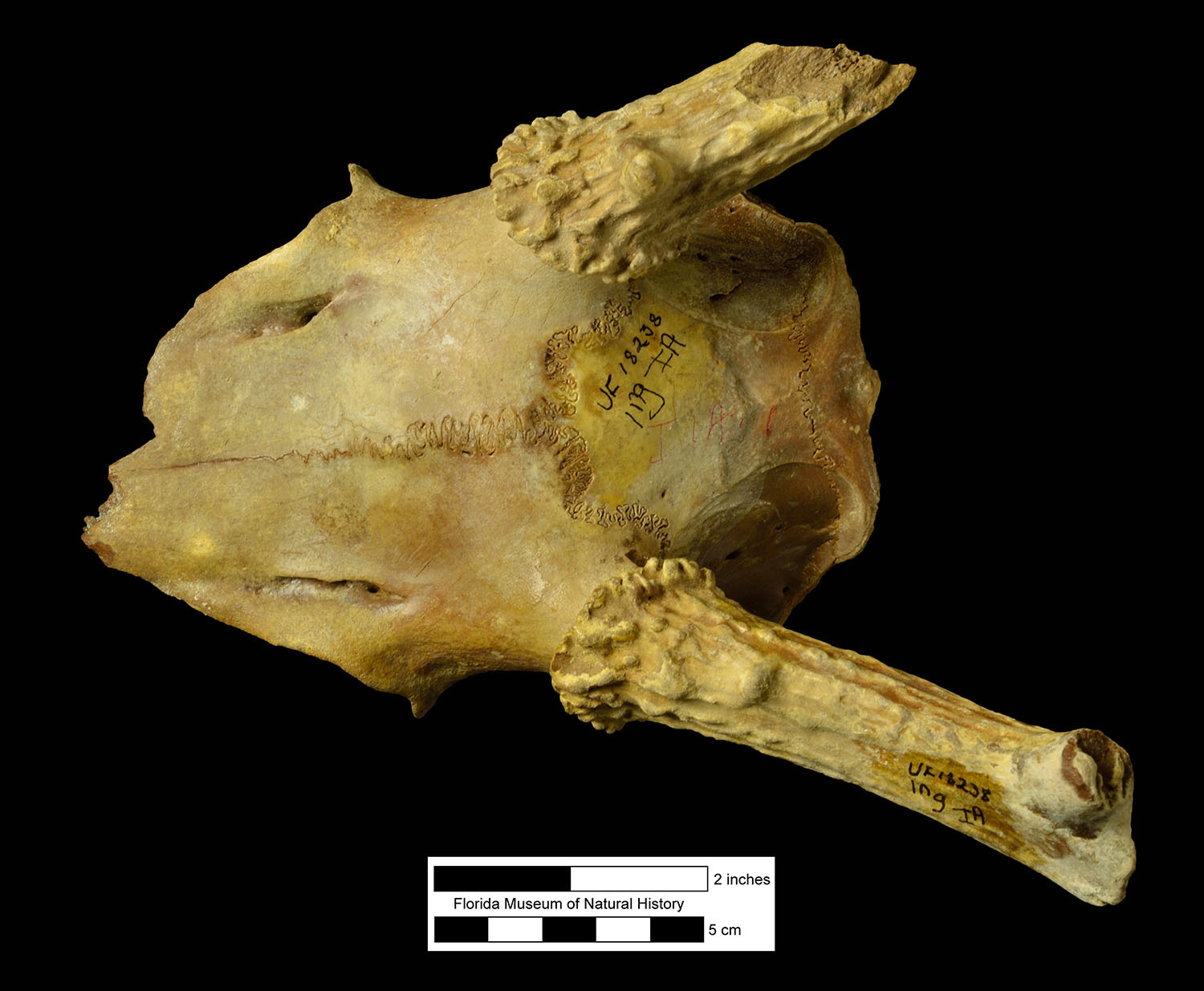
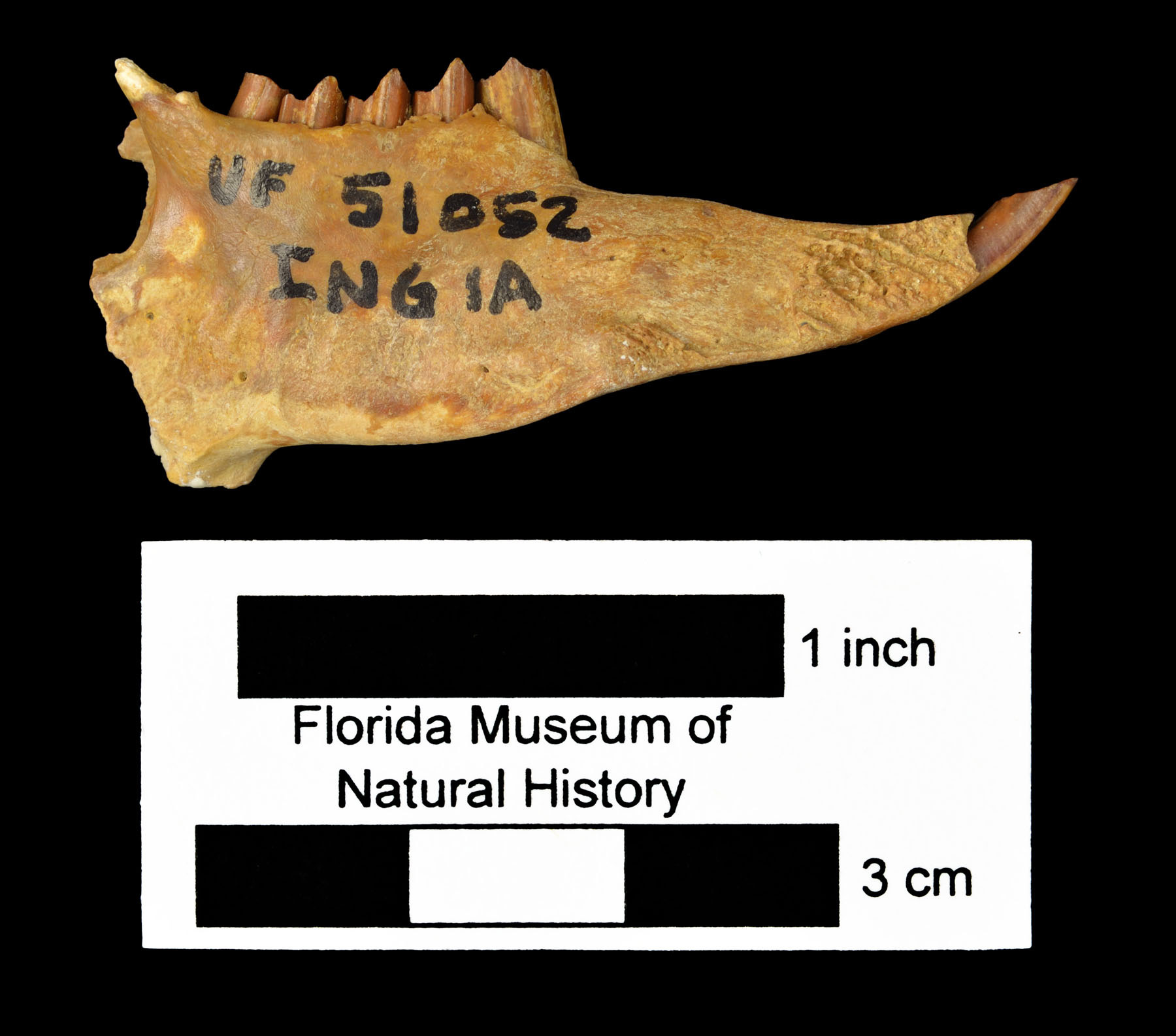
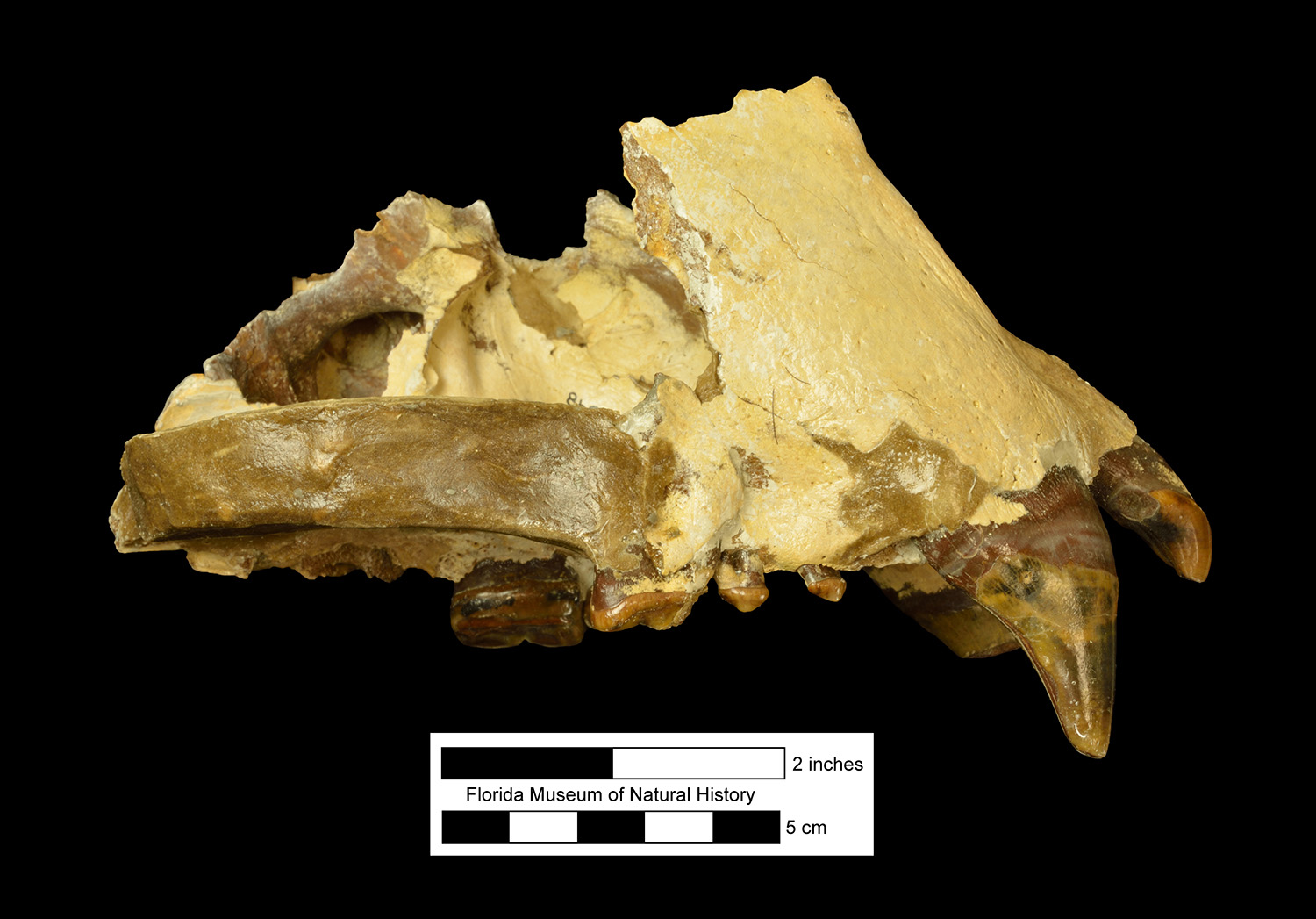
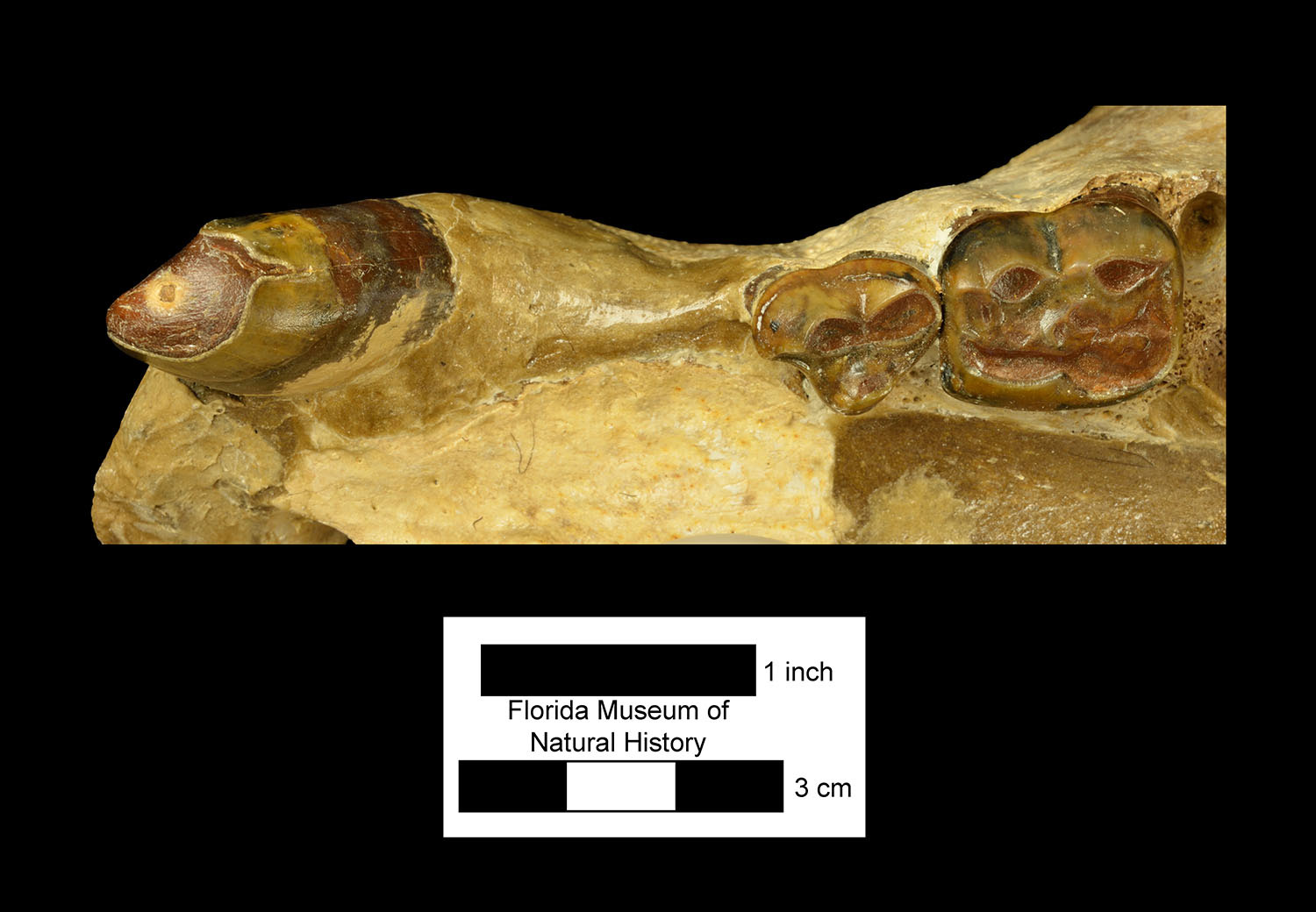
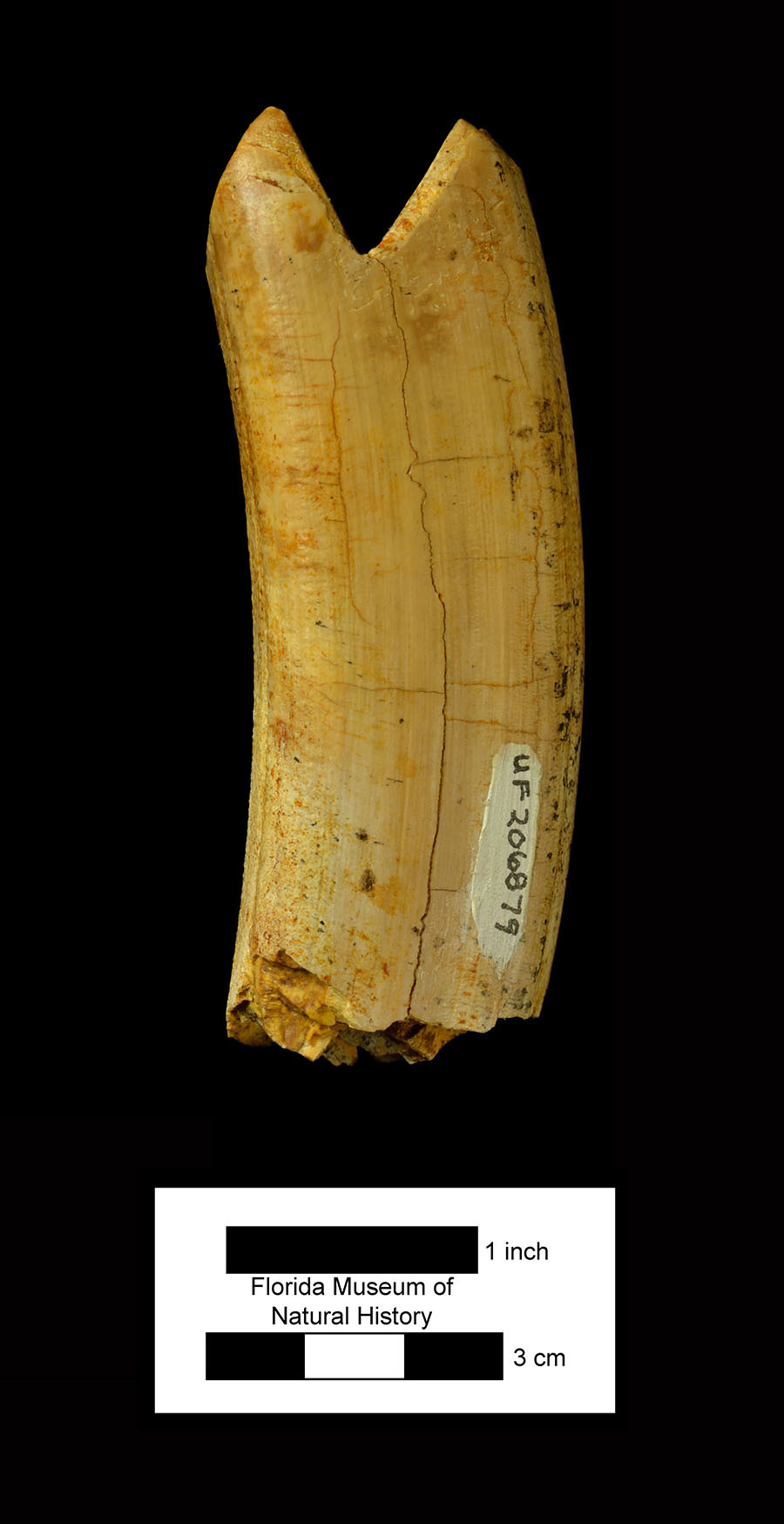
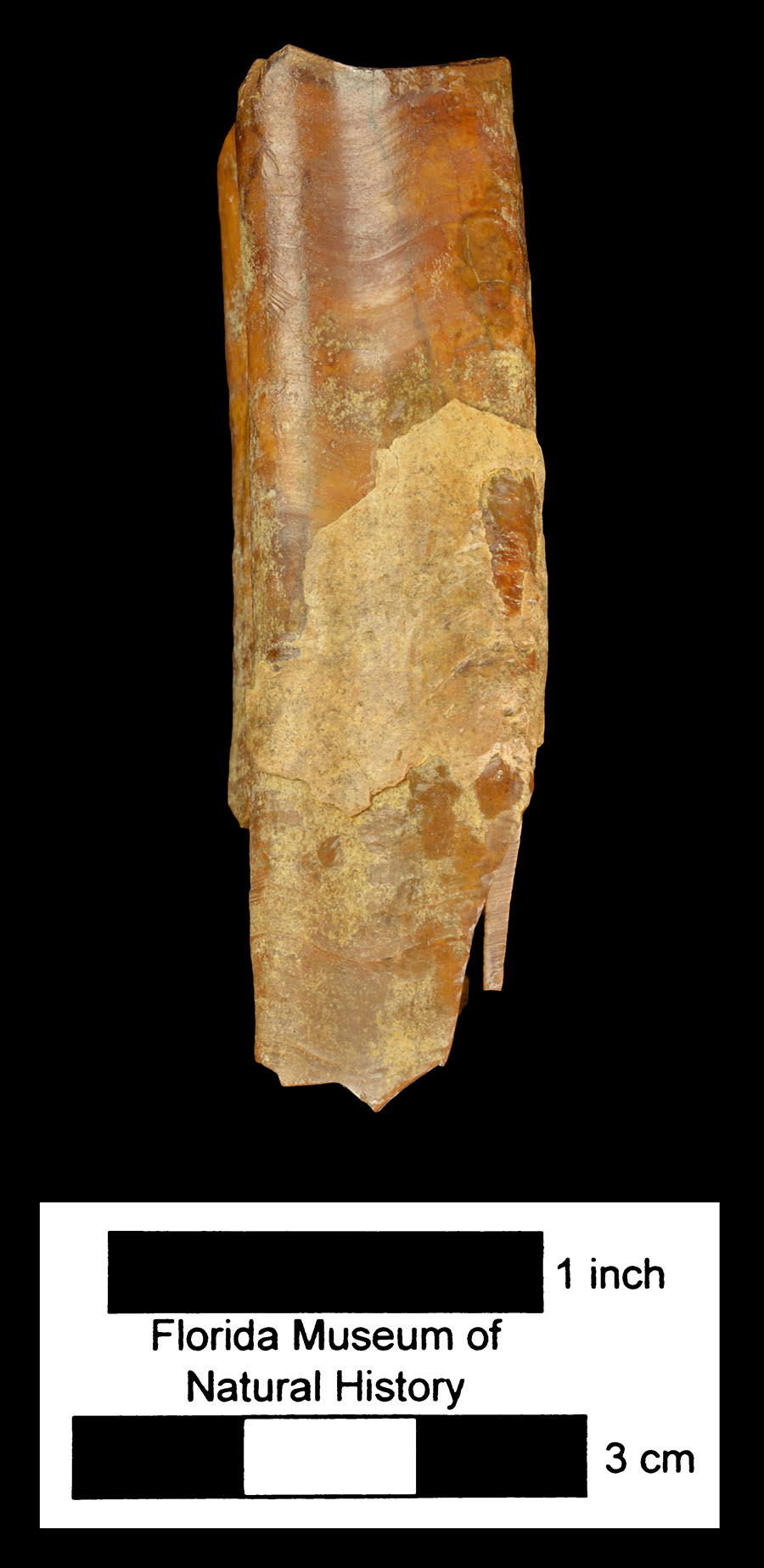
During the Pleistocene, Florida was home to a number of amazing large terrestrial animals (megafauna) including this large ground sloth species, Paramylodon harlani, and Cuvier’s rhynchothere (Cuvieronius tropicus), which were gomphotheres (relatives of modern elephants). Near the end of the Pleistocene, the number of megafauna species here in Florida declined but scientists are unsure why. Extinctions could have been driven by climate change, disease or the arrival of humans as hunters—or, most likely, a combination of these pressures.
Explore more fossils
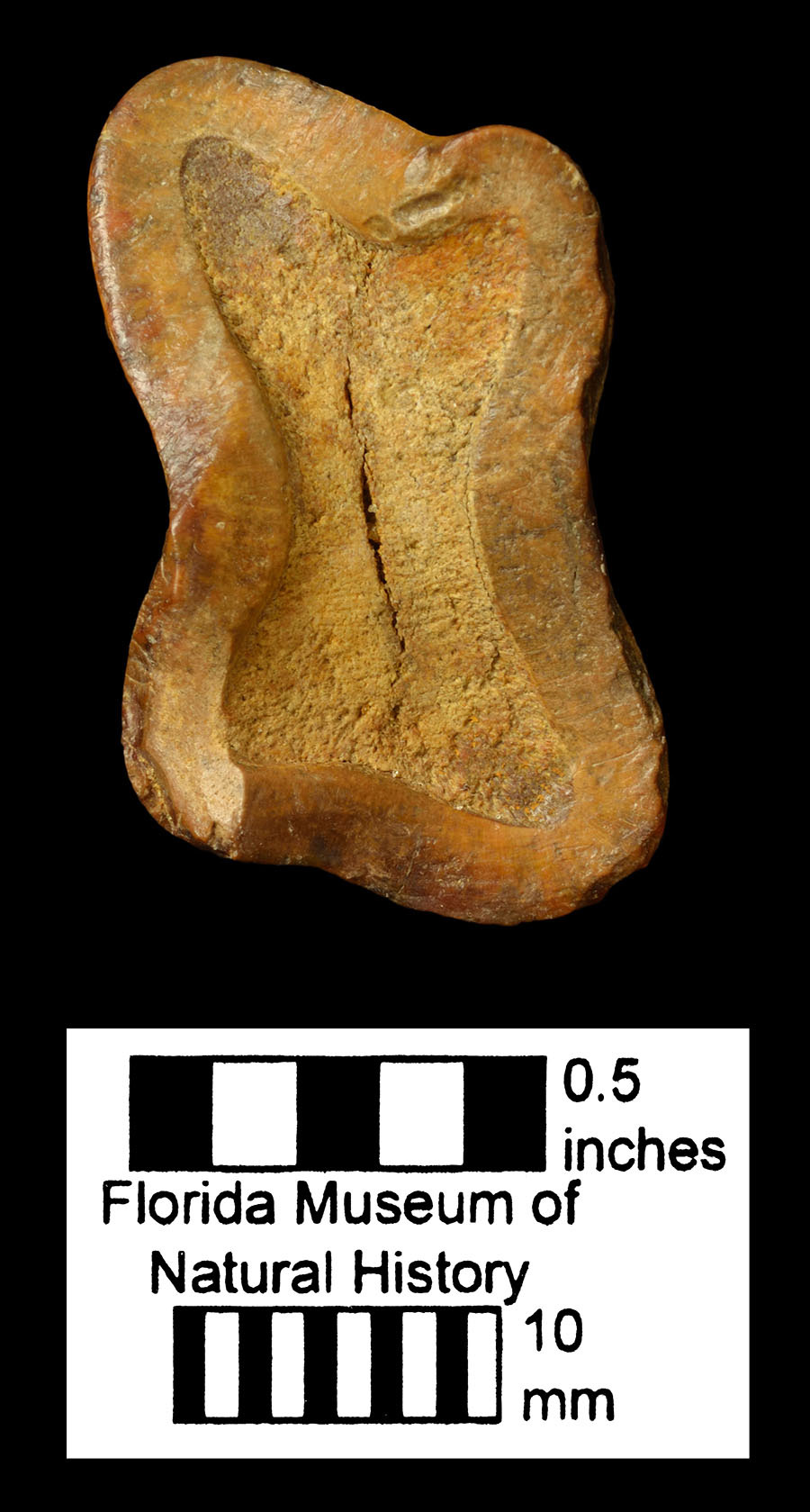
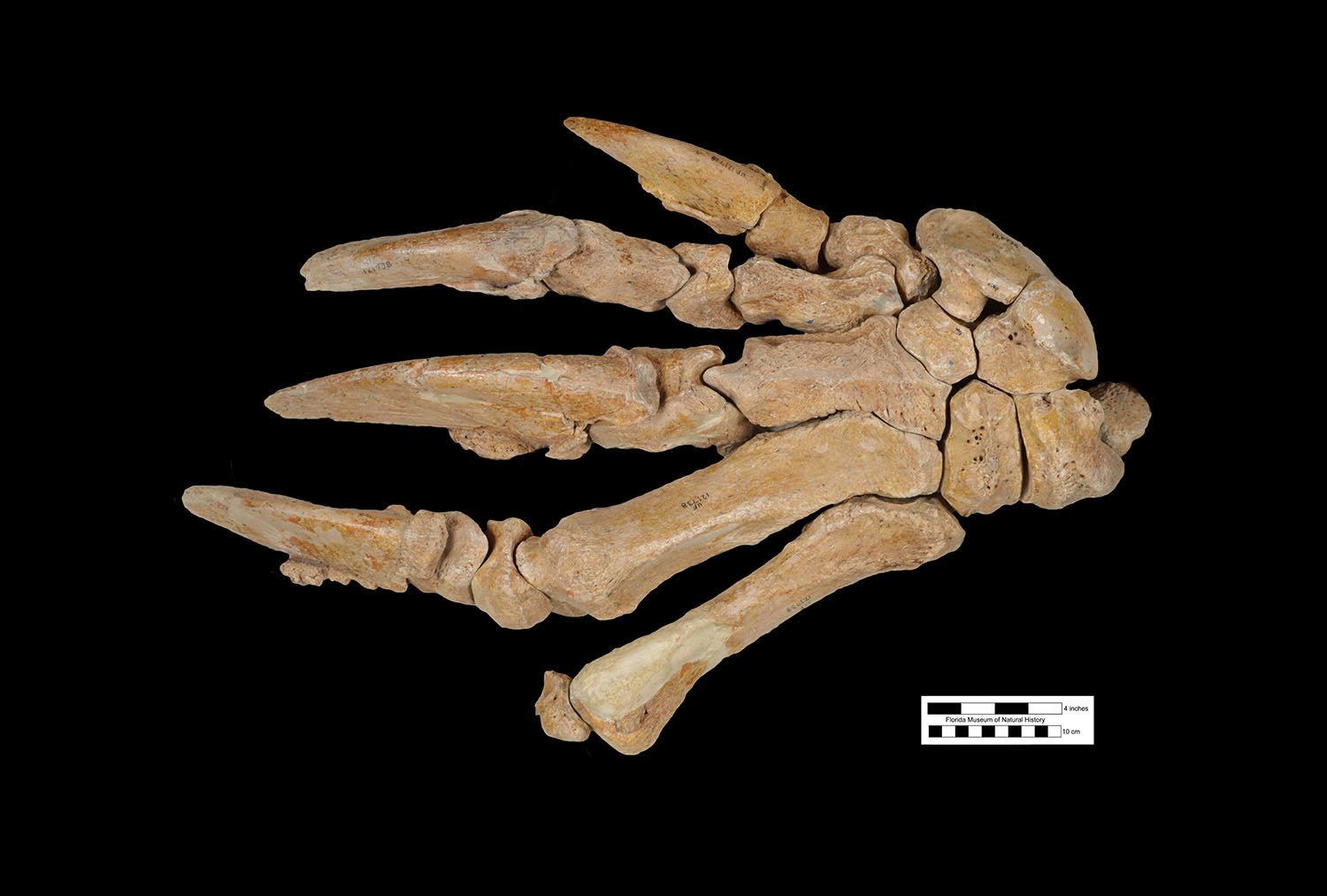
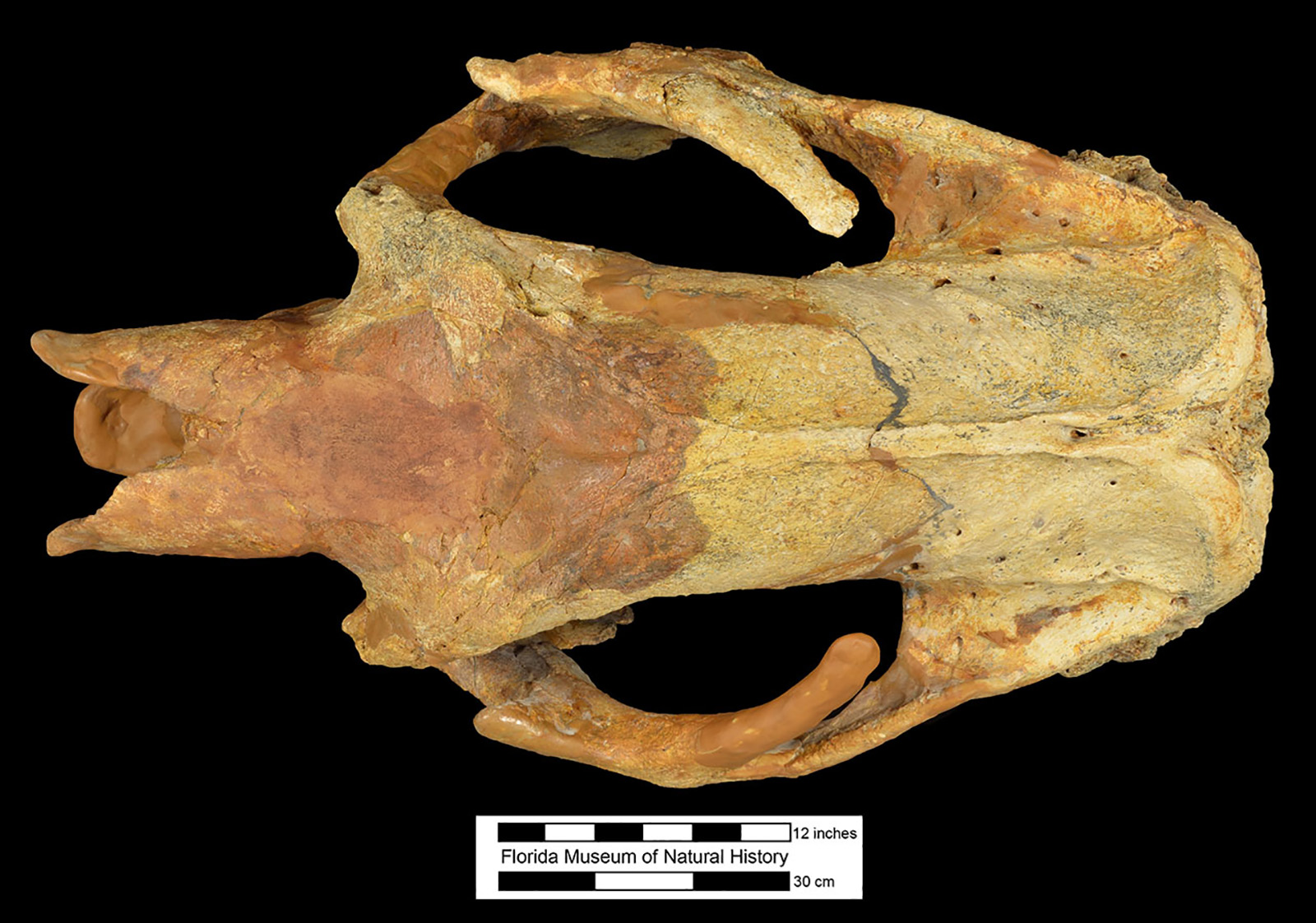

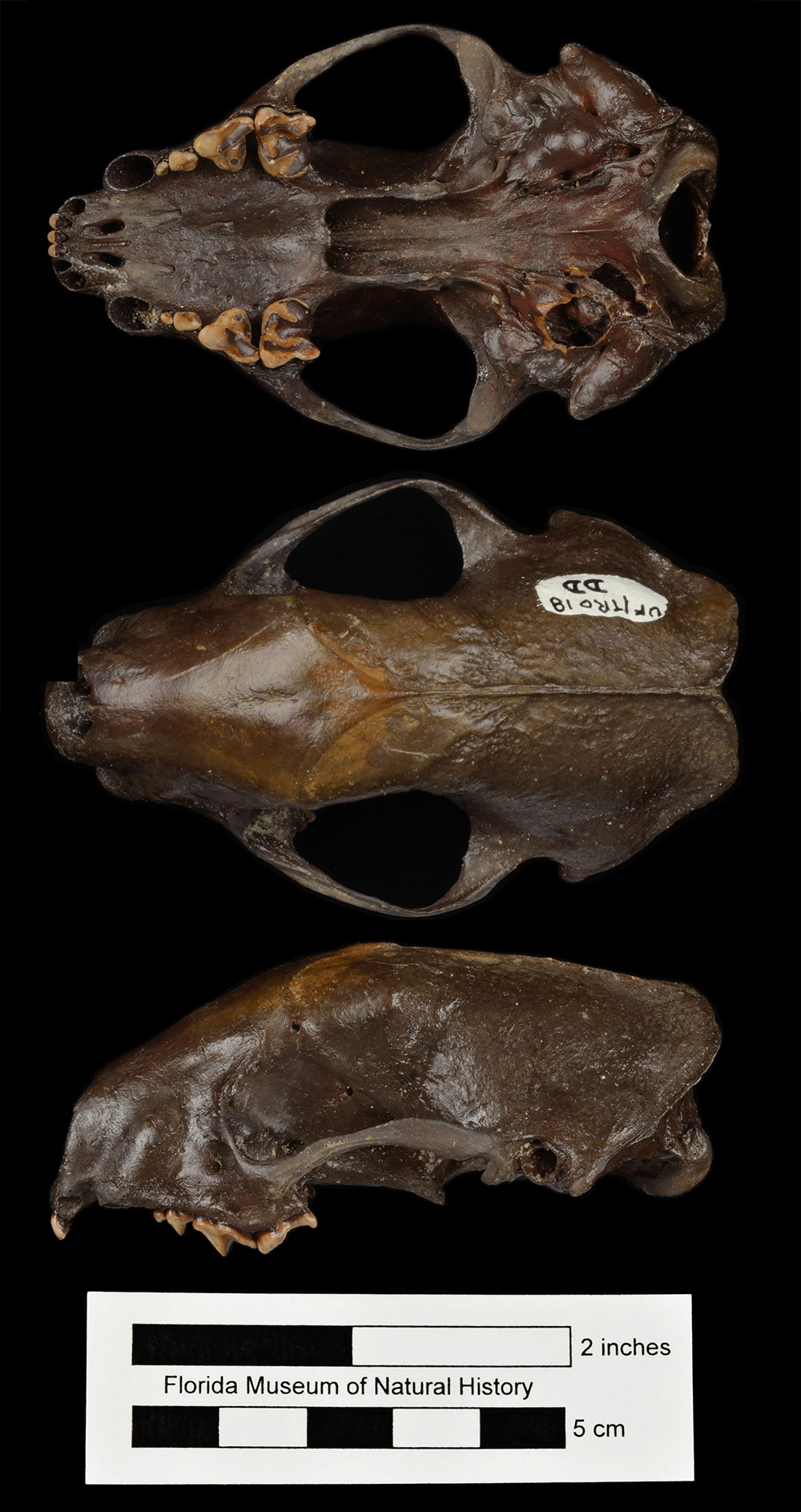

Note: Because our scientific knowledge is always expanding, some information like species names may have changed since the Florida Fossils exhibit was opened in 2004. The information on this page has been updated and may differ from the exhibit panel.
More
Florida Fossils: Evolution of Life and Land exhibit
Florida Vertebrate Fossils online resource