We have been working with the Dry Dredgers (and, in particular, Jack Kallmeyer), Cincinnati Museum Center, and Paleontological Society to plan the 2016 Cincinnati Mini Conference to be held on June 3-5, with an optional trip to Big Bone Lick State Park in Kentucky on June 2. We are pleased to announce that the Paleontological Society has become a meeting sponsor. They will present a town hall-style discussion about amateurs and the PS. Thanks to support from the PS, the FOSSIL project will provide travel scholarships to the meeting for five students and five K-12 teachers interested in paleontology.
We continue to work with partner, AtmosphereApps, to improve the myFOSSIL community website. This includes a photo gallery and upgrades to navigation. The web site is growing slowly but steadily in the right direction. We now have more than 160 members, with more joining every week. We are also pleased to announce that the Birmingham Paleontological Society has officially joined the FOSSIL network.
Kent Crippen represented FOSSIL at the 2016 NSF (National Science Foundation) meeting for all projects funded in the AISL (Advancing Informal STEM Learning program) with a poster about the FOSSIL project. Sessions at the meeting included the latest research on learning in informal settings, as well as strategies for supporting citizen science and best practices for diversifying participation through outreach. The research by the FOSSIL project on using social media and activities like the PaleoBlitz and mini-conferences to support our growing community was well received and generated much interest among meeting participants.
Ronny Leder released a new tutorial on myFOSSIL (digitizing your collection).
FOSSIL sponsored a talk by paleobotanist Sarah Allen of FLMNH at the February meeting of the Florida Fossil Hunters club. Sarah gave a presentation on her work on Hell Creek plant fossils at the Blue Rim site in Wyoming. The club members reported that Sarah was a wonderful speaker and they highly encourage everybody to check out her website to learn more.
On March 12, Victor Perez and Betty Dunckel participated in the Can You Dig It? Program at the Florida Museum of Natural History. Presented by the University of Florida Department of Geological Sciences and Florida Museum in collaboration with the Gainesville Gem and Mineral Society, this annual event promotes the science of geology and paleontology. Over 2100 visitors of all ages participated in the program. This year the FOSSIL project partnered with the Florida Museum’s Vertebrate Paleontology range to create a fossil identification game. The game engaged visitors in identifying fragmentary fossils by matching them with the complete specimens we had on display. This game was especially popular because we let the visitors keep the fossil fragment after they’d successfully identified it.

Also on March 12, but in Watsonville, California, Bruce was involved in a local fossil display table at the Santa Cruz County Science and Engineering Fair. The table was a partnership with the nearby Seacliff Cliff State Beach (Christina Cecchettini) and Santa Cruz Museum of Natural History (Felicia Van Stolk), and we also were fortunate to have Jeanette Pirlo, a UCSC undergraduate student, helping with the exhibit and interacting with the public. We displayed vertebrate and invertebrate fossils collected from the local beaches and environs and discussed these with the families that attended the fair. Over the four hours we reached a few hundred individuals as they stopped by to view and discuss the fossils.
March 18-20, 13 members from fossil clubs across the south participated in our first PaleoBlitz organized by Victor Perez and Ronny Leder. Blitz participants spend two days cataloging specimens at the Florida Museum of Natural History, visiting Gordon Hubbell’s collection, and collecting at a private creek site in Florida. Read more.
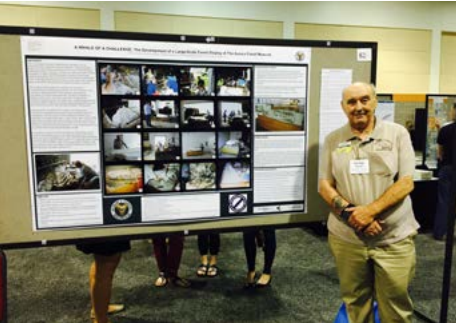
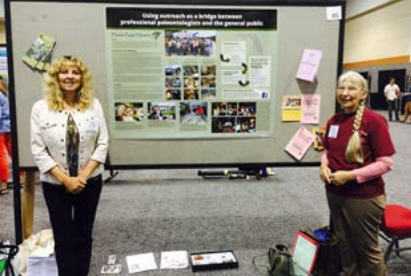
On March 31-April 1, we participated in the GSA (Geological Society of America) Southeastern Section Meeting held in Columbia, South Carolina. The FOSSIL project hosted a theme session on “Synergistic Paleontology” designed to promote collaborations between amateurs and professionals as well as highlight the contributions of amateurs. Eighteen talks and six posters were presented in this symposium, with a mix of about 30 to 45 students, amateurs, and professionals in the audience, many of whom had not previously heard about the FOSSIL project. Interestingly, more than half of the presentations were made by amateurs. On the second day many of us attended another symposium describing new research advances about fossil vertebrates in the SE U.S. There was lots of time for informal discussion after the talks, as well as during the posters and related social events. We thank all of the folks in attendance for their participation and hope that we can sustain this level of activity and interest at future GSA meetings (also see below).