Editor’s note: Nathan Newell has been an active member of myFOSSIL since joining the community in April 2017. He is an amateur paleontologist who has contributed more than 50 amazing specimens to the myFOSSIL gallery. Nathan has helped promote FOSSIL by sharing some of these great fossils on his Instagram page, which also includes fun paleontology memorabilia from the past. We interviewed Nathan to learn more about his passion for fossils and paleontology.
What first got you interested in collecting fossils? How long have you been involved in paleontology?
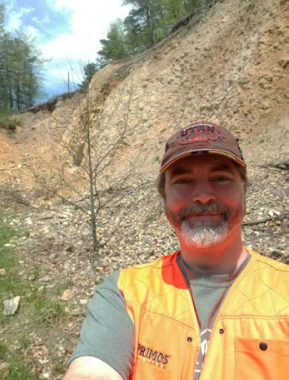
I’ve loved prehistoric life ever since I was a kid. I used to love watching old monster movies with dinosaurian creatures like Godzilla, taking trips to the Smithsonian National Museum of Natural History, and visiting Dinosaur Land in White Post, VA (which is still my happiest place on Earth). These all infused in me a passion for all sorts of prehistoric creatures, which I enjoyed exploring in books like Ranger Rick’s Dinosaur Book. As an adult I continued to go dinosaur hunting in museums and read books on paleontology and evolutionary theory, but living in Virginia, I just didn’t think that fossil hunting was feasible.
Eventually I found fossilguy.com, which featured, to my surprise, a few fossil hunting sites within driving distance! This led me down a rabbit hole of research as I tried to find other cool sites and understand the complicated geography of Virginia and West Virginia. I’ve only been fossil hunting for about two years, but it’s been a blast!
Where are some of your favorite places to collect? What do you most enjoy about fossil hunting?
Fossil collecting in Virginia is tricky. The rocks throughout much of the state are igneous and metamorphic, but west of the Blue Ridge Mountains, the Appalachians are composed of Paleozoic sedimentary rocks. Vegetation is everywhere, covering up outcrops and resisting erosion, so the only fossil sites I’ve been able to find are roadcuts.
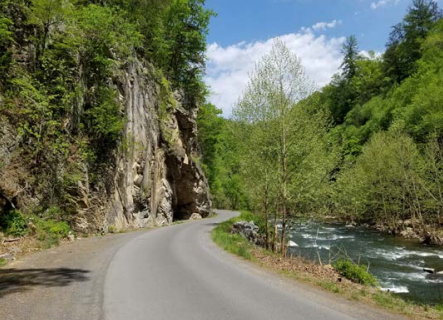
I enjoy collecting in the Appalachian Mountains; the scenery is just beautiful. Smoke Hole Road leading up to the Big Bend Campground near Upper Tract, West Virginia is particularly breathtaking, with fascinating geology juxtaposed with the beautiful South Branch Potomac River.
What I enjoy most is finding something completely unexpected. I almost discarded one fossil because I thought it was just porous rock, but upon further inspection, I discovered that it was a tiny coral colony with all sorts of little critters. I was holding a whole miniature fossilized ecosystem in my hands!
You have contributed more than 40 beautiful specimens to myFOSSIL! What motivates you to keep a digital catalog? What are your goals for your collection (digital or otherwise)?
Thank you! I like keeping a digital catalog on myFOSSIL because it’s the best way to organize and visualize my fossil data all in one place. I keep separate spreadsheets and photos on Google Drive for my own purposes, but the data is fragmentary: the photos are in one folder, the descriptive data is in a spreadsheet in another folder, and the site locations are on a custom Google map completely separate from everything else. But with myFOSSIL, I’m able to view the data, photos, and map for a fossil all in one place.
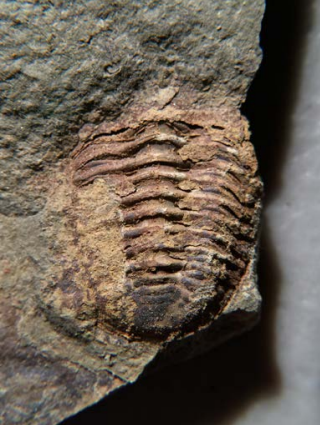
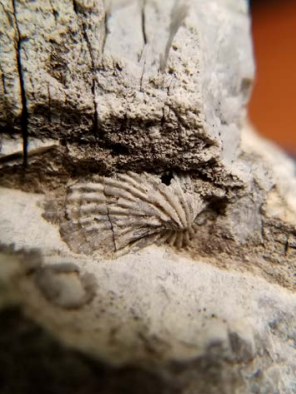
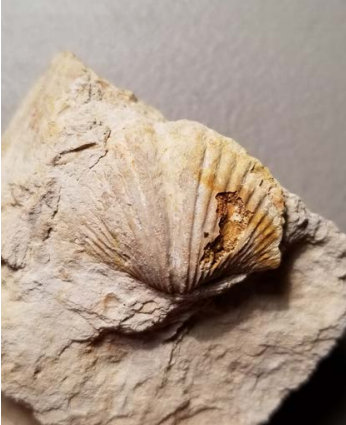
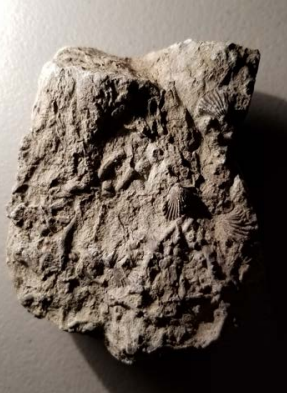
Also, it’s great for publishing my fossils so others can check out what I’ve been up to. I like sharing the exact location of my fossil sites so others can discover cool sites that they might not have known about before. Publishing my collection on myFOSSIL also helps me get in contact with paleontologists, both professional and amateur, that could help me with identification.
My goal for my digital collection is to accurately record the information and bring it all together so that I can see patterns that would help me find new sites and anticipate the fossils that I might find. My goal for my collection is to hopefully contribute in some small way to the understanding of paleontology in Virginia and West Virginia.