Pleistocene Epoch
2.58 million to 11,700 years ago
Global temperatures during the Pleistocene fluctuated dramatically creating glacial periods of extremes. Glacial sheets covered much of North America, as near as 900 miles to the north of Florida. During warm interglacial periods, some of Florida might have appeared much like it does today in the undisturbed areas of our state. Sinkholes were sometimes sources of fresh water and also trapped a wide assortment of animals, leaving ample evidence in the fossil record for paleontologists to study. Explore some of the aquatic animals of Florida’s Pleistocene:
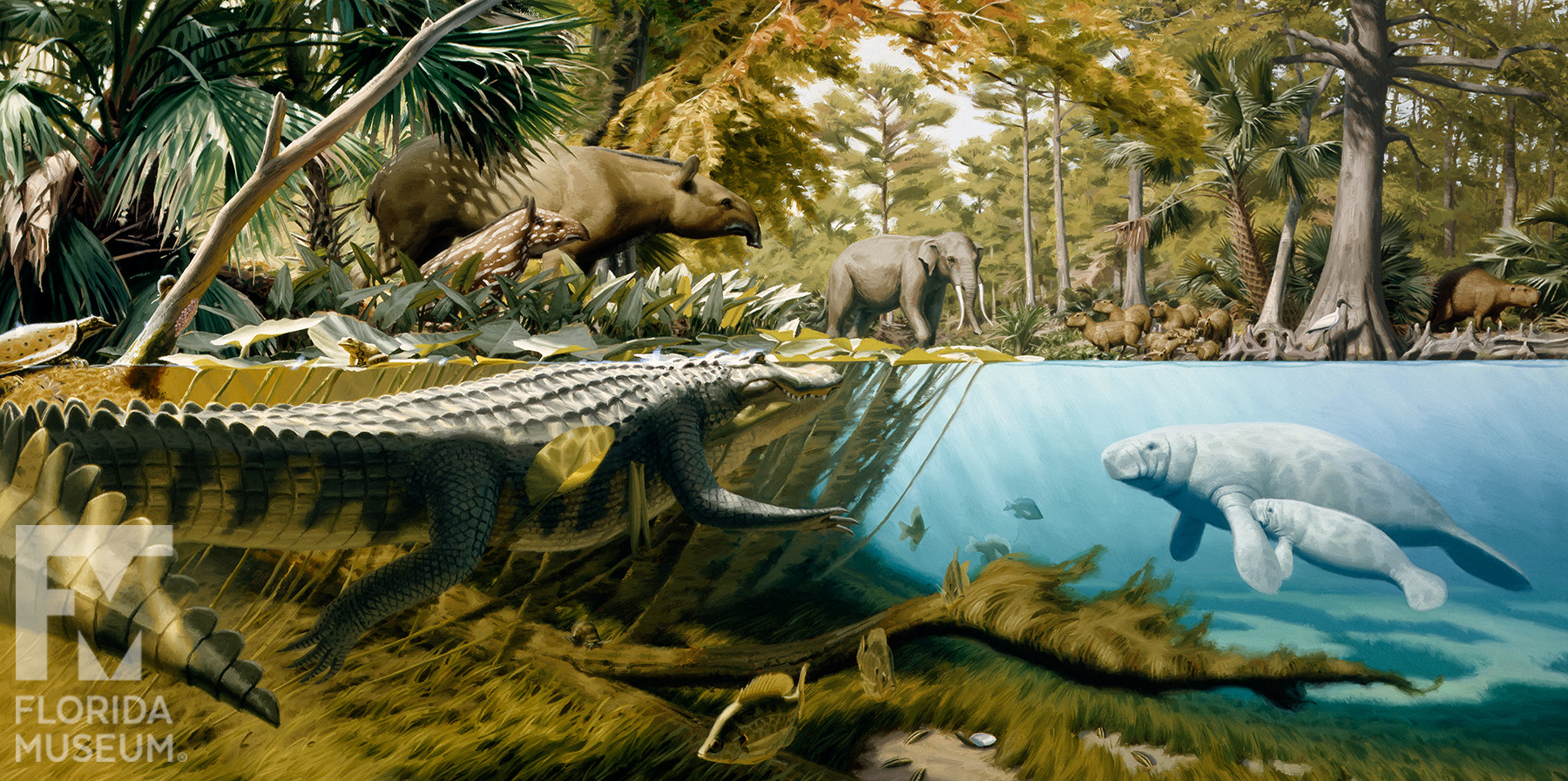
This painting was commissioned from artist Robert Barber for our Florida Fossils exhibit. Learn about the Pleistocene animals represented:
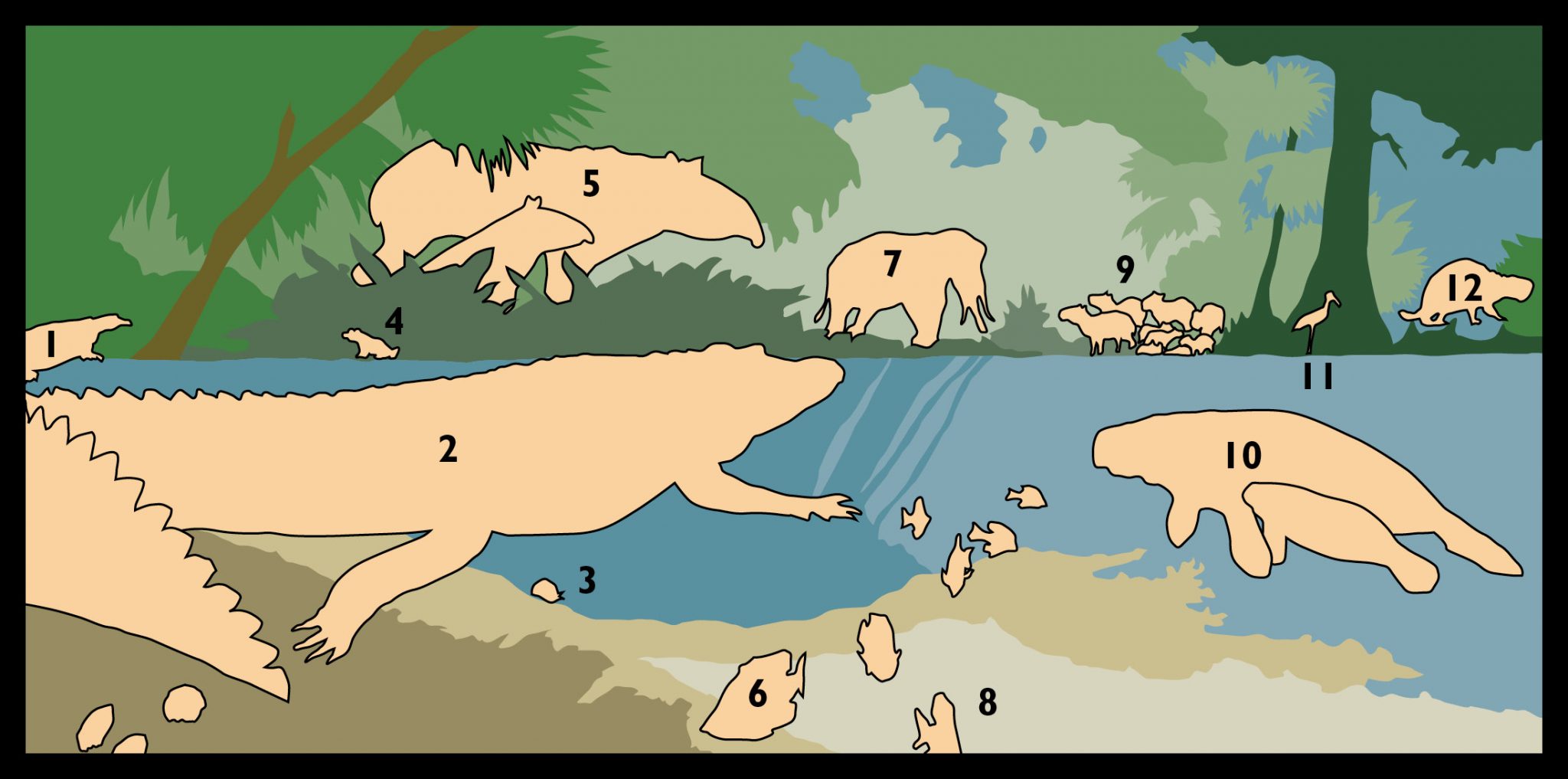
- Apalone ferox (Florida softshell turtle)
- Alligator mississippiensis (American alligator)
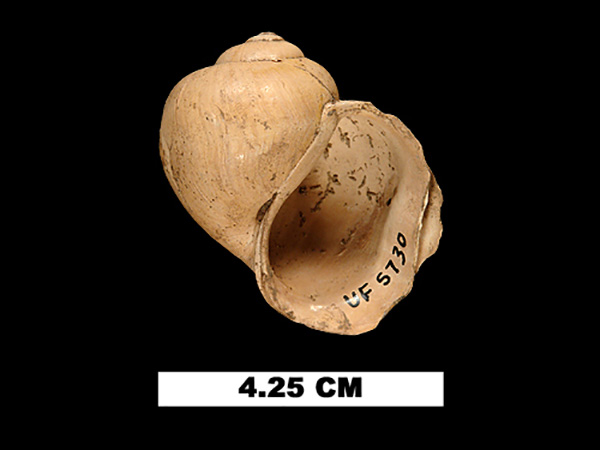
- Pomacea paludosa (Florida applesnail)
- Rana (Aquarana) catesbeiana (American bullfrog)
- Tapirus haysii (Hays’ tapir)
- Lepomis microlophus (redear sunfish)
- Cuvieronius species (gomphothere)
- Megalonaias nervosa (washboard)
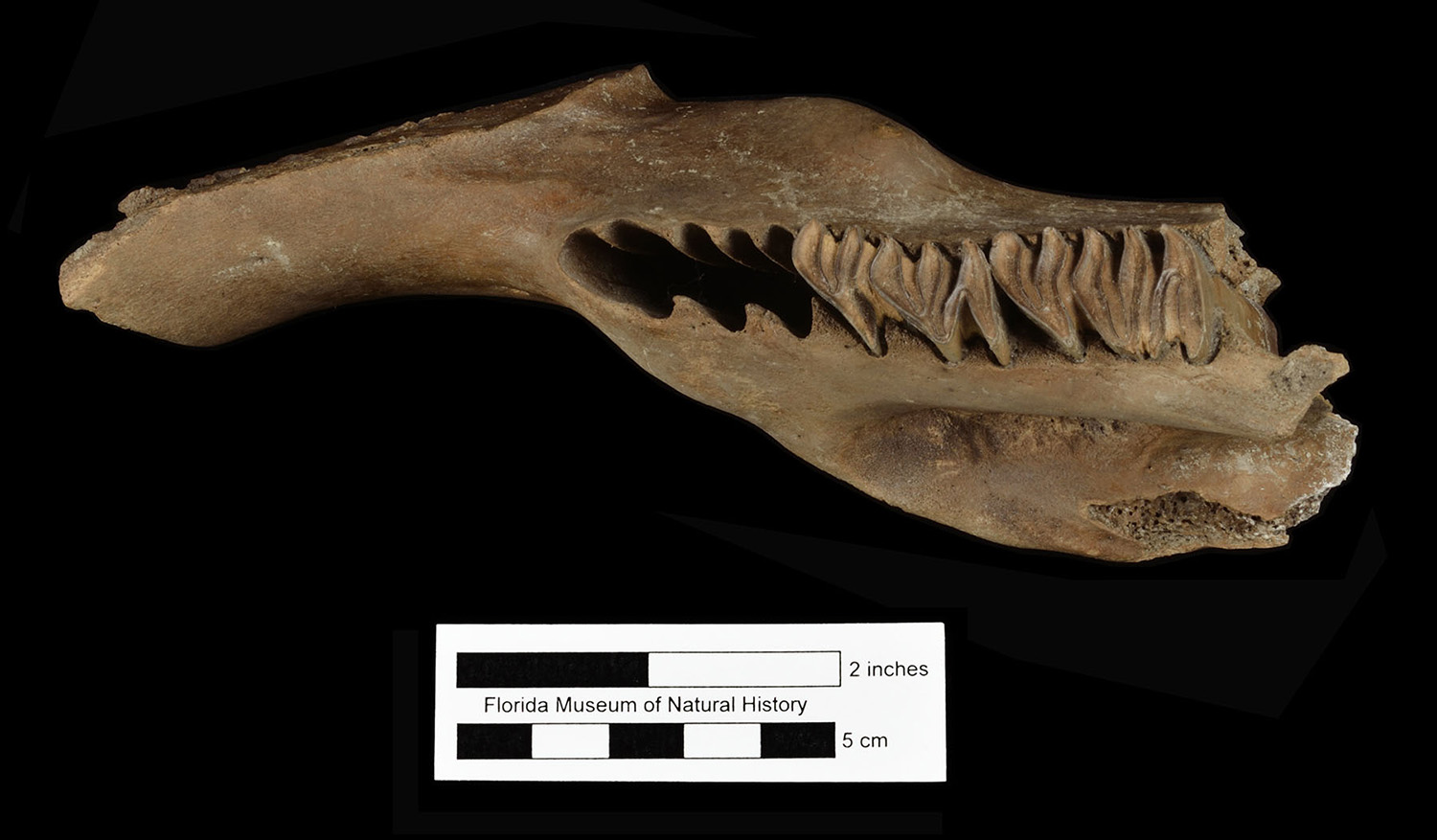
- Neochoerus pinckneyi (Pinckney’s capybara)
- Trichechus manatus (West Indian manatee)
- Ciconia maltha (asphalt stork)
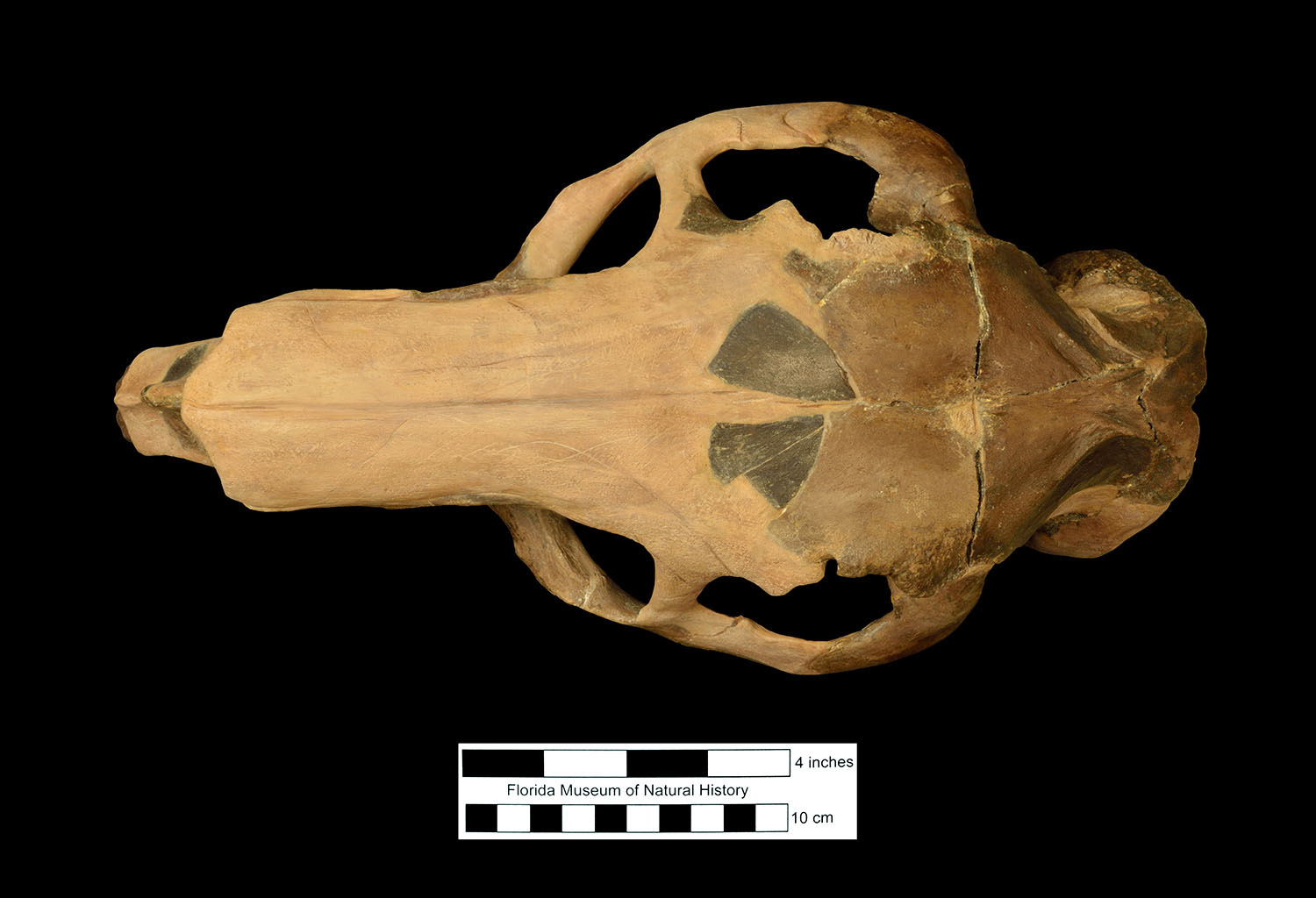
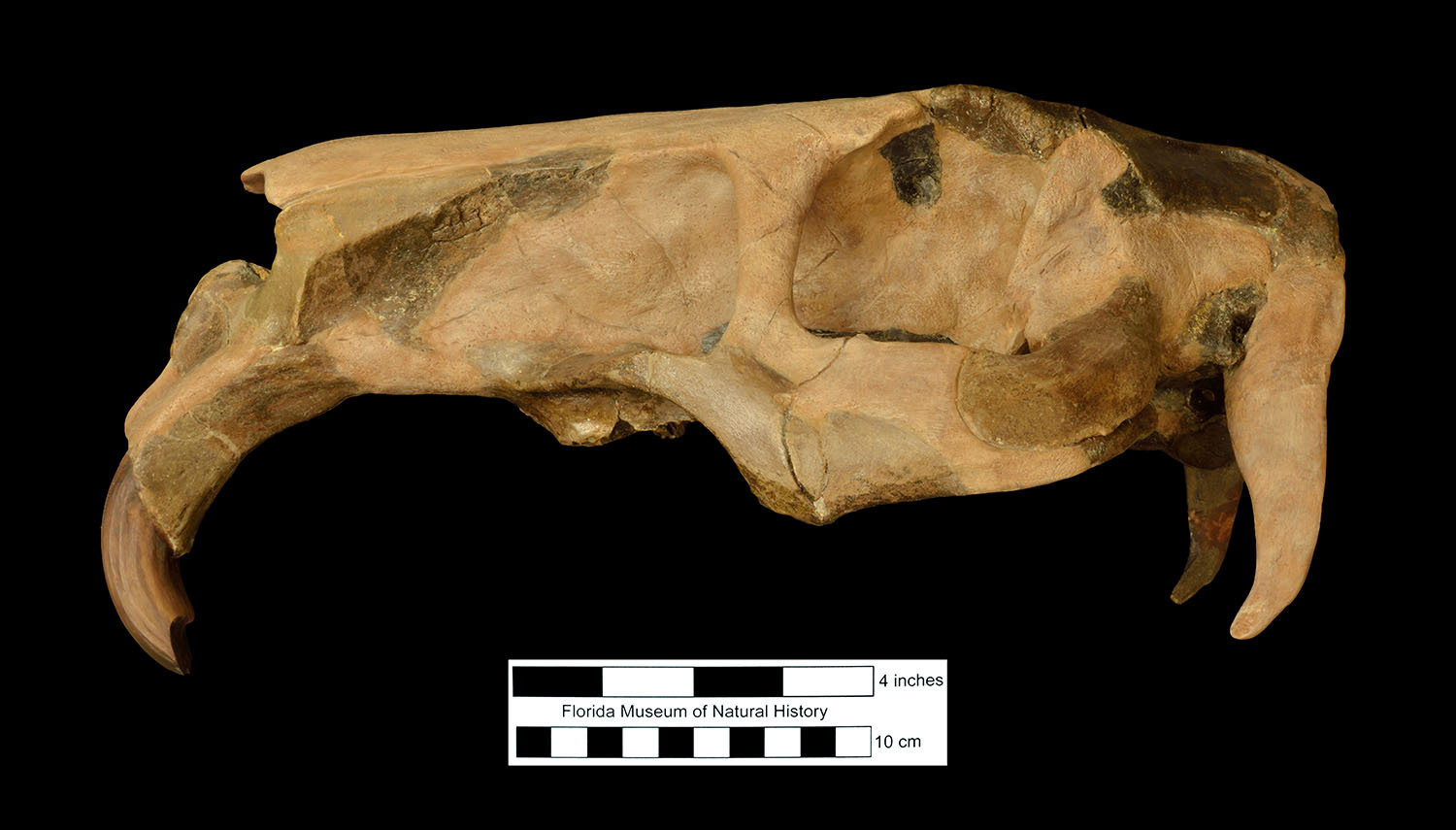
- Castoroides dilophidus (Southern giant beaver)
Highlights
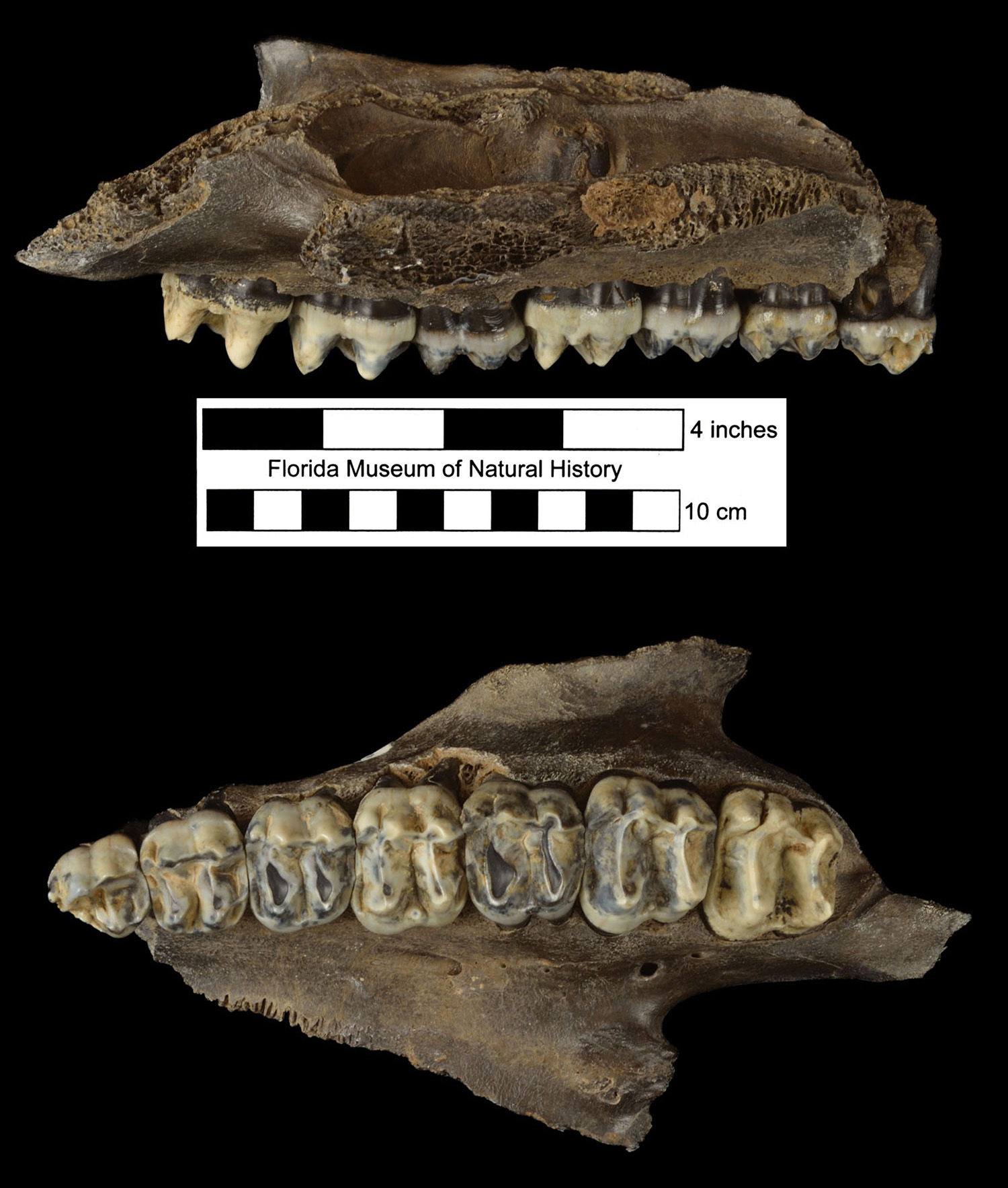
Many of Florida’s mammals during the Pleistocene might look similar to animals living today. There were giant beavers, capybaras and elephant-like gomphotheres, as well as our iconic manatee (Trichechus manatus). Some species are now extinct but have modern relatives living elsewhere. These extinct giant Hays’ tapirs (Tapirus haysii) have the classic stout body and short, elephant-like proboscis of modern tapirs that do not live in North America today. Read about Hays’ tapir
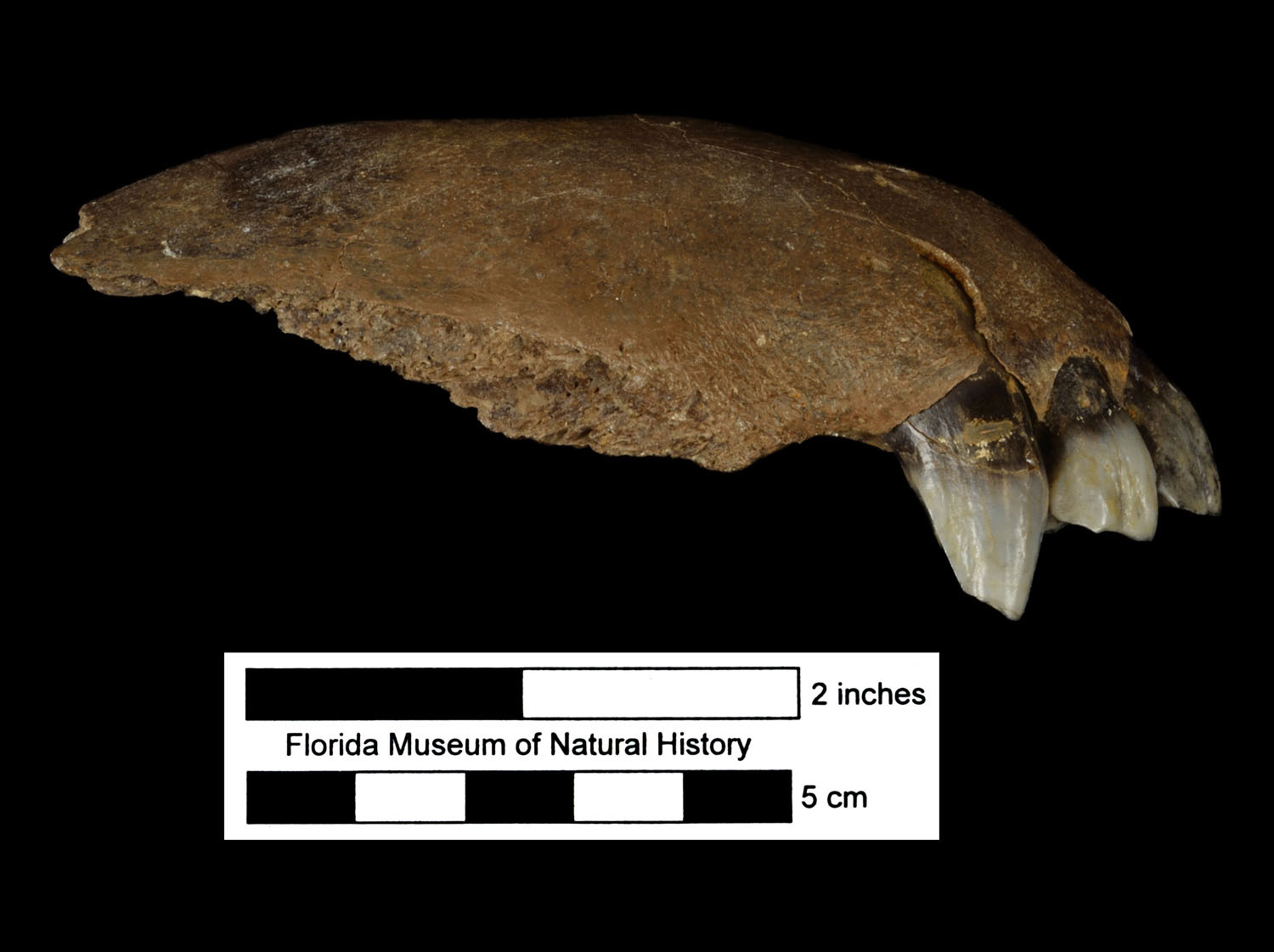
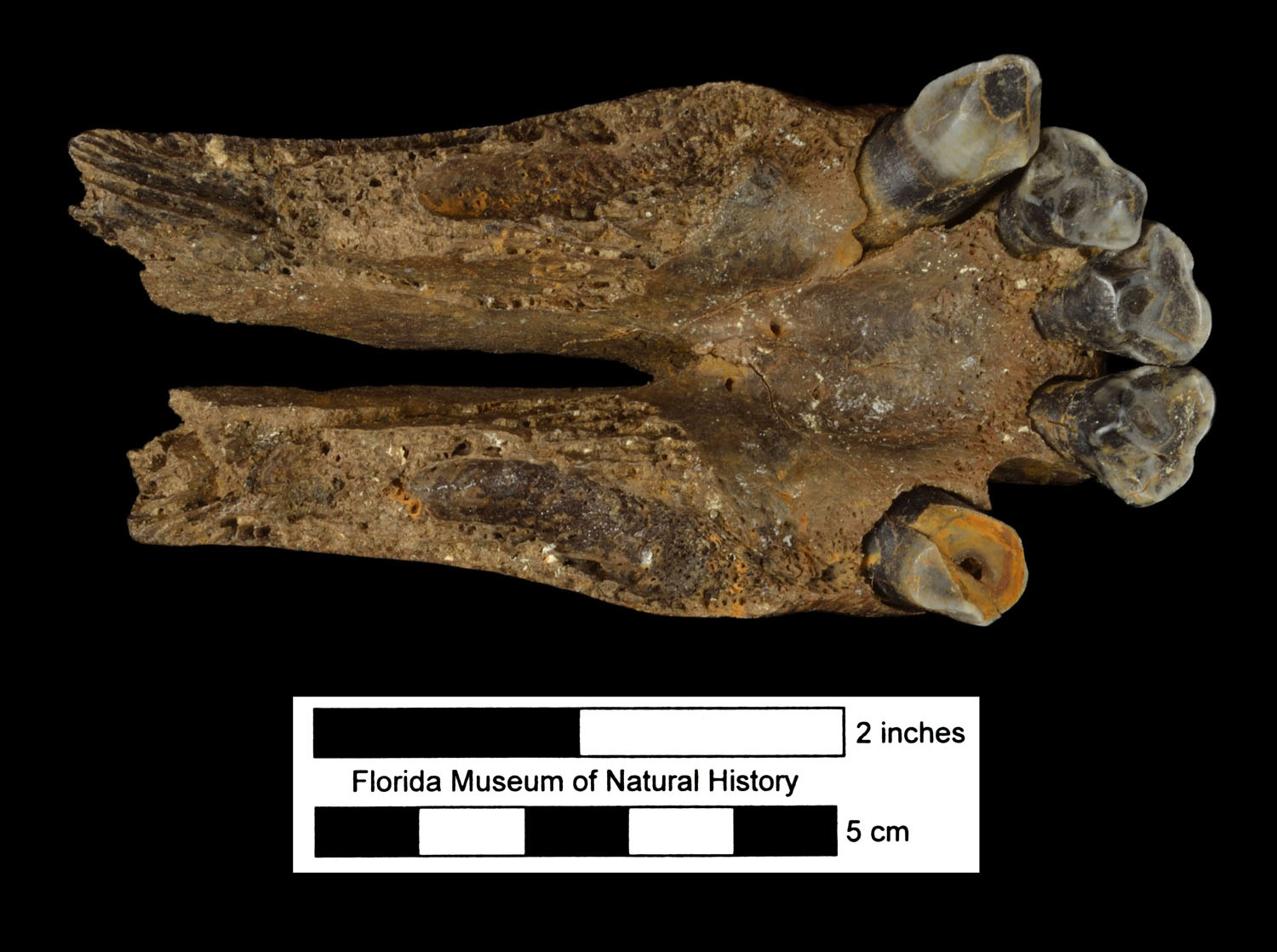
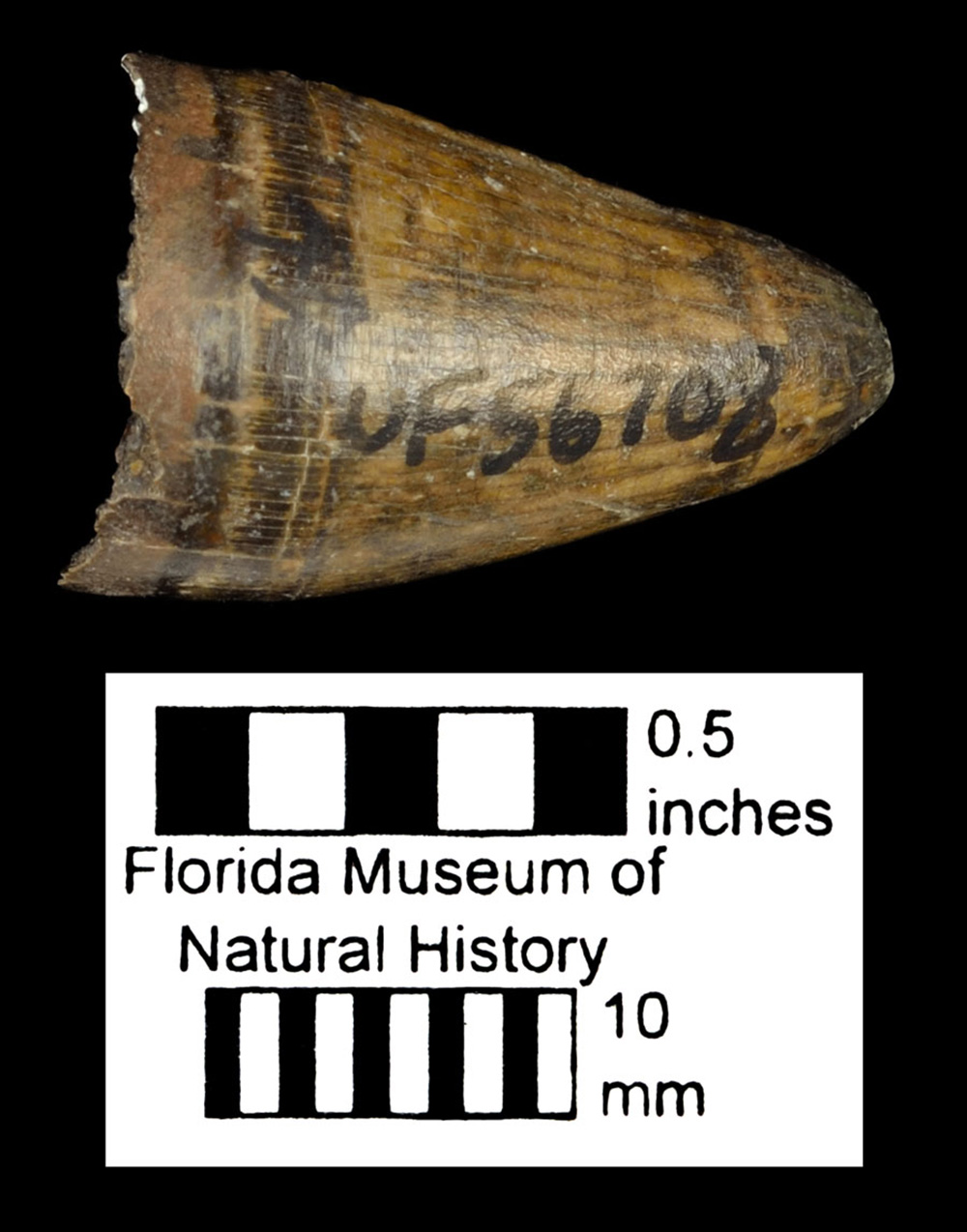
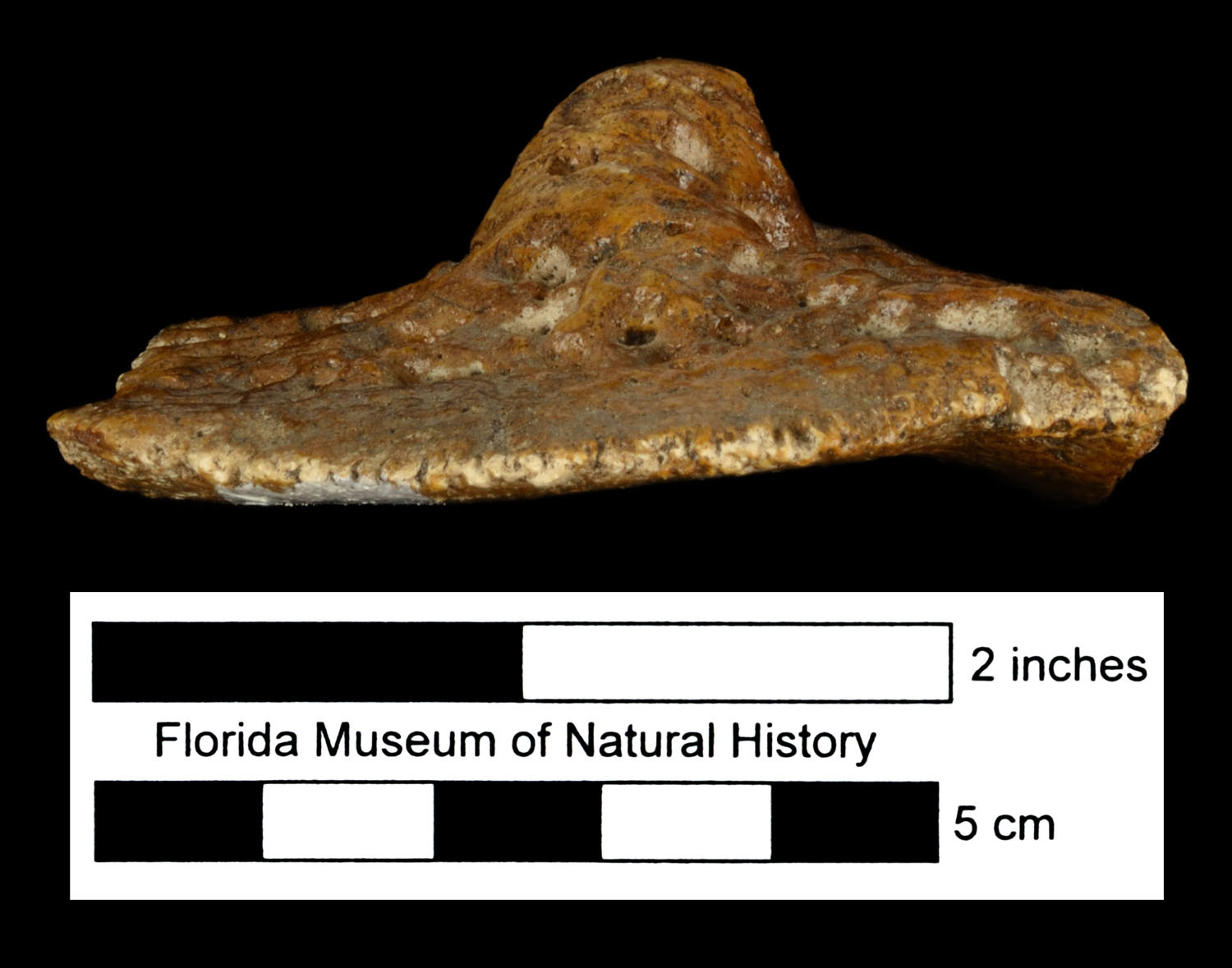
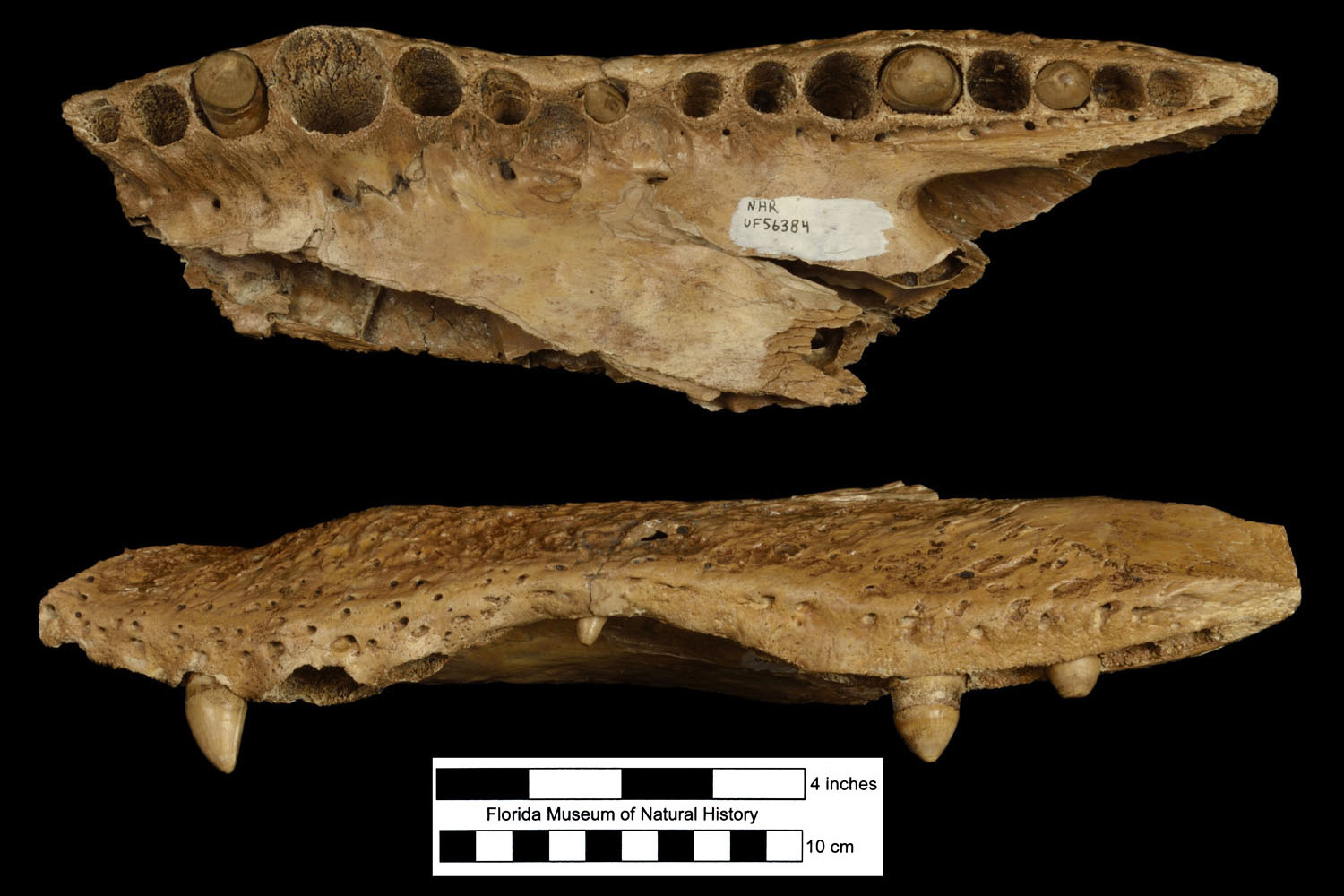
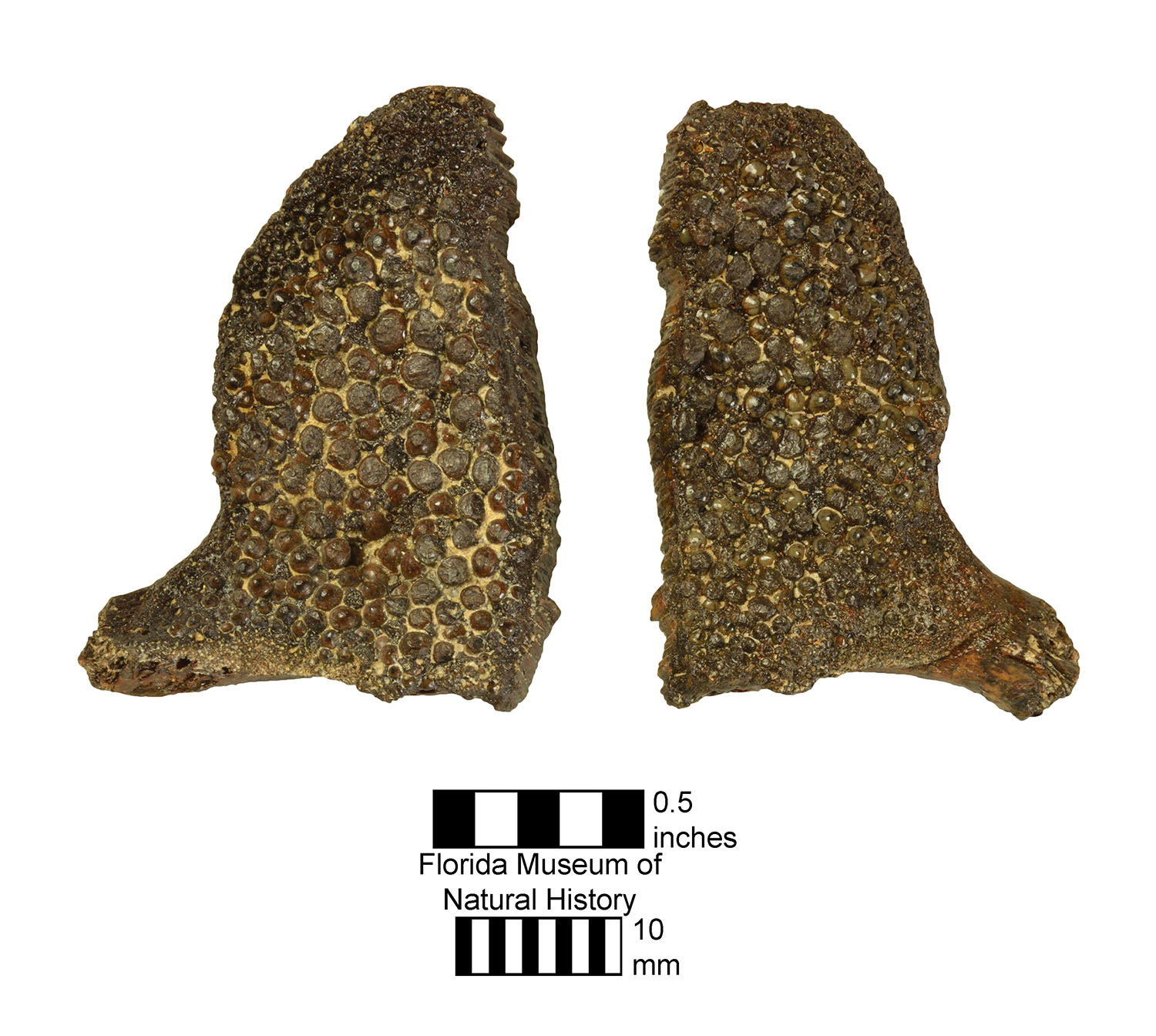
One animal you’re sure to recognize is the American alligator (Alligator mississippiensis) casually floating in this freshwater habitat. There have been other species of crocodilians living on Florida, but this alligator has lived for millions of years with very few changes. They have protective osteoderms in their skin—bony plates that act as armor—and they produce hundreds or thousands of teeth during their lifespan. Here at the Museum we have a large collection of fossil and modern alligator specimens to study. Read about American alligators in our fossil record

Birds, frogs, fish and other smaller animals are not as strongly represented in our fossil record because their small bones are small or hollow and fragile, making them more difficult to collect and identify, especially when fragmented. The specimens we have are valuable because they help scientists understand all aspects of an ecosystem. Some larger species of birds are more recently being discovered like a new species of extinct heron or this asphalt stork (Ciconia maltha). This stork was a big bird that stood over 4 feet tall with a wingspan of up to 9 feet wide. Read about this extinct asphalt stork
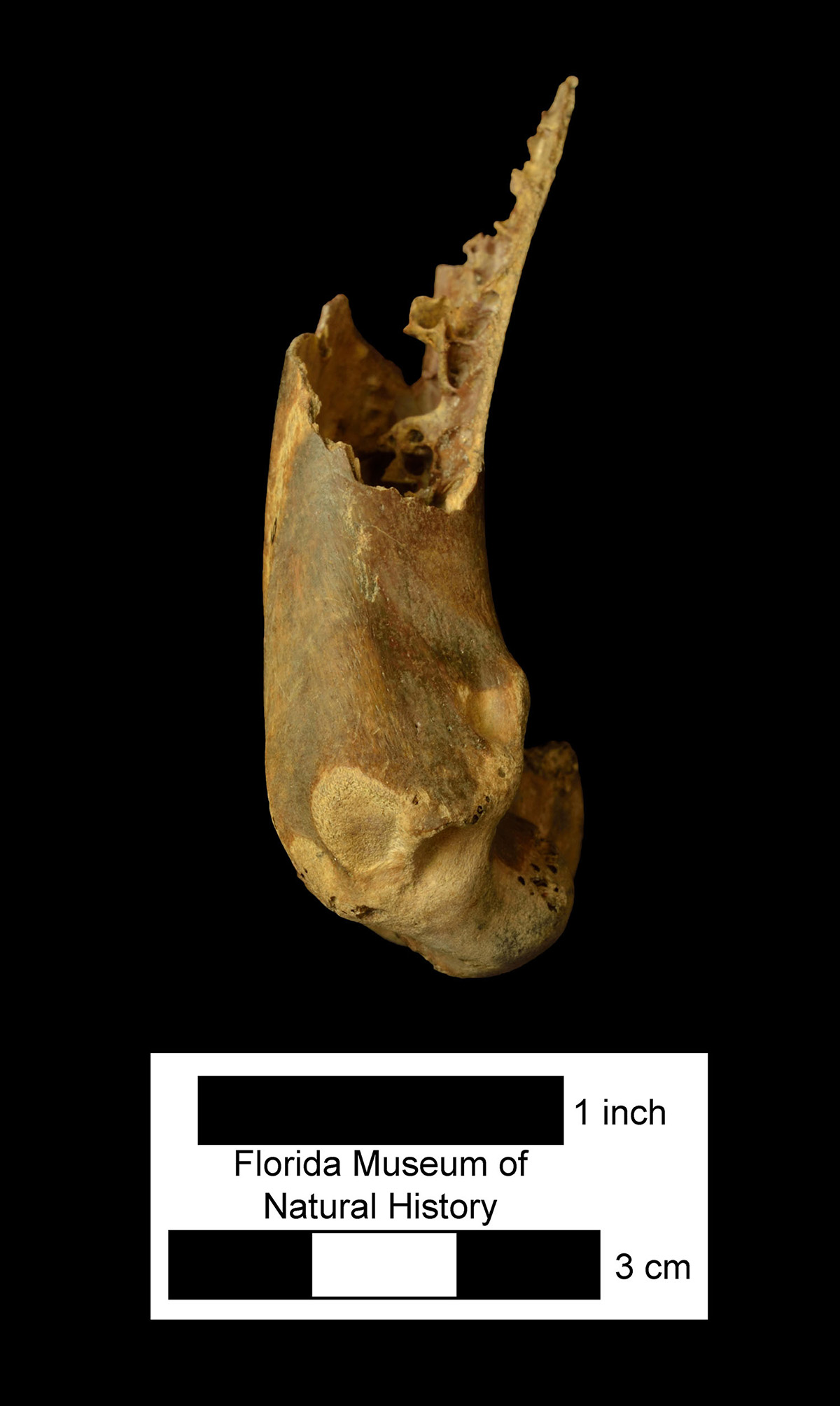
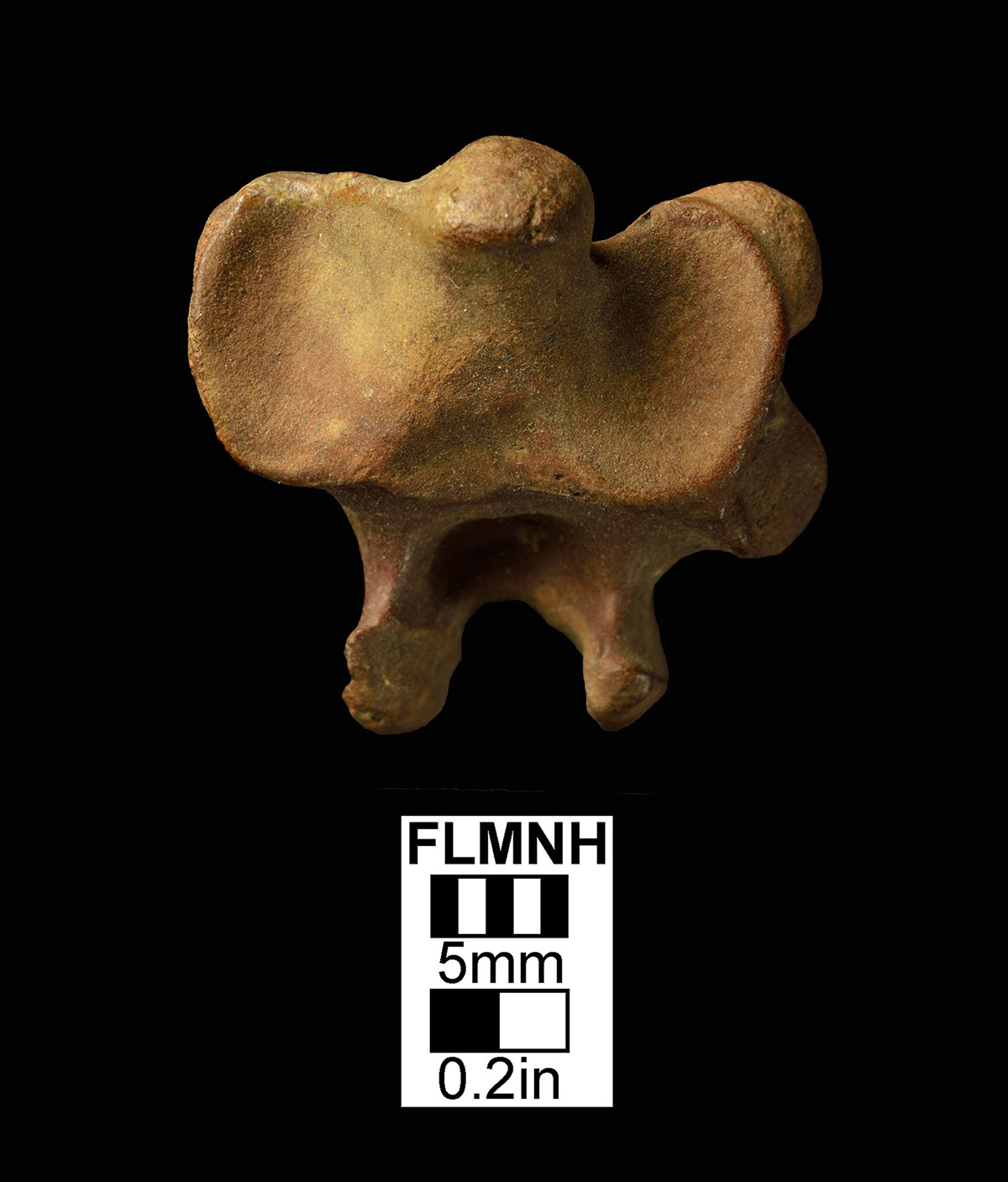

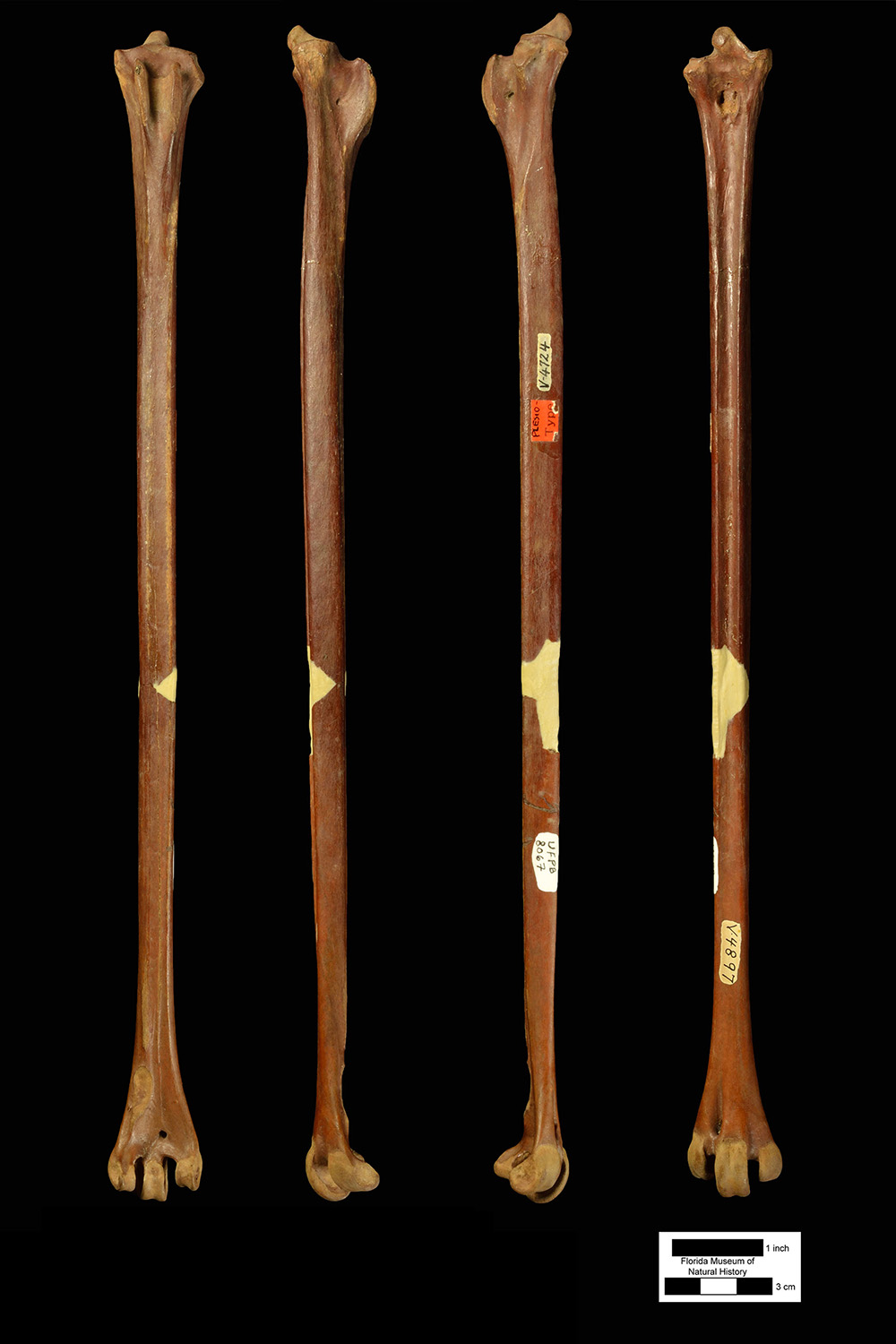
Explore more fossils
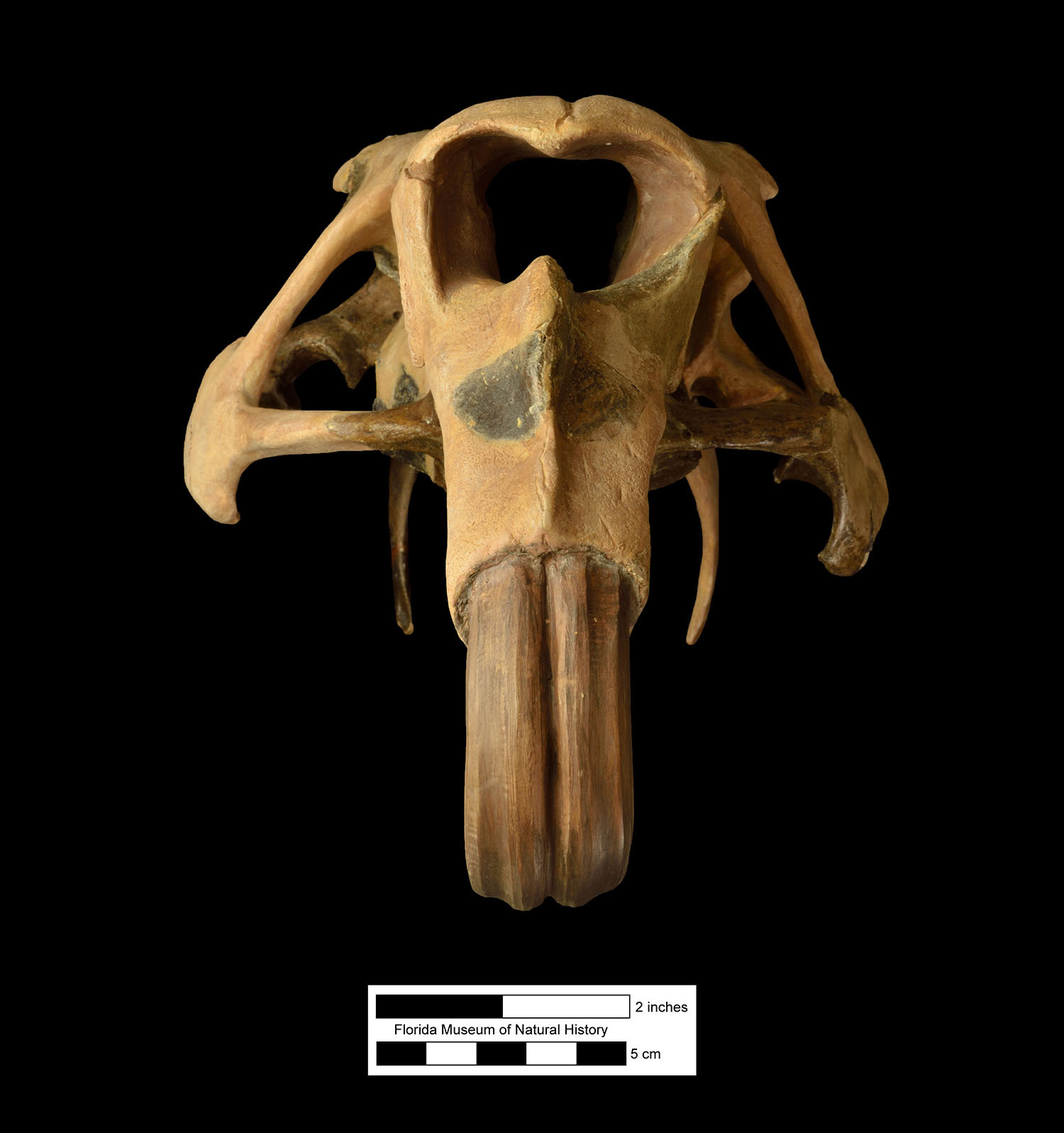
Note: Because our scientific knowledge is always expanding, some information like species names may have changed since the Florida Fossils exhibit was opened in 2004. The information on this page has been updated and may differ from the exhibit panel.
More
Florida Fossils: Evolution of Life and Land exhibit
Florida Vertebrate Fossils online resource