GAINESVILLE, Fla. — The Florida Museum of Natural History’s Dickinson Hall, located at the heart of the University of Florida campus, was built in 1970 and once hosted public exhibits and education programs. Since the museum’s public exhibitions were moved to their current location at Powell Hall in 1998, Dickinson Hall has served as a research hub and repository for the state’s natural history collections, consisting of more than 50 million specimens and objects.
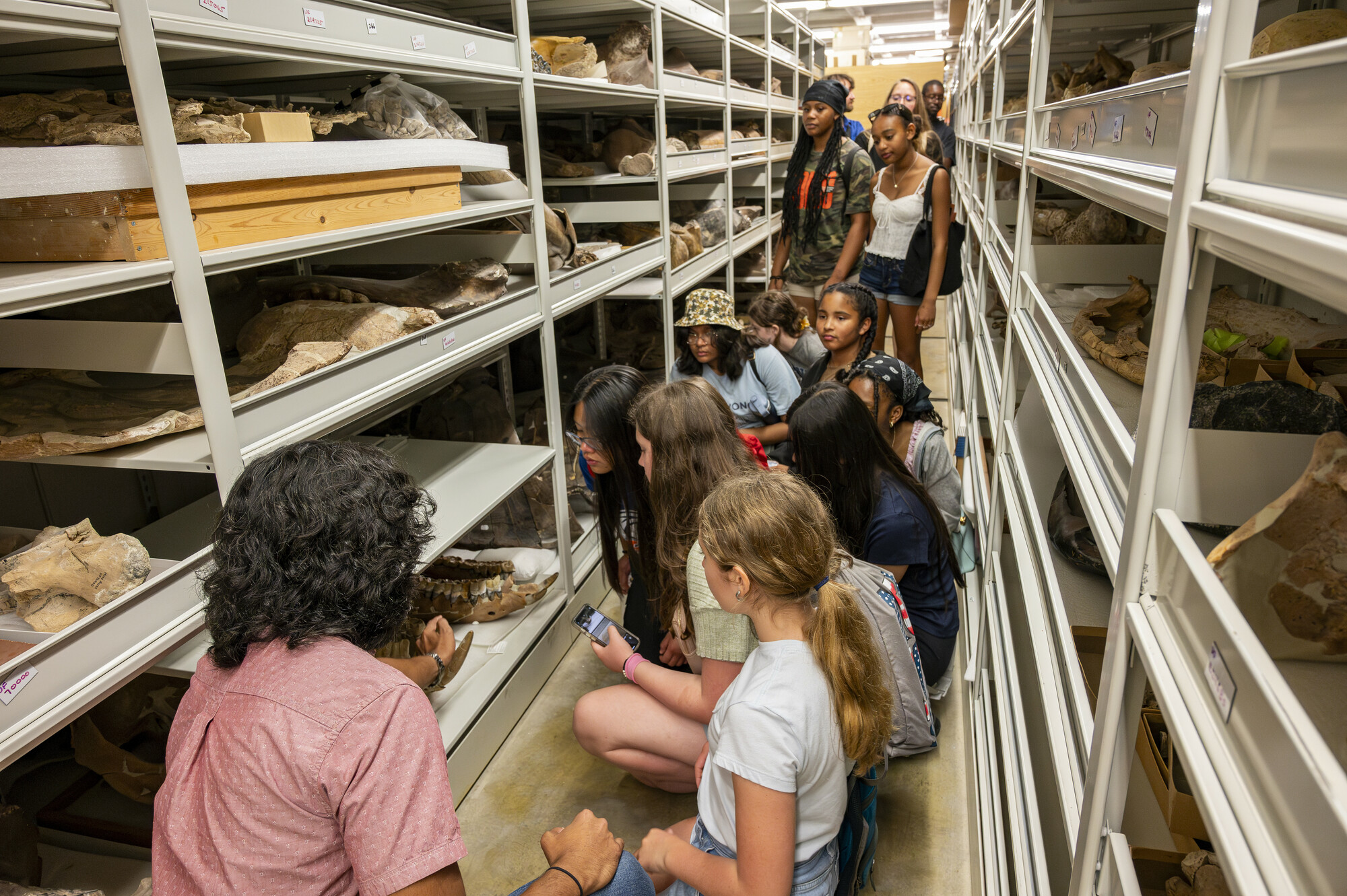
This past May, the building’s collections were opened to the public for the first time in more than 20 years to host dozens of future scientists from the UF P.K. Yonge Developmental Research School in a collaboration with the UF Center for Precollegiate Education and Training (UF CPET) Gator Labs programs.

“The goal of this initiative is to inspire middle school students through hands-on interaction with real scientific collections, encouraging their curiosity and passion for learning,” said Hazel Levy, the associate director of UF CPET who helped organize the tours in coordination with the museum. “We hope that by participating in this experience, students not only gain knowledge about natural history and scientific inquiry but also develop a deeper appreciation for the interdisciplinary nature of UF’s research efforts.”
The tours took place May 8 and 9 and brought 150 sixth grade students to the collections to meet researchers and see specimens while getting a firsthand look at life in science, technology, engineering, arts and math fields.
“Just as it was for us when we began our scientific careers, I know how memorable and inspiring those first glimpses behind the scenes can be,” said Dave Blackburn, the Florida Museum’s associate director for research and collections. “It’s an incredibly fun experience for us to have students and the public with us in the spaces where we conduct research and care for the state of Florida’s natural history collections.”
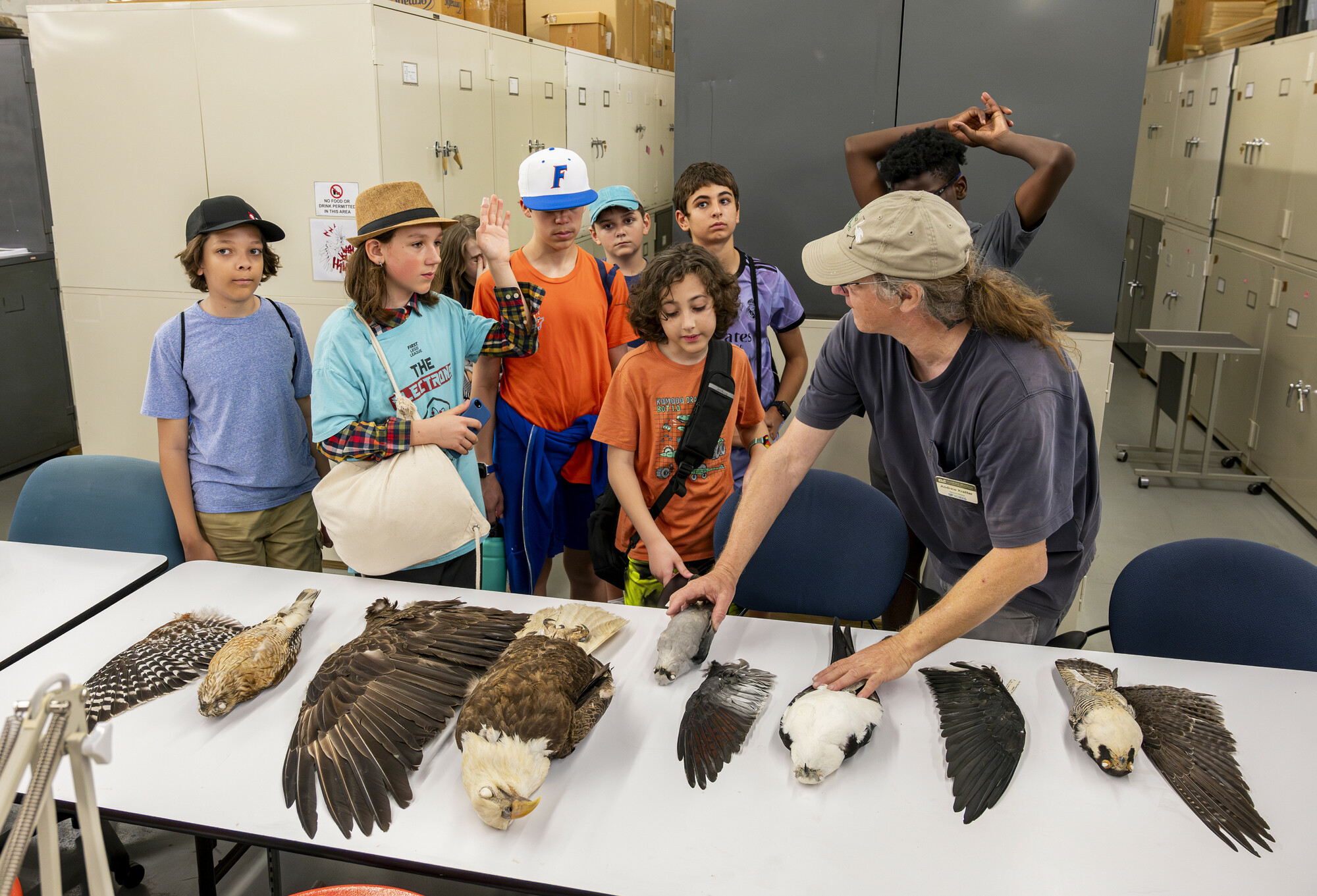
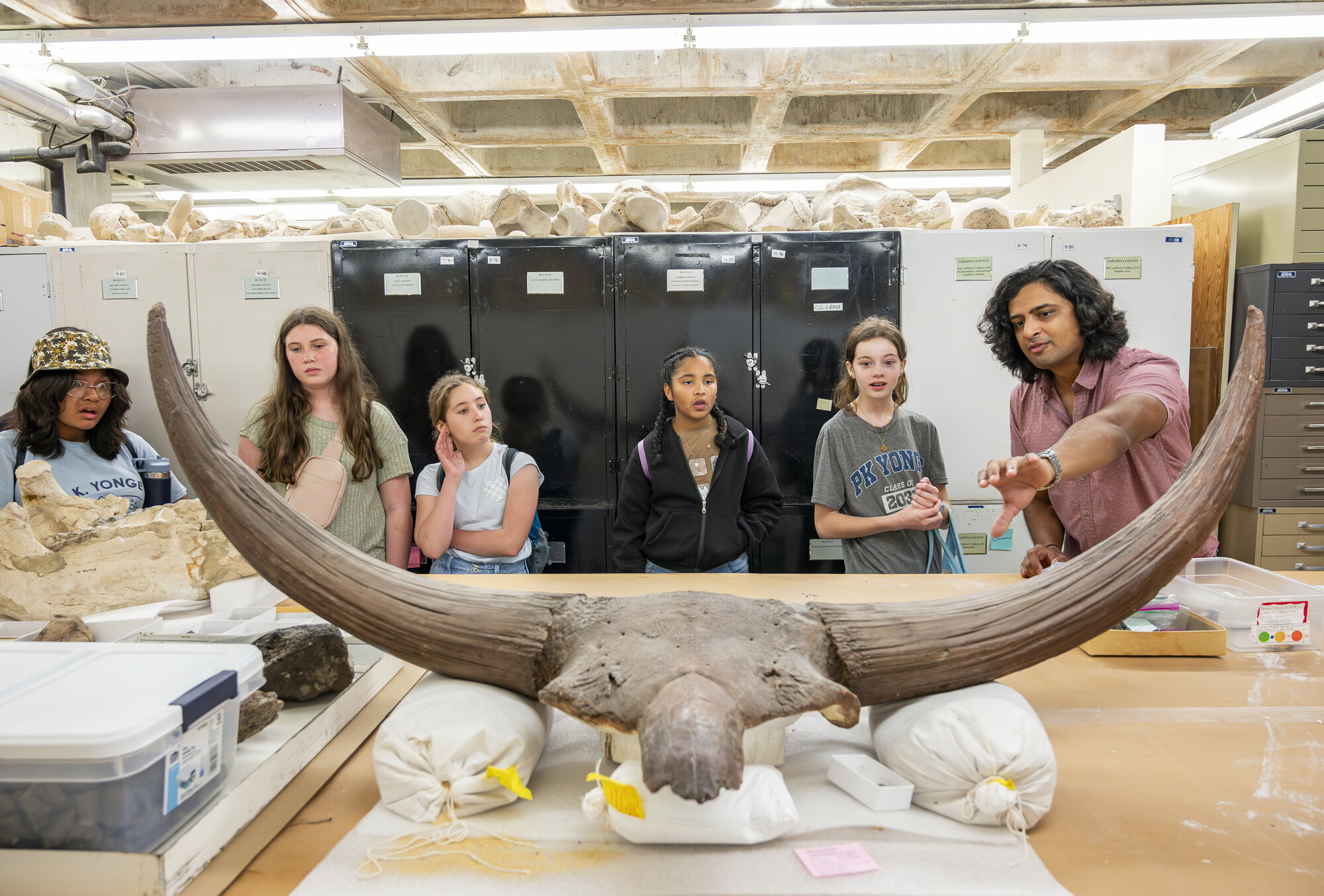
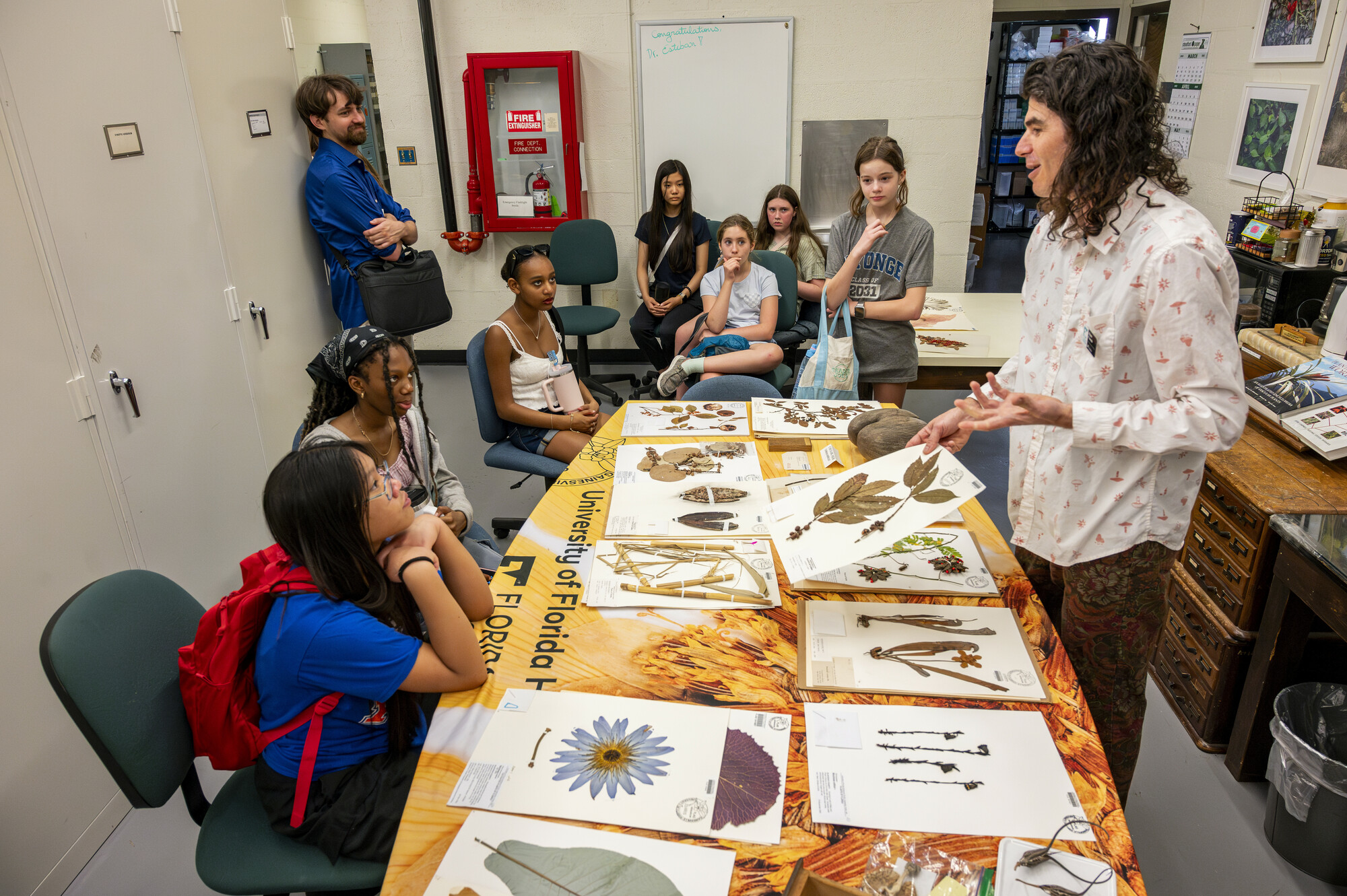
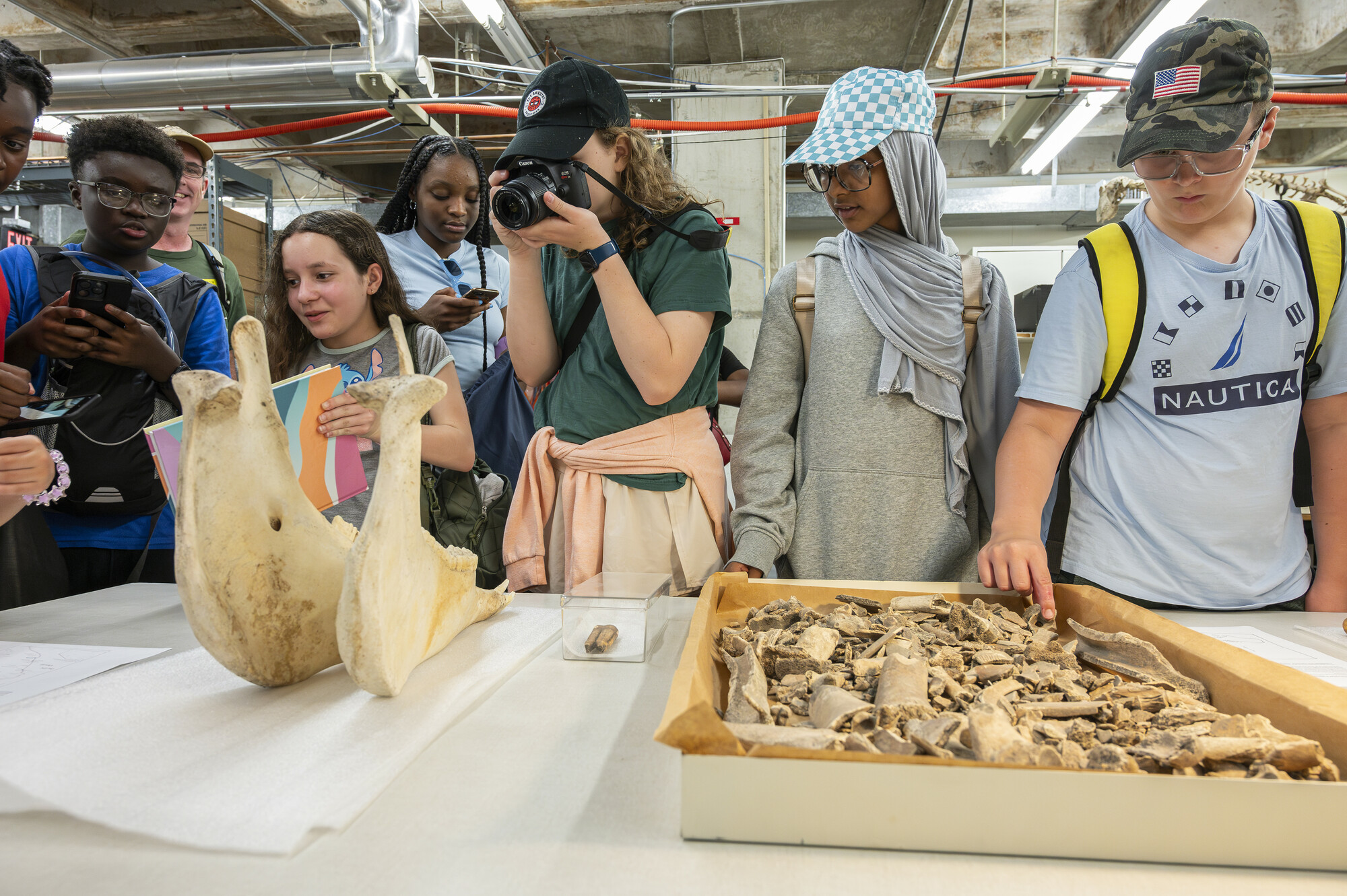
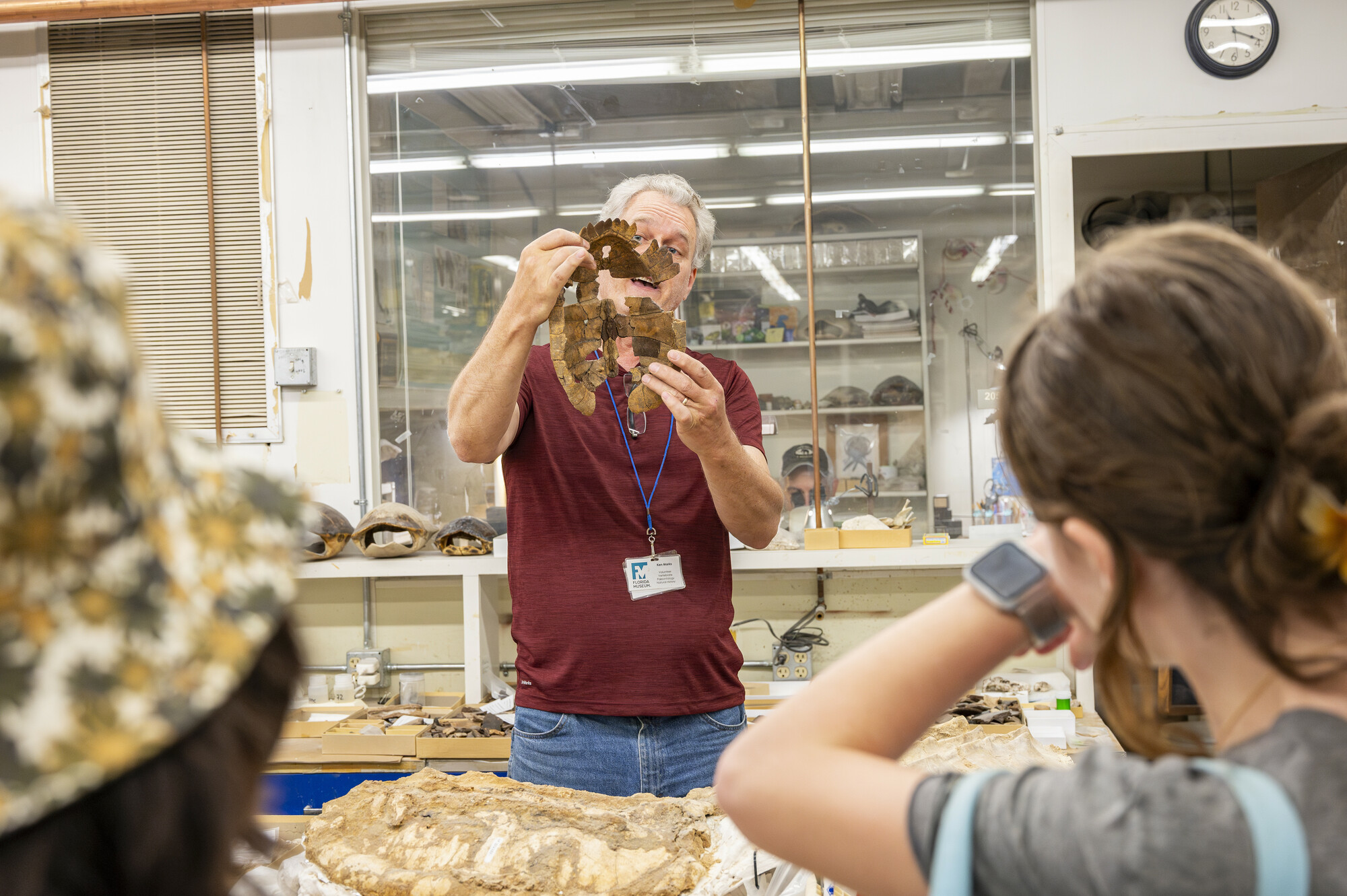
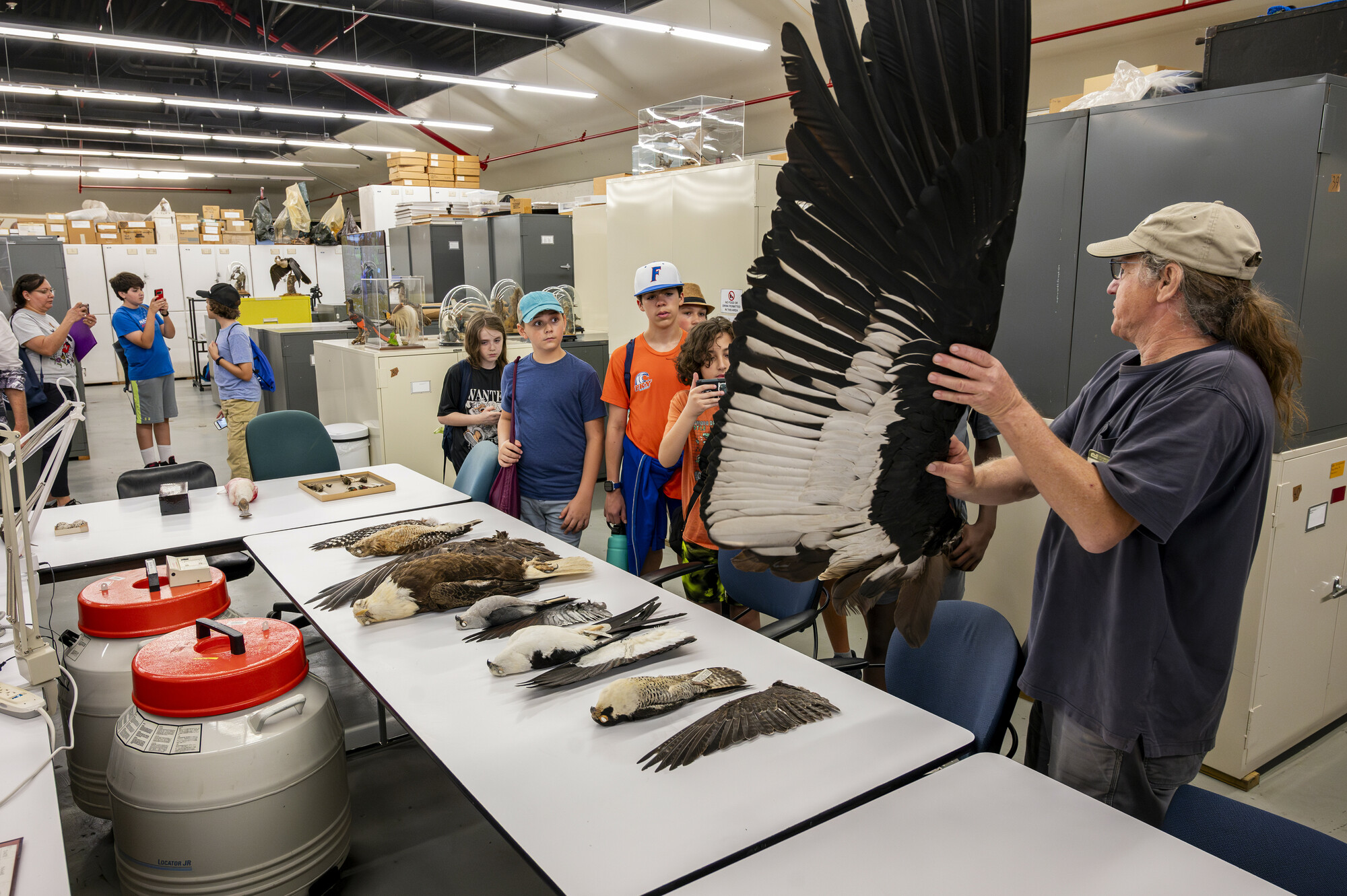
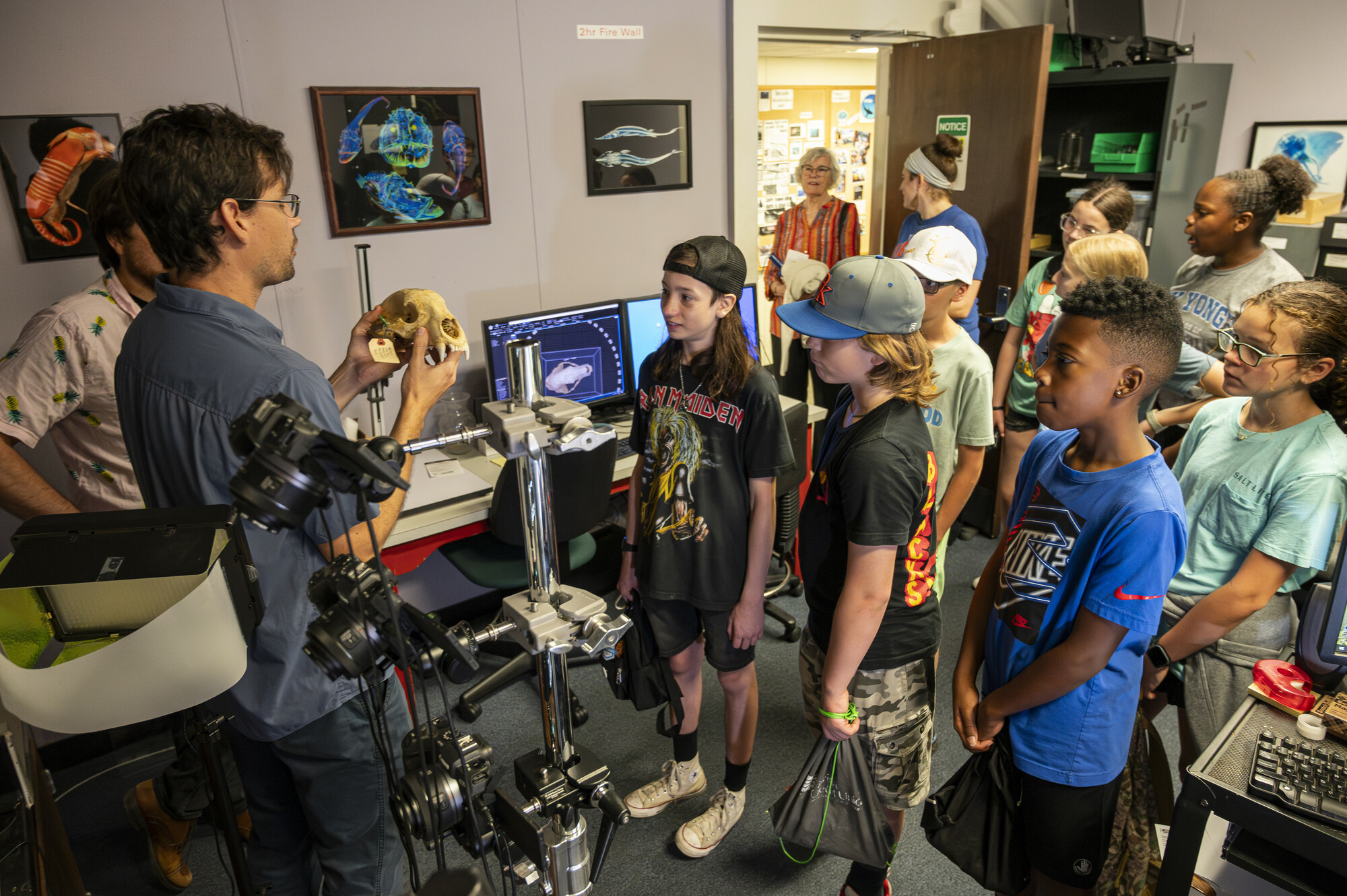
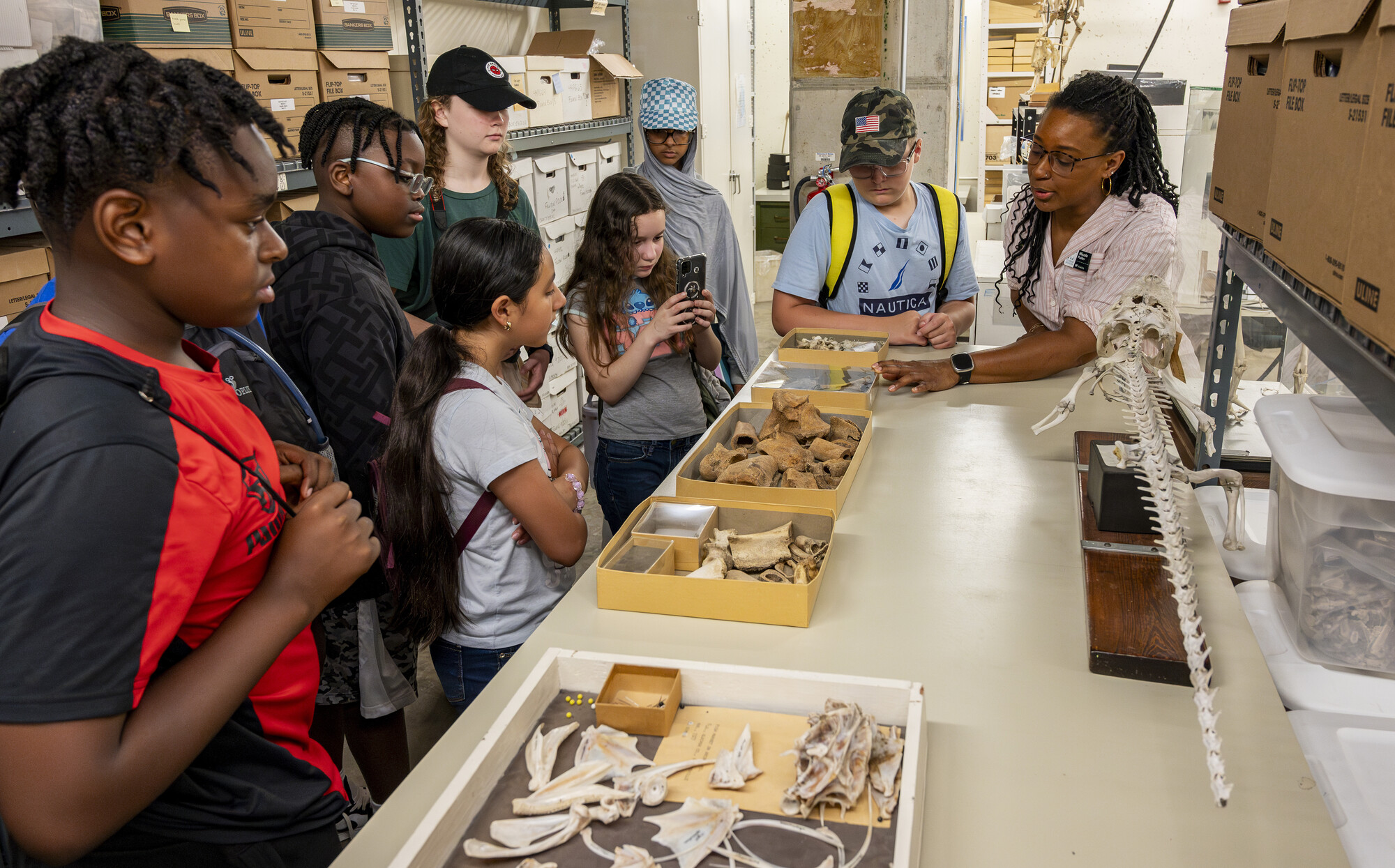
The students met collection managers, researchers, curators and volunteers to learn about the plethora of vocations available in science while also getting an up-close look at the behind-the-scenes work that goes into collections and research. As just a few examples of this unique experience, they got to see how fossil specimens are jacketed and brought to the collection from the field, the CT scanning and 3D modeling that happens in the digital imaging division, and how millions of objects are categorized and stored.
For a portion of the trip, the students visited eight collections and labs: ornithology, vertebrate paleontology, environmental archaeology, historical archaeology, South Florida archaeology and ethnography, paleobotany, the herbarium and digital imaging divisions. There, they covered topics from fossils and birds to CT scanning and ethnography.
“Middle school is an especially great time to engage students with the many different types of jobs in natural history museums, ranging from researchers and staff caring for our collections to photographers, science writers and educators,” Blackburn said. “We hope getting to see the kinds of work that we do and all of the different people involved can be inspiring to those who will soon be choosing the sorts of classes that they take in high school and beyond.”
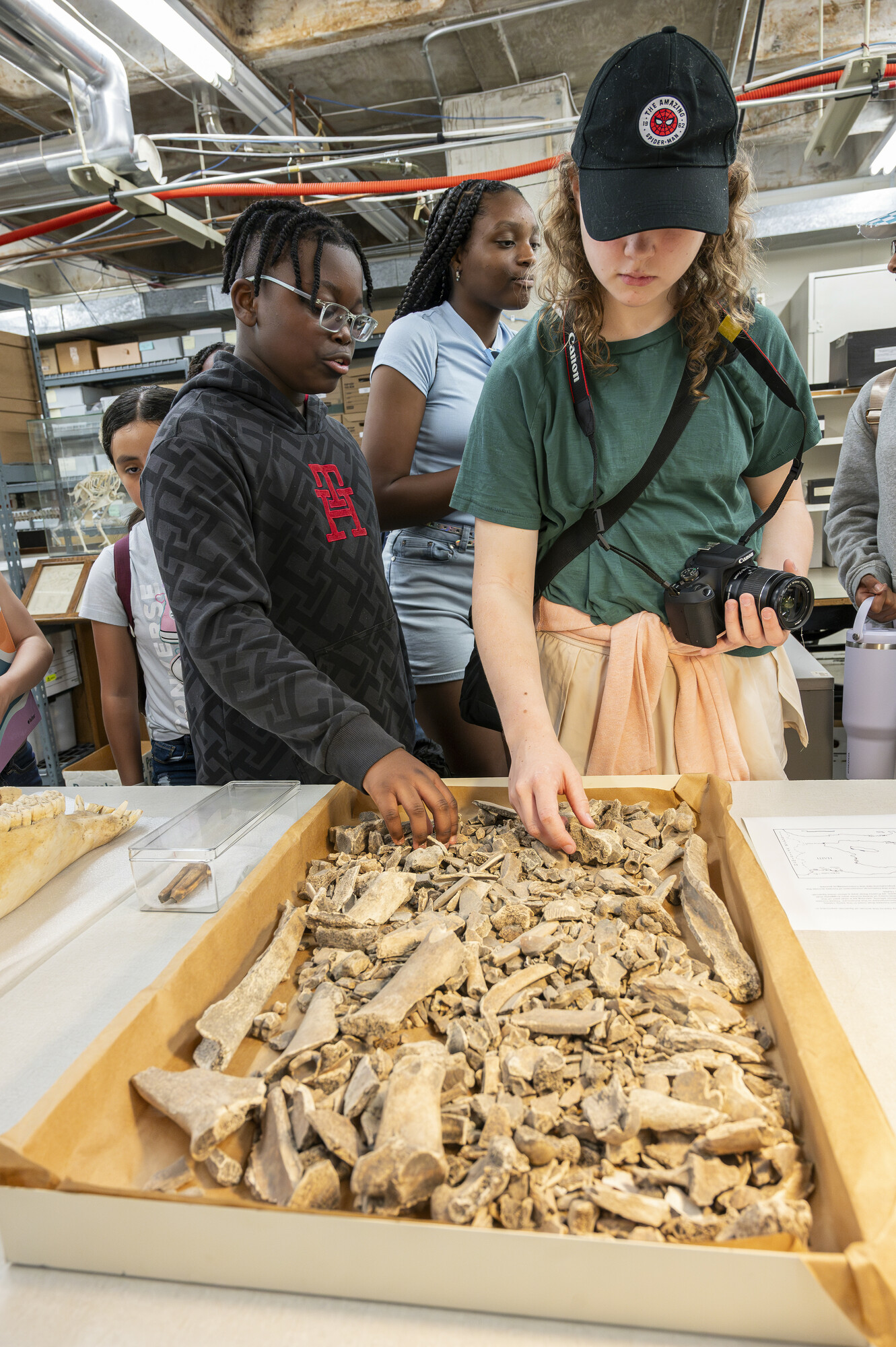
P.K. Yonge is the public, developmental research school of the university and has more than 1,400 students from pre-kindergarten through 12th grade. UF CPET works with other on-campus organizations to provide a preview of the college environment to P.K. Yonge students. By organizing tours of facilities like the Florida Museum’s Dickinson Hall and the Harn Museum of Art, they seek to build students’ familiarity with the variety of opportunities available as part of the Gator Nation.
“Through this collaborative initiative, we aim to provide enriching experiences that ignite students’ interest in STEAM fields, while helping them to feel at home on a college campus – so they are able to see themselves here,” Levy said.
May marked the first student tour of Dickinson Hall in more than 20 years. Open houses and public tours took place in the past but were eliminated when building access was restricted due to safety concerns regarding the storage of 4 million specimens in alcohol that comprised the museum’s “wet” collections.
These specimens were moved to the museum’s new special collections building in 2023-24, opening the door for more of these peeks into the collections during expansion of the museum’s exhibition hall.
“Hopefully this is just the first of many events like this to engage our local community in our work behind the scenes in the museum,” Blackburn said. “The look of surprise and excitement on people’s faces never gets old.”
Dickinson Hall is not open to the public, visitors must make an appointment with a staff member to gain entrance.
-30-
Writer: Nikhil Srinivasan, nsrinivasan@flmnh.ufl.edu
Source: Hazel Levy, hclevy@ufl.edu; Dave Blackburn, dblackburn@flmnh.ufl.edu
Media contact: Kaitlin Gardiner, kgardiner@floridamuseum.ufl.edu